
Catalogue Search | MBRL


Are you sure you want to remove the book from the shelf?

{{itemTitle}}
80
result(s) for
"Nationalism Europe, Eastern History 20th century"
Sort by:

The Politics of \National Character\
The book is a comparative analysis of the ideological constructions of national specificity in Romania, Bulgaria, and Hungary. Studying the growing infatuation with \"national essence\" it seeks to understand the radicalization of nationalism in East Central Europe in connection with the shift of the notions of historicity and temporality.
Trencsényi provides a contextual analysis of the symbolic resources and available ideological references that were used for creating these discourses in the respective countries. While focusing on the interwar period when these conceptions became central to the political debate, he also reconstructs the long-term historical evolution of the discourse of 'national characterology'. Through this prism the work offers a contextual reconstruction of the main debates of these elites on national identity from the mid-19th century until 1945. In the light of the three case studies, the volume contributes to discussions of the problem of modernism and anti-modernism in twentieth-century political thought, posing the question of the intellectual responsibility of intellectuals in constructing radical ideological frameworks.
This book offers a broad intellectual panorama, discerning the common regional features as well as the considerable divergence between these three cases, while also placing them into a wider European intellectual framework of the emergence of radical nationalism.
eBook


Less than nations
Less than Nations: Central-Eastern European Minorities after WWI represents the result of research that the author has carried over recent years, and was facilitated by the 2008 PRIN project (Programmi di Ricerca di Rilevante Interesse Nazionale) and the 2010 Sapienza Research funds. The book analyses the conditions of national minorities after World War I, when the geo-political map of Central-Eastern Europe was redefined by international diplomacy. The new settlements were based on the prin.
eBook


Nested Nationalism
Nested Nationalism is a study of the politics and
practices of managing national minority identifications, rights,
and communities in the Soviet Union and the personal and political
consequences of such efforts. Titular nationalities that had
republics named after them in the USSR were comparatively
privileged within the boundaries of \"their\" republics, but they
still often chafed both at Moscow's influence over republican
affairs and at broader Russian hegemony across the Soviet Union.
Meanwhile, members of nontitular communities frequently complained
that nationalist republican leaders sought to build titular nations
on the back of minority assimilation and erasure. Drawing on
extensive archival and oral history research conducted in Armenia,
Azerbaijan, Dagestan, Georgia, and Moscow, Krista A. Goff argues
that Soviet nationality policies produced recursive, nested
relationships between majority and minority nationalisms and
national identifications in the USSR.
Goff pays particular attention to how these asymmetries of power
played out in minority communities, following them from Azerbaijan
to Georgia, Dagestan, and Iran in pursuit of the national ideas,
identifications, and histories that were layered across internal
and international borders. What mechanisms supported cultural
development and minority identifications in communities subjected
to assimilationist politics? How did separatist movements coalesce
among nontitular minority activists? And how does this
historicization help us to understand the tenuous space occupied by
minorities in nationalizing states across contemporary Eurasia?
Ranging from the early days of Soviet power to post-Soviet ethnic
conflicts, Nested Nationalism explains how Soviet-era
experiences and policies continue to shape interethnic
relationships and expectations today.
eBook

Reinstating the Ottomans : alternative Balkan modernities, 1800-1912
\"This book is inspired by recent scholarship that reexamines the dramatic changes affecting heterogeneous societies in late nineteenth century empires. It expands the analysis of transformation beyond conventional methods of studying failed empires--the emergence of ethnonationalism, sharpened class/gendered sectarian differences--and restates the need to guard against unnecessary anachronisms that have infused post-World War I state-centric historiography. The issues specific to the western Balkans constituted in 1820-1912 a confluence of autonomous, ever-shifting polities that constantly interacted with each other and the larger world in varying degrees through the filter of an Ottoman administration. Unlike other areas of southeastern Europe or the Mediterranean, though, the western Balkans in much of the last quarter of the nineteenth century were characterized by a unique administrative, cultural, and economic setting that led to a distinctive regional experience of modernity. This is partly why it would take the many competing interests in the post-Ottoman years to finally establish respective administrative regimes; this \"delayed\" incorporation into the nation state left most of the regions inhabitants in a kind of developmental black hole with respect to ethnonational and sectarian claims\"-- Provided by publisher.
Book

Between Two Motherlands
In 1900, some 100,000 people living in Bulgaria-2 percent of the country's population-could be described as Greek, whether by nationality, language, or religion. The complex identities of the population-proud heirs of ancient Hellenic colonists, loyal citizens of their Bulgarian homeland, members of a wider Greek diasporic community, devout followers of the Orthodox Patriarchate in Istanbul, and reluctant supporters of the Greek government in Athens-became entangled in the growing national tensions between Bulgaria and Greece during the first half of the twentieth century.
InBetween Two Motherlands, Theodora Dragostinova explores the shifting allegiances of this Greek minority in Bulgaria. Diverse social groups contested the meaning of the nation, shaping and reshaping what it meant to be Greek and Bulgarian during the slow and painful transition from empire to nation-states in the Balkans. In these decades, the region was racked by a series of upheavals (the Balkan Wars, World War I, interwar population exchanges, World War II, and Communist revolutions). The Bulgarian Greeks were caught between the competing agendas of two states increasingly bent on establishing national homogeneity.
Based on extensive research in the archives of Bulgaria and Greece, as well as fieldwork in the two countries, Dragostinova shows that the Greek population did not blindly follow Greek nationalist leaders but was torn between identification with the land of their birth and loyalty to the Greek cause. Many emigrated to Greece in response to nationalist pressures; others sought to maintain their Greek identity and traditions within Bulgaria; some even switched sides when it suited their personal interests. National loyalties remained fluid despite state efforts to fix ethnic and political borders by such means as population movements, minority treaties, and stringent citizenship rules. The lessons of a case such as this continue to reverberate wherever and whenever states try to adjust national borders in regions long inhabited by mixed populations.
eBook
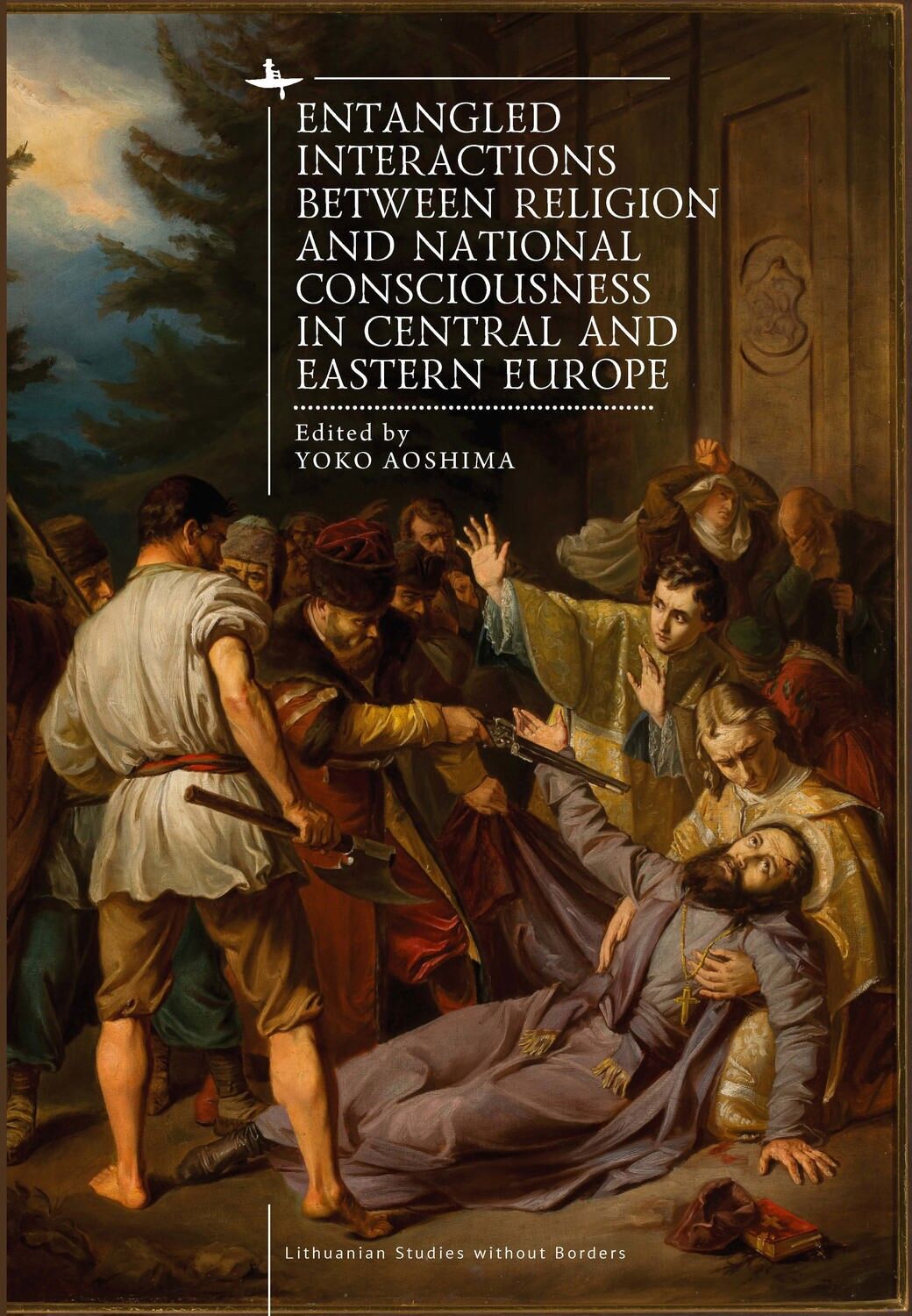
Entangled interactions between religion and national consciousness in Central and Eastern Europe
Thisbook elucidates the complicated relationship between religion and nationalconsciousness in the modern world, shedding light on various cases in Centraland Eastern Europe. Though those analyses, the authors show how religion, far fromdisappearing, strongly impacted on the emerging national consciousness.
eBook

Blood and Homeland
The history of eugenics and racial nationalism in Central and Southeast Europe is a neglected topic of analysis in contemporary scholarship. The 20 essays in this volume, written by distinguished scholars of eugenics and fascism alongside a new generation of scholars, excavate the hitherto unknown eugenics movements in Central and Southeast Europe, including Austria and Germany. Eugenics and racial nationalism are topics that have constantly been marginalized and rated as incompatible with local national traditions in Central and Southeast Europe. These topics receive a new treatment here. On the one hand, the historiographic perspective connects developments in the history of anthropology and eugenics with political ideologies such as racial nationalism and anti-Semitism; on the other hand, it contests the 'Sonderweg' approach adopted by scholars dealing with these issues.
eBook