
Catalogue Search | MBRL


Are you sure you want to remove the book from the shelf?

{{itemTitle}}
942
result(s) for
"Nationalism and collective memory"
Sort by:

Unbecoming nationalism : from commemoration to redress in Canada
\"Canada's recent sesquicentennial celebrations were the latest in a long, steady progression of Canadian cultural memory projects. Unbecoming Nationalism investigates the power of commemorative performances in the production of nationalist narratives. Using \"unbecoming\" as a theoretical framework to unsettle or decolonize nationalist narratives, Helene Vosters examines an eclectic range of both state-sponsored social memory projects and counter-memorial projects to reveal and unravel the threads connecting reverential military commemoration, celebratory cultural nationalism, and white settler-colonial nationalism. Vosters brings readings of institutional, aesthetic, and activist performances of Canadian military commemoration, settler-colonial nationalism, and redress into conversation with literature that examines the relationship between memory, violence, and nationalism from the disciplinary arenas of performance studies, Canadian studies, critical race and Indigenous studies, memory studies, and queer and gender studies. In addition to using performance as a theoretical framework, Vosters uses performance to enact a philosophy of praxis and embodied theory.\"-- Provided by publisher.
Book

Memorials and martyrs in modern Lebanon
Lebanese history is often associated with sectarianism and hostility
between religious communities, but by examining public memorials and historical
accounts Lucia Volk finds evidence for a sustained politics of Muslim and Christian
co-existence. Lebanese Muslim and Christian civilians were jointly commemorated as
martyrs for the nation after various episodes of violence in Lebanese history. Sites
of memory sponsored by Maronite, Sunni, Shiite, and Druze elites have shared the
goal of creating cross-community solidarity by honoring the joint sacrifice of
civilians of different religious communities. This compelling and lucid study
enhances our understanding of culture and politics in the Middle East and the
politics of memory in situations of ongoing conflict.
eBook

The algerian war in French-language comics
The decolonization of Algeria represents a turning point in world history, marking the end of France's colonial empire, the birth of the Algerian republic, and the appearance of the Third World and pan-Arabism.Algeria emerged from colonial domination to negotiate the release of American hostages in Iran during the Carter administration.
eBook

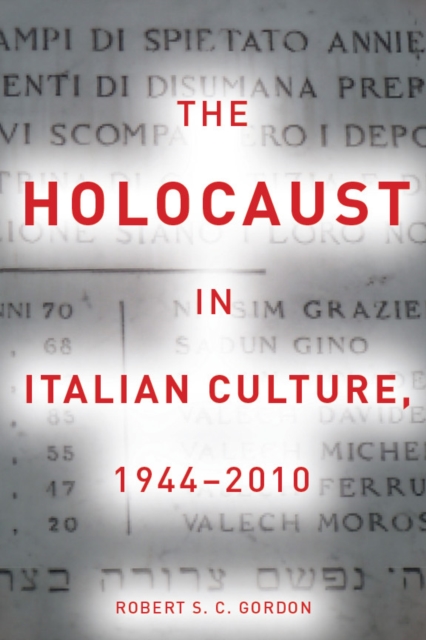
The Holocaust in Italian Culture, 1944–2010
The Holocaust in Italian Culture, 1944–2010 is the first major study of how postwar Italy confronted, or failed to confront, the Holocaust. Fascist Italy was the model for Nazi Germany, and Mussolini was Hitler's prime ally in the Second World War. But Italy also became a theater of war and a victim of Nazi persecution after 1943, as resistance, collaboration, and civil war raged. Many thousands of Italians—Jews and others—were deported to concentration camps throughout Europe. After the war, Italian culture produced a vast array of stories, images, and debate through which it came to terms with the Holocaust's difficult legacy. Gordon probes a rich range of cultural material as he paints a picture of this shared encounter with the darkest moment of twentieth-century history. His book explores aspects of Italian national identity and memory, offering a new model for analyzing the interactions between national and international images of the Holocaust.
eBook

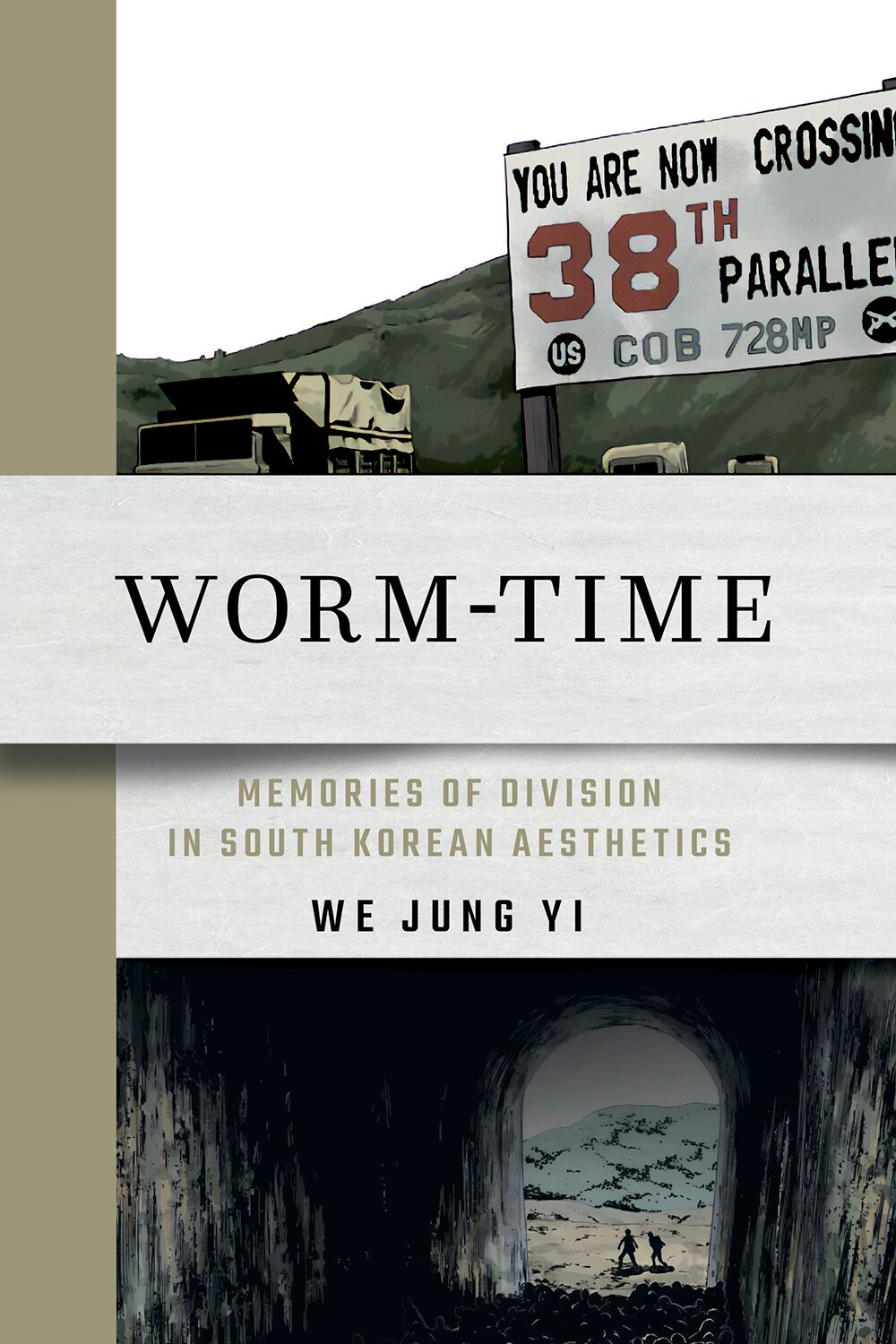
Worm-Time
Worm-Time challenges
conventional narratives of the Cold War and its end, presenting an
alternative cultural history based on evolving South Korean
aesthetics about enduring national division. From novels
of dissent during the authoritarian era to films and webtoons in
the new millennium, We Jung Yi's transmedia analyses unearth
people's experiences of \"wormification\"-traumatic survival,
deferred justice, and warped capitalist growth in the wake of the
Korean War.
Whether embodied as refugees, leftists, or broken families, Yi's
wormified protagonists transcend their positions as displaced
victims of polarized politics and unequal development. Through
metamorphoses into border riders who fly over or crawl through the
world's dividing lines, they reclaim postcolonial memories buried
in the pursuit of modernization under US hegemony and cultivate a
desire for social transformation. Connecting colonial legacies,
Cold War ideologies, and neoliberal economics, Worm-Time
dares us to rethink the post-WWII consensus on freedom, peace, and
prosperity.
eBook


Indigenous Peoples and Archaeology in Latin America
This book is the first to describe indigenous archaeology in Latin America for an English speaking audience. Eighteen chapters primarily by Latin American scholars describe relations between indigenous peoples and archaeology in the frame of national histories and examine the emergence of the native interest in their heritage. Relationships between archaeology and native communities are ambivalent: sometimes an escalating battleground, sometimes a promising site of intercultural encounters. The global trend of indigenous empowerment today has renewed interest in history, making it a tool of cultural meaning and political legitimacy. This book deals with the topic with a raw forthrightness not often demonstrated in writings about archaeology and indigenous peoples. Rather than being 'politically correct,' it attempts to transform rather than simply describe.
eBook