
Catalogue Search | MBRL


Are you sure you want to remove the book from the shelf?

{{itemTitle}}
7
result(s) for
"Nationalism and sports Cross-cultural studies."
Sort by:


Power and Global Sport
Sport has changed. Traditions and territorial distinctions are dissolving as a result of new global, political, economic and cultural conditions. The team of authors examine these changes, investigating the power relations that govern the new global sport and assessing the consequences for the future of sport.
The book is founded on a series of case studies, linked by a common process-sociological approach, and is divided into four sections - each dealing with an important aspect of sport and globalization:
* the local-global nexus - how global sports processes are played out at the level of local communities * lived experiences - the reality of global sport for players and supporters * identity politics - the impact of global sport on national consciousness * sporting futures - the emergent political, economic and cultural forces that are shaping global sport, and their implications for its development.
The text introduces new approaches to the study of sport and globalization, updating and extending Maguire's previous work, and is therefore an essential resource for all those working in this fast-changing area.
Joseph Maguire is Professor of Sociology of Sport and Co-Director of the Centre for Olympic Studies & Research at Loughborough University, UK, as well as Past President of the International Sociology of Sport Association (1995-2003). Joseph Maguire has written extensively in the area of globalisation, sport, culture and society.
1. Local - Global Nexus. 2. Lived Experiences. 3. Identity Politics. 4. Sporting Futures.
eBook

International Sports Events
This book offers new insight into International Sports Events (ISEs), examining the relationship between sport, tourism and events. It assesses sports events through the lens of both sports participants and spectators, based on three primary themes: impacts, experiences and identities. The first section of the book contributes to the future development of knowledge by analyzing the impact of sport events and their legacies from economic, environmental, social, sporting, political and cultural perspectives - an understanding of the impacts and potential legacies of sports events is fundamental to their future development. In the second section of the book, the focus moves from impact and legacy issues towards exploring consumer behaviour and participant experiences at a diverse selection of International Sports Events. The emphasis within this section is grounded within the tourism dimension of sports events. Section three of the book highlights the dominant role of identity at a diverse selection of sports events, and demonstrates how that identity is displayed whilst either watching or participating in sport and leisure.
The book provides an international analysis drawing on emerging empirical research conducted across a diverse range of sport and leisure activities and contrasting locations. Linked to the three underlying themes of the book, a future research agenda for International Sports Events is provided which is centred on four key pillars: impact, identity, internationalization and interdisciplinary research.
This timely book will be of interest to students, researchers and academics studying Event Management, Sport Management and Sport Tourism.
eBook


Digital nationalism: analyzing the role of sports in Thai identity through social media
This study investigates the intersection of sports and nationalism among Thai sports fans, with a focus on the role of social media in shaping national identity. Employing qualitative methods, including thematic analysis, we examined over 500 social media posts, comments and interactions purposively sampled from Facebook, X and Instagram during major sports events such as the Olympics, Asian Games and Southeast Asian Games. Guided by Social Identity Theory and Leisure Theory, we identified key themes and patterns in social media content. Our findings reveal strong expressions of national pride, the significant role of digital platforms in fostering collective identity, and variations in engagement across different demographics. Younger fans often used humor and memes, while older fans engaged in more formal discussions. This study highlights how social media amplifies nationalistic sentiments, creating virtual spaces for community building and collective celebration. These insights offer valuable strategies for academics, policymakers, sports organizations and marketers to enhance national branding and digital engagement. Future research should explore emerging digital platforms, conduct cross-cultural comparisons and employ mixed-methods approaches to further understand the complexities of sports-related nationalism. The study argues that social media fosters collective identity, contributing to scholarship by integrating social identity and leisure theories, offering a non-Western perspective on digital sports nationalism.
Journal Article
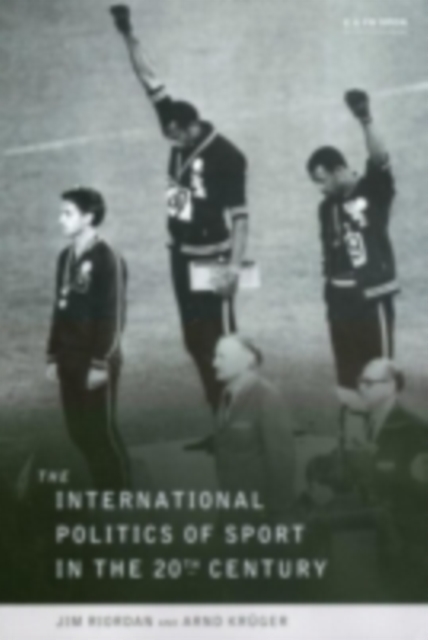
The International Politics of Sport in the Twentieth Century
There is no better time to take a look back at the political events of the past 100 years as seen through the eyes of sport and sports people. Ten key international authorities in their respective fields lead you through the most important political elements of contemporary sport. This book is the first of its kind. It provides a wide ranging perspective through time and place and will be an invaluable tool for students studying sport from an historical and political perspective, and also for those who have a general interest in sport at its interface with politics.
Arnd Kruger is Professor and head of the 'Sport and Society' section of the Department of Sport Science at the Georg-Augist University in Germany. He has served as Dean of Faculty of Sport Sciences and is Past-President of the European Committee for Sport History. He has published widely on political aspects of sports mainly in the 19th & 20th Century
Introduction. Part 1: The unfinished symphony. A History of the Olympic Games from. Coubertin to Samaranch. FIFA. The impact of communism on sport. Strength through joy. The culture of consent under fascism, nazism and Francoism. Religion and Sport. The worker sports movement. Part 2: Women in sport and society. The rise of black athletes in the USA. Disability sport. The homosexual and homoerotic in sport. Sport and terrorism. Sport in South Africa. Index.
eBook

Sport and International Relations
Sport plays a highly significant role in the lives of millions the world over, and yet the impact of this global phenomenon on the subject of international relations hes been neglected. The contributors to this collection argue that sport remains both an underestimated and understudied aspect of international relations, and that the growth of its importance should be seen in the complex interdependencies and global systems of governance. The text examines: * how the expansion of professional sport, and the revenues generated by mass media's links with sport have transformed the international political economy; * how sport contributes to nation building and notions of identity; * how sport is a significant facet of international diplomacy. International sport is far from being peripheral to international relations. This challenging and comprehensive introduction will be of interest to students and all those working in international relations and sport studies.
eBook