
Catalogue Search | MBRL


Are you sure you want to remove the book from the shelf?

{{itemTitle}}
6,307
result(s) for
"Native American and Indigenous Studies"
Sort by:

Grounded authority : the Algonquins of Barriere Lake against the state
\"Since Justin Trudeau's election in 2015, Canada has been hailed internationally as embarking on a truly progressive, post-postcolonial era--including an improved relationship between the state and its Indigenous peoples. Shiri Pasternak corrects this misconception, showing that colonialism is very much alive in Canada. From the perspective of Indigenous law and jurisdiction, she tells the story of the Algonquins of Barriere Lake, in western Quebec, and their tireless resistance to federal land claims policy. Grounded Authority chronicles the band's ongoing attempts to restore full governance over its lands and natural resources through an agreement signed by settler governments almost three decades ago--an agreement the state refuses to fully implement. Pasternak argues that the state's aversion to recognizing Algonquin jurisdiction stems from its goal of perfecting its sovereignty by replacing the inherent jurisdiction of Indigenous peoples with its own, delegated authority. From police brutality and fabricated sexual abuse cases to an intervention into and overthrow of a customary government, Pasternak provides a compelling, richly detailed account of rarely documented coercive mechanisms employed to force Indigenous communities into compliance with federal policy. A rigorous account of the incredible struggle fought by the Algonquins to maintain responsibility over their territory, Grounded Authority provides a powerful alternative model to one nation's land claims policy and a vital contribution to current debates in the study of colonialism and Indigenous peoples in North America and globally\"-- Provided by publisher.
Book

Living with the Past
David Silverman offers a critical appraisal of two prizewinning works in Native American and Indigenous studies (NAIS), Our Beloved Kin: A New History of King Philip’s War, by Lisa Brooks, and Memory Lands: King Philip’s War and the Place of Violence in the Northeast, by Christine M. DeLucia. Silverman’s review treats the methodology associated with NAIS with some skepticism, offering the opportunity for a lively discussion about the merits and perils of community-engaged history scholarship. Four scholars of Native American history, including DeLucia, respond, defending new approaches to Indigenous history represented by these recent works.
Journal Article

Inter/nationalism : decolonizing Native America and Palestine
\"According to Steven Salaita, the seemingly disparate fields of Palestinian studies and American Indian studies have more in common than one may think. In Inter/nationalism, Salaita argues that American Indian and Indigenous studies must be more central to the scholarship and activism focusing on Palestine. Salaita offers [an] ... inside account of the Boycott, Divestment, and Sanctions (BDS) movement--which, among other things, aims to end Israel's occupation of Palestinian land. In doing so, he emphasizes BDS's significant potential as an organizing community as well as its importance in the creation of intellectual and political communities that put Natives and other colonized peoples such as Palestinians into conversation\"-- Provided by publisher.
Book
Cold Business and the Hot Take
David Silverman offers a critical appraisal of two prizewinning works in Native American and Indigenous studies (NAIS), Our Beloved Kin: A New History of King Philip’s War, by Lisa Brooks, and Memory Lands: King Philip’s War and the Place of Violence in the Northeast, by Christine M. DeLucia. Silverman’s review treats the methodology associated with NAIS with some skepticism, offering the opportunity for a lively discussion about the merits and perils of community-engaged history scholarship. Four scholars of Native American history, including DeLucia, respond, defending new approaches to Indigenous history represented by these recent works.
Journal Article
What Does Native American and Indigenous Studies (NAIS) Do?
David Silverman offers a critical appraisal of two prizewinning works in Native American and Indigenous studies (NAIS), Our Beloved Kin: A New History of King Philip’s War, by Lisa Brooks, and Memory Lands: King Philip’s War and the Place of Violence in the Northeast, by Christine M. DeLucia. Silverman’s review treats the methodology associated with NAIS with some skepticism, offering the opportunity for a lively discussion about the merits and perils of community-engaged history scholarship. Four scholars of Native American history, including DeLucia, respond, defending new approaches to Indigenous history represented by these recent works.
Journal Article
Continuing the Intervention
David Silverman offers a critical appraisal of two prizewinning works in Native American and Indigenous studies (NAIS), Our Beloved Kin: A New History of King Philip’s War, by Lisa Brooks, and Memory Lands: King Philip’s War and the Place of Violence in the Northeast, by Christine M. DeLucia. Silverman’s review treats the methodology associated with NAIS with some skepticism, offering the opportunity for a lively discussion about the merits and perils of community-engaged history scholarship. Four scholars of Native American history, including DeLucia, respond, defending new approaches to Indigenous history represented by these recent works.
Journal Article
Contexts for Critique
David Silverman offers a critical appraisal of two prizewinning works in Native American and Indigenous studies (NAIS), Our Beloved Kin: A New History of King Philip’s War, by Lisa Brooks, and Memory Lands: King Philip’s War and the Place of Violence in the Northeast, by Christine M. DeLucia. Silverman’s review treats the methodology associated with NAIS with some skepticism, offering the opportunity for a lively discussion about the merits and perils of community-engaged history scholarship. Four scholars of Native American history, including DeLucia, respond, defending new approaches to Indigenous history represented by these recent works.
Journal Article
Historians and Native American and Indigenous Studies
David Silverman offers a critical appraisal of two prizewinning works in Native American and Indigenous studies (NAIS), Our Beloved Kin: A New History of King Philip’s War, by Lisa Brooks, and Memory Lands: King Philip’s War and the Place of Violence in the Northeast, by Christine M. DeLucia. Silverman’s review treats the methodology associated with NAIS with some skepticism, offering the opportunity for a lively discussion about the merits and perils of community-engaged history scholarship. Four scholars of Native American history, including DeLucia, respond, defending new approaches to Indigenous history represented by these recent works.
Journal Article
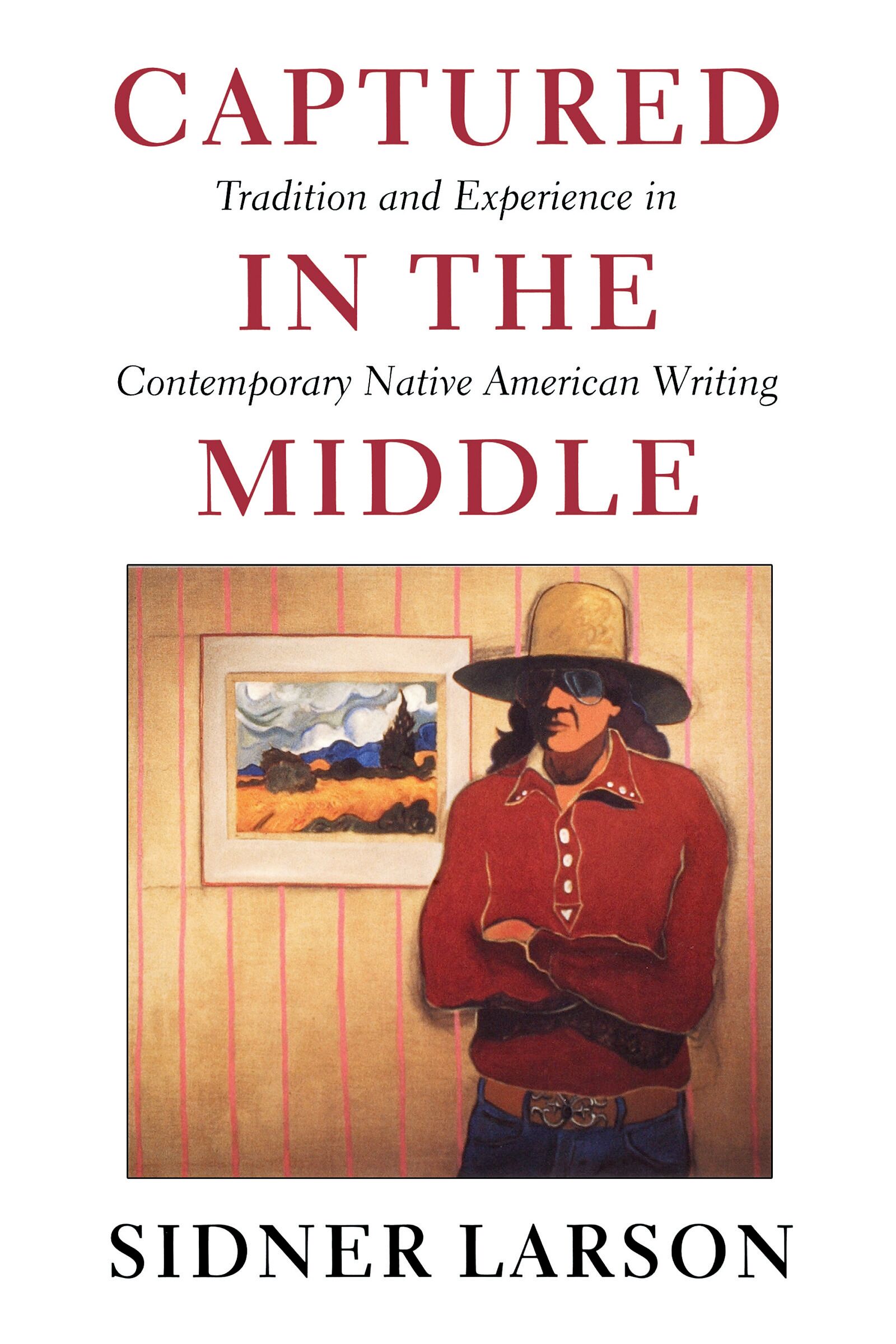
Captured in the Middle
Sidner Larson's Captured in the Middle embodies the very nature of Indian storytelling, which is circular, drawing upon the personal experiences of the narrator at every turn. Larson teaches about contemporary American Indian literature by describing his own experiences as a child on the Fort Belknap Reservation in Montana and as a professor at the University of Oregon.Larson argues that contemporary Native American literary criticism is stalled. On one hand are the scholars who portray Indians stereotypically, assuming that the experiences of all tribal groups have largely been the same. On the other hand are those scholars who focus on the \"authenticity\" of the writer. In contrast, Larson considers the scholarship of Vine Deloria, Jr., who has a genuine understanding of the balance required in dealing with these issues. Two writers who have successfully redescribed many of the contemporary romantic stereotypes are James Welch and Louise Erdrich, both northern Plains Indians whose works are markedly different, their writing highlighting the disparate ways tribal groups have responded to colonization.Larson describes Indians today as postapocalyptic peoples who have already lived through the worst imaginable suffering. By confronting the issues of fear, suppression, and lost identity through literature, Indians may finally move forward to imagine and create for themselves a better future, serving as models for the similarly fractured cultures found throughout the world today.
eBook
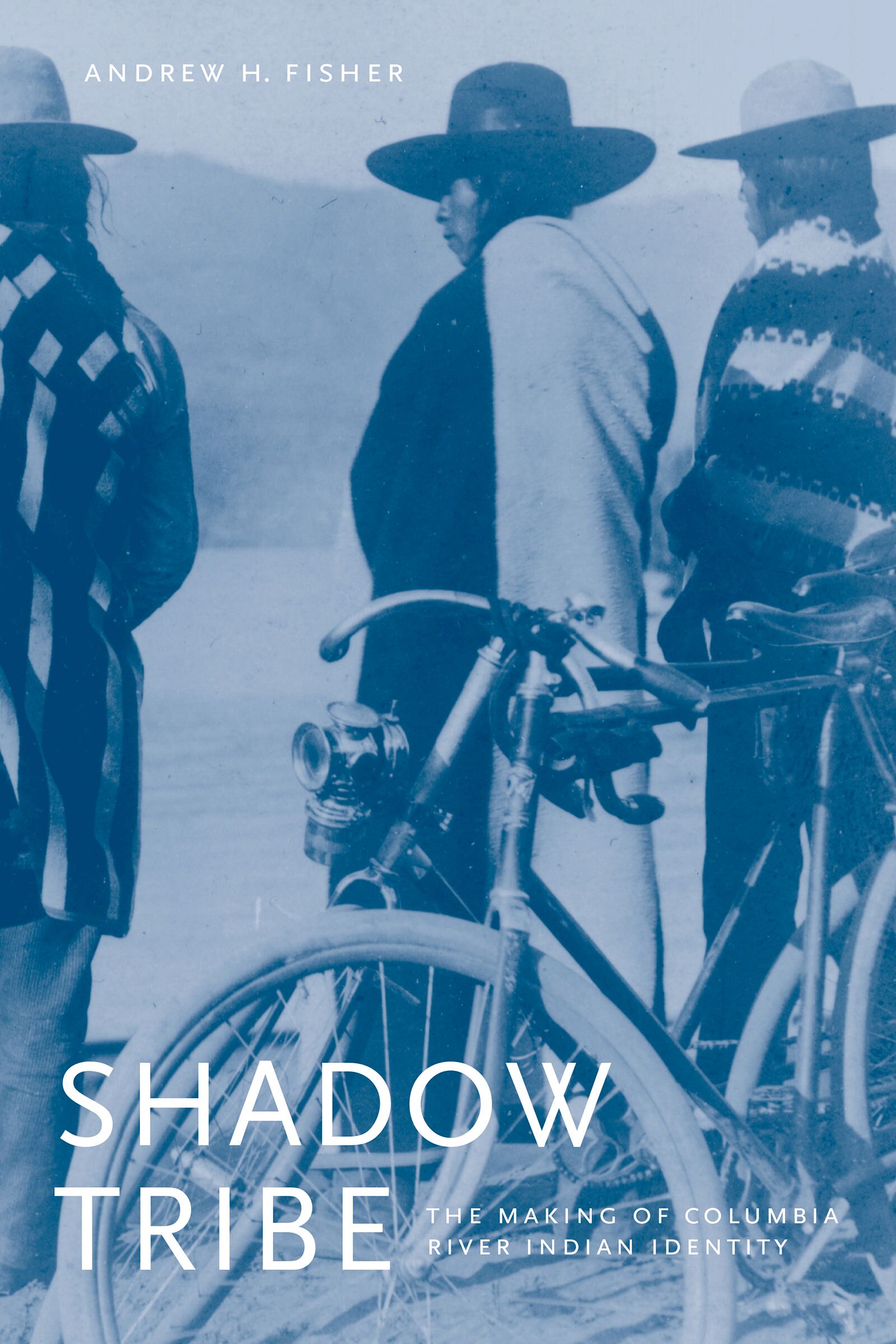
Shadow Tribe
Shadow Tribe offers the first in-depth history of the Pacific Northwest's Columbia River Indians -- the defiant River People whose ancestors refused to settle on the reservations established for them in central Oregon and Washington. Largely overlooked in traditional accounts of tribal dispossession and confinement, their story illuminates the persistence of off-reservation Native communities and the fluidity of their identities over time. Cast in the imperfect light of federal policy and dimly perceived by non-Indian eyes, the flickering presence of the Columbia River Indians has followed the treaty tribes down the difficult path marked out by the forces of American colonization.Based on more than a decade of archival research and conversations with Native people, Andrew Fisher's groundbreaking book traces the waxing and waning of Columbia River Indian identity from the mid-nineteenth through the late twentieth centuries. Fisher explains how, despite policies designed to destroy them, the shared experience of being off the reservation and at odds with recognized tribes forged far-flung river communities into a loose confederation called the Columbia River Tribe. Environmental changes and political pressures eroded their autonomy during the second half of the twentieth century, yet many River People continued to honor a common heritage of ancestral connection to the Columbia, resistance to the reservation system, devotion to cultural traditions, and detachment from the institutions of federal control and tribal governance. At times, their independent and uncompromising attitude has challenged the sovereignty of the recognized tribes, earning Columbia River Indians a reputation as radicals and troublemakers even among their own people.Shadow Tribe is part of a new wave of historical scholarship that shows Native American identities to be socially constructed, layered, and contested rather than fixed, singular, and unchanging. From his vantage point on the Columbia, Fisher has written a pioneering study that uses regional history to broaden our understanding of how Indians thwarted efforts to confine and define their existence within narrow reservation boundaries.
eBook