
Catalogue Search | MBRL


Are you sure you want to remove the book from the shelf?

{{itemTitle}}
31,708
result(s) for
"Native American art"
Sort by:

Glittering world : Navajo jewelry of the Yazzie family
\"Glittering World tells the remarkable story of Navajo jewelry--from its ancient origins to the present--through the work of the gifted Yazzie family of Arizona. Jewelry has long been an important form of artistic expression for Native peoples in the Southwest; its diversity of design reflects a long history of migrations, trade, and cultural exchange. Exceptional jewelry makers who have been active for nearly eight decades, the Yazzies are strongly rooted in and inspired by these traditions and values. Their works emphasize reciprocity, harmony, balance, and respect for family. As the companion volume to the Smithsonian's National Museum of the American Indian in New York exhibit of the same name, this book is richly illustrated with images of these beautifully crafted treasures, bringing to light some of the finest indigenous art being created in the world today. Its informative and lively narrative complements these stunning images to illuminate the fascinating story of continuity, change, and survival embodied by Navajo jewelry\"-- Provided by publisher.
Book
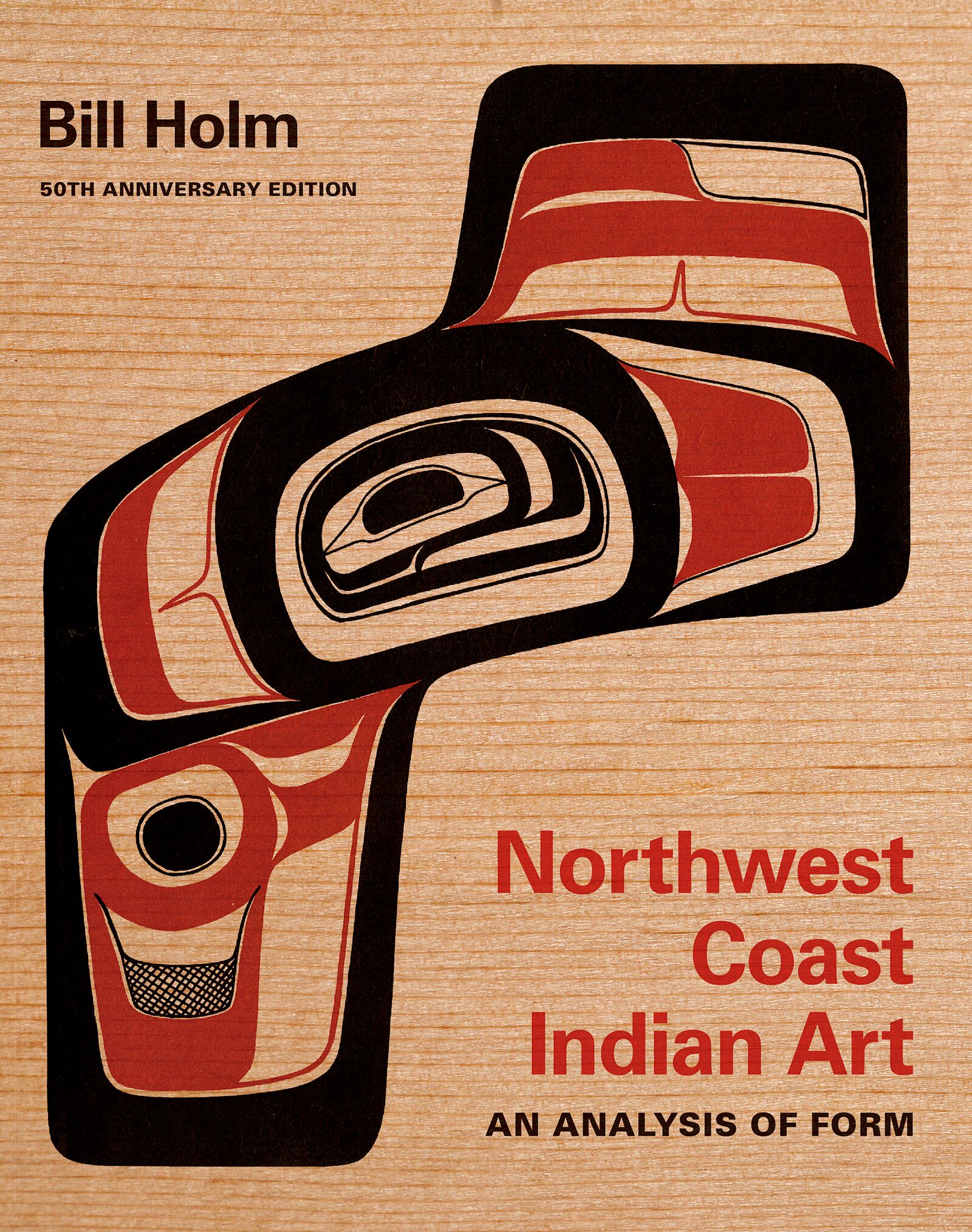
Northwest Coast Indian Art
The 50th anniversary edition of this classic work on the art of Northwest Coast Indians now offers color illustrations for a new generation of readers along with reflections from contemporary Northwest Coast artists about the impact of this book. The masterworks of Northwest Coast Native artists are admired today as among the great achievements of the world's artists. The painted and carved wooden screens, chests and boxes, rattles, crest hats, and other artworks display the complex and sophisticated northern Northwest Coast style of art that is the visual language used to illustrate inherited crests and tell family stories.In the 1950s Bill Holm, a graduate student of Dr. Erna Gunther, former Director of the Burke Museum, began a systematic study of northern Northwest Coast art. In 1965, after studying hundreds of bentwood boxes and chests, he published Northwest Coast Indian Art: An Analysis of Form. This book is a foundational reference on northern Northwest Coast Native art. Through his careful studies, Bill Holm described this visual language using new terminology that has become part of the established vocabulary that allows us to talk about works like these and understand changes in style both through time and between individual artists' styles. Holm examines how these pieces, although varied in origin, material, size, and purpose, are related to a surprising degree in the organization and form of their two-dimensional surface decoration.The author presents an incisive analysis of the use of color, line, and texture; the organization of space; and such typical forms as ovoids, eyelids, U forms, and hands and feet. The evidence upon which he bases his conclusions constitutes a repository of valuable information for all succeeding researchers in the field.Replaces ISBN 9780295951027
eBook

Surviving desires : making and selling Native jewellery in the American Southwest
\"Author Henrietta Lidchi focuses on jewellery in the cultural economy of the Southwest, exploring jewellery making as a decorative art form in constant transition. She describes the jewellery as subject to a number of desires, controlled at different times by government agencies, individual entrepreneurs, traders, curators, and Native American communities. Lidechi explores the jewellery as craft, material culture, commodity, and adornment. Considering the impact of tourism, she discusses fakes in the market and the artists' desires to codify traditional styles, explaining how that can affect stylistic development and value. Surviving Desires suggests the complexity and reinvention innate to Native American jewellery as a commercial craft\"-- Provided by publisher.
Book

The Arts of Indigenous Health and Well-Being
Drawing attention to the ways in which creative practices are essential to the health, well-being, and healing of Indigenous peoples, The Arts of Indigenous Health and Well-Being addresses the effects of artistic endeavour on the \"good life\", or mino-pimatisiwin in Cree, which can be described as the balanced interconnection of physical, emotional, spiritual, and mental well-being.
In this interdisciplinary collection, Indigenous knowledges inform an approach to health as a wider set of relations that are central to well-being, wherein artistic expression furthers cultural continuity and resilience, community connection, and kinship to push back against forces of fracture and disruption imposed by colonialism. The need for healing—not only individuals but health systems and practices—is clear, especially as the trauma of colonialism is continually revealed and perpetuated within health systems. The field of Indigenous health has recently begun to recognize the fundamental connection between creative expression and well-being. This book brings together scholarship by humanities scholars, social scientists, artists, and those holding experiential knowledge from across Turtle Island to add urgently needed perspectives to this conversation. Contributors embrace a diverse range of research methods, including community-engaged scholarship with Indigenous youth, artists, Elders, and language keepers.
The Arts of Indigenous Health and Well-Being demonstrates the healing possibilities of Indigenous works of art, literature, film, and music from a diversity of Indigenous peoples and arts traditions. This book will resonate with health practitioners, community members, and any who recognize the power of art as a window, an entryway to access a healthy and good life.
eBook

Before Yellowstone
Since 1872, visitors have flocked to Yellowstone National Park to gaze in awe at its dramatic geysers, stunning mountains, and impressive wildlife. Yet more than a century of archaeological research shows that the wild landscape has a long history of human presence. In fact, Native American people have hunted bison and bighorn sheep, fished for cutthroat trout, and gathered bitterroot and camas bulbs here for at least 11,000 years, and twenty-six tribes claim cultural association with Yellowstone today.In Before Yellowstone, Douglas MacDonald tells the story of these early people as revealed by archaeological research into nearly 2,000 sites-many of which he helped survey and excavate. He describes and explains the significance of archaeological areas such as the easy-to-visit Obsidian Cliff, where hunters obtained volcanic rock to make tools and for trade, and Yellowstone Lake, a traditional place for gathering edible plants. MacDonald helps readers understand the archaeological methods used and the limits of archaeological knowledge. From Clovis points associated with mammoth hunting to stone circles marking the sites of tipi lodges, Before Yellowstone brings to life a fascinating story of human engagement with this stunning landscape.
eBook
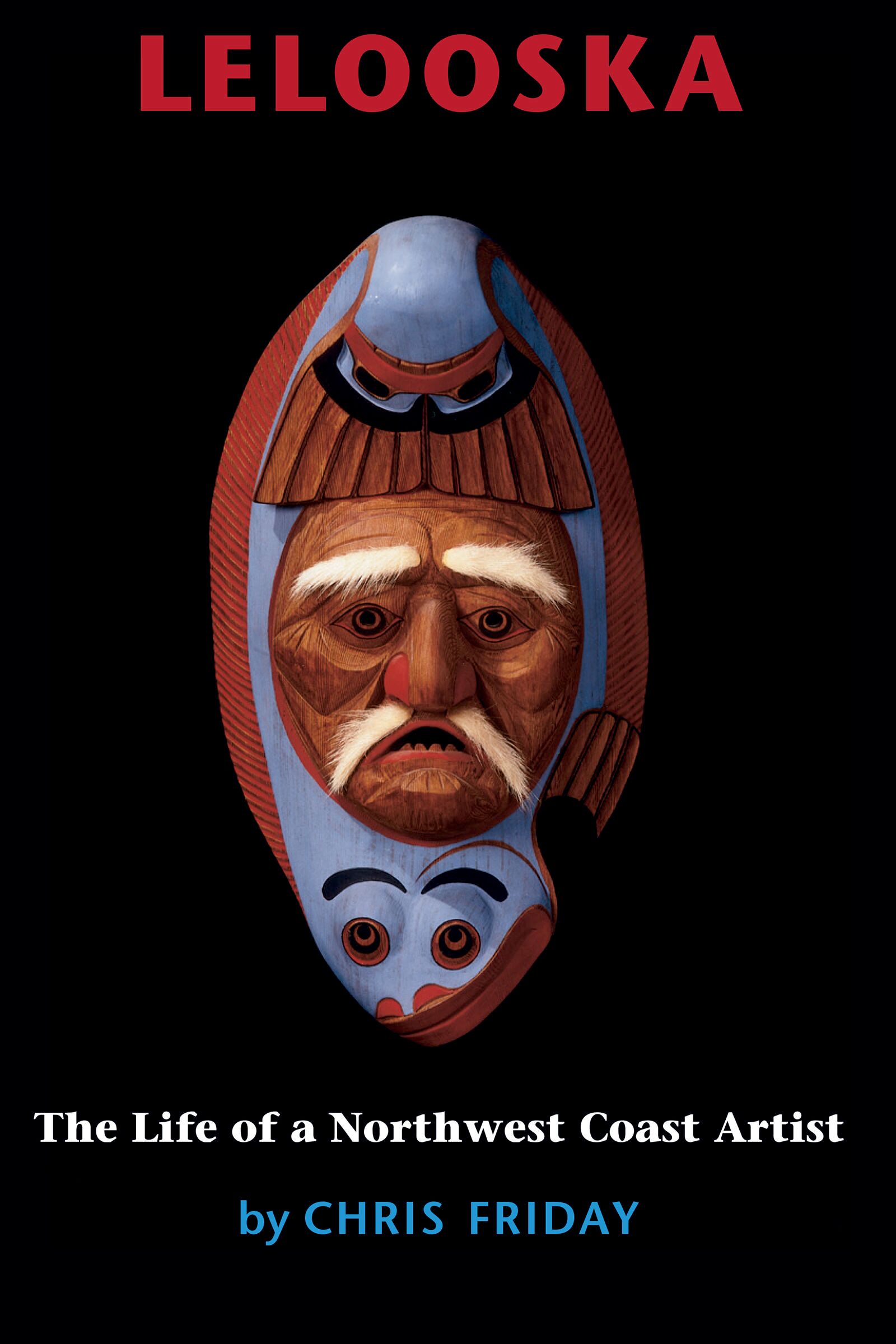
Lelooska
Don Smith - or Lelooska, as he was usually called - was a prominent Native American artist and storyteller in the Pacific Northwest. Born in 1933 of \"mixed blood\" Cherokee heritage, he was adopted as an adult by the prestigious Kwakiutl Sewid clan and had relationships with elders from a wide range of tribal backgrounds. Initially producing curio items for sale to tourists and regalia for Oregon Indians, Lelooska emerged in the late 1950s as one of a handful of artists who proved crucial to the renaissance of Northwest Coast Indian art. He also developed into a supreme performer and educator, staging shows of dances, songs, and storytelling. During the peak years, from the 1970s to the early 1990s, the family shows with Lelooska as the centerpiece attracted as many as 30,000 people annually.In this book, historian and family friend Chris Friday shares and annotates interviews that he conducted with Lelooska, between 1993 and ending shortly before the artist's death, in 1996. This is the story of a man who reached, quite literally, a million or more people in his lifetime and whose life was at once exceptional and emblematic.
eBook

Not Native American Art
Explores the making and meaning of so-called Native American artThe faking of Native American art objects has proliferated as their commercial value has increased, but even a century ago experts were warning that the faking of objects ranging from catlinite pipes to Chumash sculpture was rampant. Through a series of historical and contemporary case studies, Janet Catherine Berlo engages with troubling and sometimes confusing categories of inauthenticity.Based on decades of research as well as interviews with curators, collectors, restorers, replica makers, reenactors, and Native artists and cultural specialists, Not Native American Art examines the historical and social contexts within which people make replicas and fakes or even invent new objects that then become \"traditional.\" Berlo follows the unexpected trajectories of such objects, including Northwest Coast carvings, \"Navajo\" rugs made in Mexico, Zuni mask replicas, Lakota-style quillwork, and Mimbres bowl forgeries. With engaging anecdotes, the book offers a rich and nuanced understanding of a surprisingly wide range of practices that makers have used to produce objects that are \"not Native American art.\"
eBook
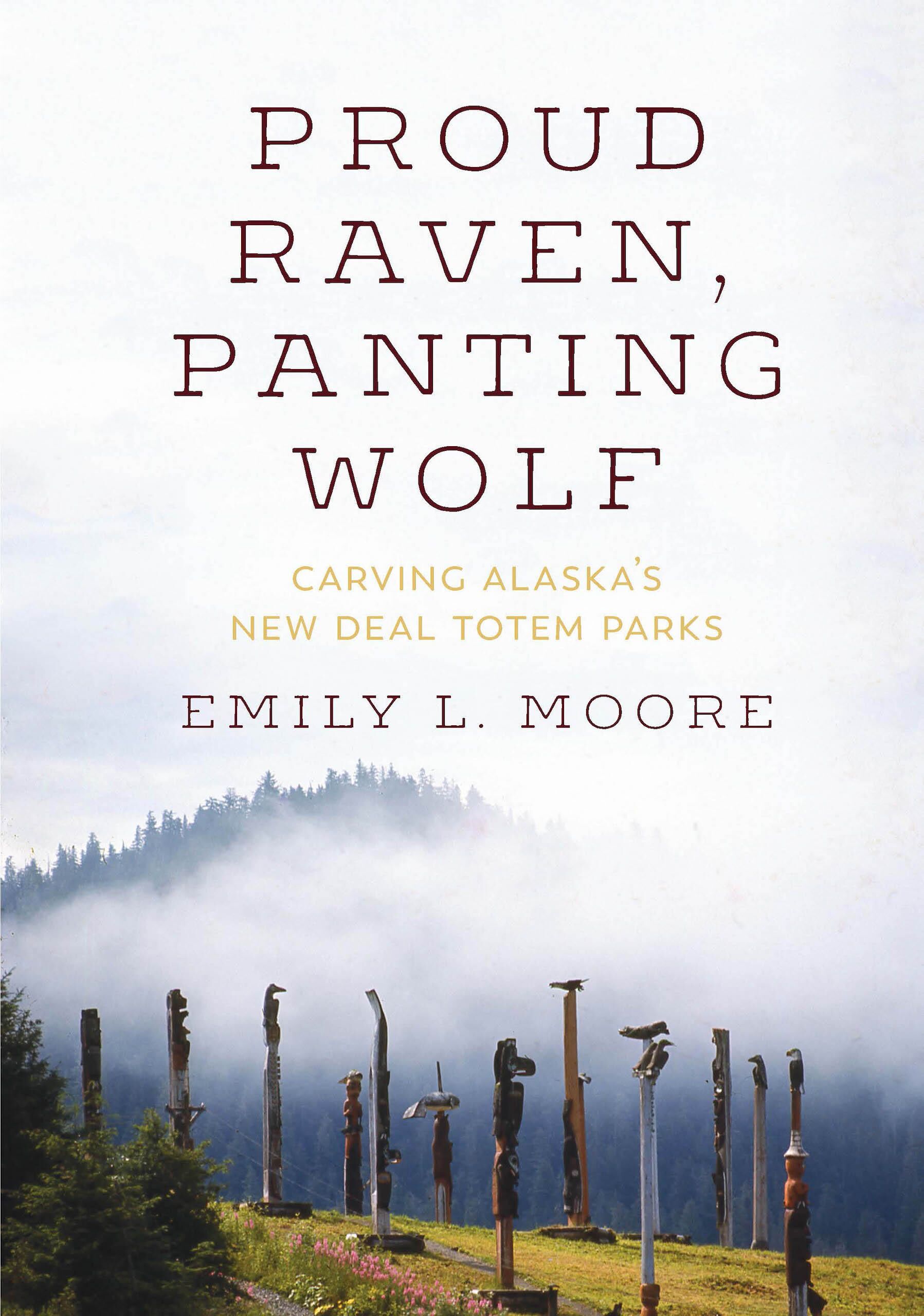
Proud Raven, Panting Wolf
Among Southeast Alaska's best-known tourist attractions are its totem parks, showcases for monumental wood sculptures by Tlingit and Haida artists. Although the art form is centuries old, the parks date back only to the waning years of the Great Depression, when the US government reversed its policy of suppressing Native practices and began to pay Tlingit and Haida communities to restore older totem poles and move them from ancestral villages into parks designed for tourists.Dramatically altering the patronage and display of historic Tlingit and Haida crests, this New Deal restoration project had two key aims: to provide economic aid to Native people during the Depression and to recast their traditional art as part of America's heritage. Less evident is why Haida and Tlingit people agreed to lend their crest monuments to tourist attractions at a time when they were battling the US Forest Service for control of their traditional lands and resources.Drawing on interviews and government records, as well as on the histories represented by the totem poles themselves, Emily Moore shows how Tlingit and Haida leaders were able to channel the New Deal promotion of Native art as national art into an assertion of their cultural and political rights. Just as they had for centuries, the poles affirmed the ancestral ties of Haida and Tlingit lineages to their lands.Supported by the Jill and Joseph McKinstry Book FundArt History Publication Initiative. For more information, visit http://arthistorypi.org/books/proud-raven-panting-wolf
eBook

Tengautuli Atkuk / The Flying Parka
A unique collaboration celebrating the importance of parkas in Yup'ik material cultureParkas are part of a living tradition in southwest Alaska. Some are ornamented with tassels, beads, and elaborate stitching; others are simpler fur or birdskin garments. Although fewer fancy parkas are sewn today, many people still wear those made for them by their mothers and other relatives.\"Parka-making\" conversations touch on every aspect of Yup'ik life-child rearing, marriage partnerships, ceremonies and masked dances, traditional oral instructions, and much more. In The Flying Parka, more than fifty Yup'ik men and women share sewing techniques and \"parka stories,\" speaking about the significance of different styles, the details of family designs, and the variety of materials used in creating these functional and culturally important garments. Based on nearly two decades of conversations with Yup'ik sewing groups and visits to the National Museum of the American Indian and the National Museum of Natural History, this volume documents the social importance of parkas, the intricacies of their construction, and their exceptional beauty. It features over 170 historical and contemporary images, full bilingual versions of six parka stories, and a glossary in Yup'ik and English.
eBook

Kuna art and Shamanism : an ethnographic approach
No detailed description available for \"Kuna Art and Shamanism\".
eBook