
Catalogue Search | MBRL


Are you sure you want to remove the book from the shelf?

{{itemTitle}}
26,227
result(s) for
"Native language and education"
Sort by:

Local languages as a human right in education : comparative cases from Africa
There seems to be general agreement that children learn better when they understand what the teacher is saying. In Africa this is not the case. Instruction is given in a foreign language, a language neither pupils nor the teachers understand well. This is the greatest educational problem there is in Africa. This is the problem this book discusses and it is therefore an important book. The recent focus on quality education becomes meaningless when teaching is given in a language pupils do not understand. Babaci-Wilhite concludes that any local curriculum that ignores local languages and contexts risks a loss of learning quality and represent a violation of children{u2019}s rights in education. The book is highly recommended. Birgit Brock-Utne, Professor of Education and Development, University of Oslo, Norway Zehlia Babaci-Wilhite{u2019}s illuminating African case studies display a mastery of the literature on policies related to not only language policies integrally related to human rights in education, but to the relationship between education and national development. The book provides a paradigm shift from focusing on the issue of schooling access to the very meaning education has for personal and collective identity and affirmation. As such, it will appeal to a wide audience of education scholars, policy makers and practitioners. Robert F. Arnove, Chancellor{u2019}s Professor Emeritus of Educational Leadership & Policy Studies, Indiana University, Bloomington, USA A very important and timely book that makes crucial contribution to critical reviews of the policies about languages of instruction and rights in education in Africa. Brilliantly crafted and presented with great clarity the author puts into perspective issues that need to be addressed to improve academic performance in Africa{u2019}s educational systems in order to attain the goal of providing education for all as well as restoring rights in education. This can be achieved through critical examination of languages of instruction and of the cultural relevance of the curricula. Definitely required reading for scholars of education and human rights in general, in Africa in particular, as well as for education policy makers. Sam Mchombo, Associate Professor of African Languages and Linguistics, University of California, Berkeley, USA This book contributes to enlighten a crucial academic as well as a democratic and philosophical issue: The right to education and the rights in education, as it is seen in the dilemmas of the right to use your local language. It offers a high-level research and the work is both cutting edge and offers new knowledge to the fields of democracy, human rights and education. The book is a unique contribution to a very important academic discussion on rights in education connecting to language of instruction in schools, politics and power, as well as it frames the questions of why education and language can be seen as a human right for sustainable development in Africa. The actuality of the book is disturbing: We need to take the debate on human rights in education for the children of the world, for their future and for their right to a cultural identity. Inga Bostad, Director of the Norwegian Centre for Human Rights, University of Oslo, Norway.
Book

Teacher Collaboration and Talk in Multilingual Classrooms
Inhalt: Introduction -- Theoretical and methodological frameworks -- Policy into practice -- Teachers in multilingual mainstream classrooms: enacting inclusion -- Teachers talking. the discourses of collaborating teachers -- The discursive positionings of teachers in collaboration -- Teacher collaboration in support and withdrawal modes -- Teaching partnerships -- Content based language learning and language based content learning. learning a secondary language in the mainstream -- Bilingual teachers and students in secondary school classrooms. using Turkish for curriculum learning -- Mediating allegations of racism. bilingual EAL teachers in action -- Conclusion.
eBook

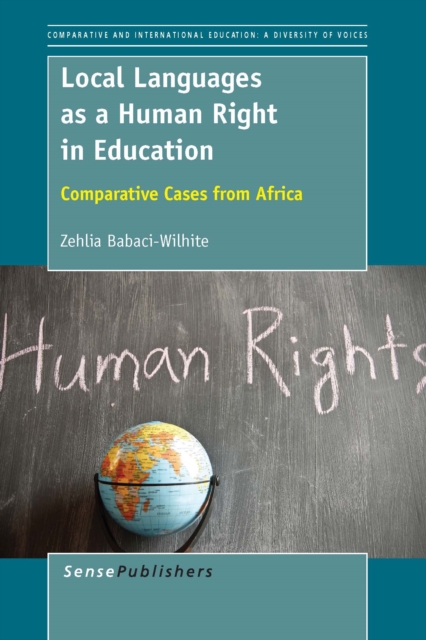
Local Languages as a Human Right in Education
\"There seems to be general agreement that children learn better when they understand what the teacher is saying.In Africa this is not the case.Instruction is given in a foreign language, a language neither pupils nor the teachers understand well.This is the greatest educational problem there is in Africa.
eBook

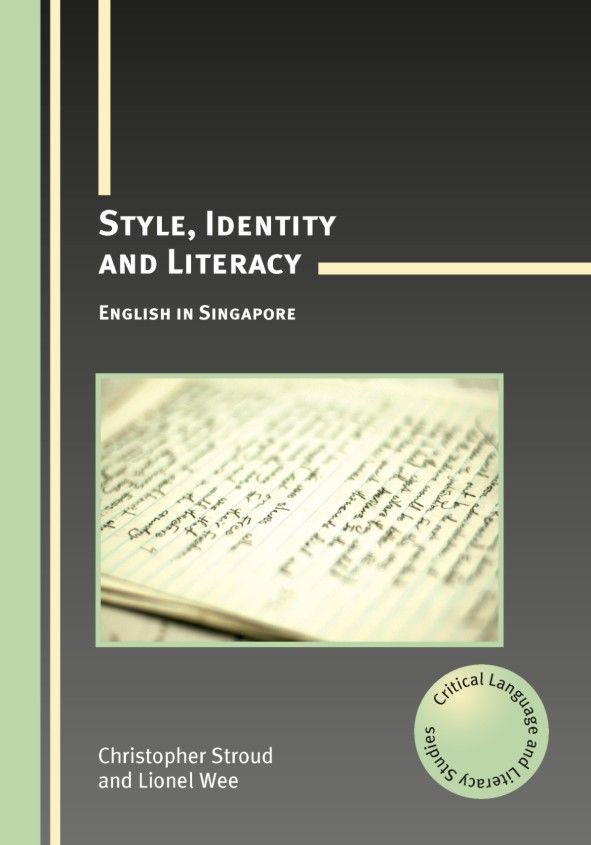
Style, Identity and Literacy
Style, Identity and Literacy: English in Singapore is a qualitative study of the literacy practices of a group of Singaporean adolescents, relating their patterns of interaction – both inside and outside the classroom – to the different levels of social organization in Singaporean society (home, peer group and school). Combining field data gathered through a series of detailed interviews with available classroom observations, the study focuses on six adolescents from different ethnic and social backgrounds as they negotiate the learning of English against the backdrop of multilingual Singapore. This book provides social explanations for the difficulties and challenges these adolescents face by drawing on current developments in sociolinguistics, literacy studies, English language teaching and language policy.
eBook

Language, development aid and human rights in education : curriculum policies in Africa and Asia
\"With a Foreword by Martin Carnoy. The debate about languages of instruction in Africa and Asia involves an analysis of both the historical thrust of national government and also development aid policies. Using case studies from Tanzania, Nigeria, South Africa, Rwanda, India, Bangladesh and Malaysia, Zehlia Babaci-Wilhite argues that the colonial legacy is perpetuated when global languages are promoted in education. The use of local languages in instruction not only offers an effective means to contextualize the curriculum and improve student comprehension, but also to achieve quality education and rights in education. Evidence that science literacy is better served through local languages and adapted to local contexts is put forward with a new vision for science learning that invests cutting edge technologies with local context. This vision is crucial to the African and Asian development on their own terms and should take its rightful place as a human right in education\"-- Provided by publisher.
Book

Languages in Africa
People in many African communities live within a series of concentric circles when it comes to language. In a small group, a speaker uses an often unwritten and endangered mother tongue that is rarely used in school. A national indigenous language-written, widespread, sometimes used in school-surrounds it. An international language like French or English, a vestige of colonialism, carries prestige, is used in higher education, and promises mobility-and yet it will not be well known by its users.The essays inLanguages in Africaexplore the layers of African multilingualism as they affect language policy and education. Through case studies ranging across the continent, the contributors consider multilingualism in the classroom as well as in domains ranging from music and film to politics and figurative language. The contributors report on the widespread devaluing and even death of indigenous languages. They also investigate how poor teacher training leads to language-related failures in education. At the same time, they demonstrate that education in a mother tongue can work, linguists can use their expertise to provoke changes in language policies, and linguistic creativity thrives in these multilingual communities.
eBook


Native Speakers and Native Users
'Native speakers' and 'native users' are terms traditionally used to differentiate between speakers who have acquired a language from birth and speakers who have learnt a second language. This book highlights the problems associated with making such a clear cut distinction. By analysing a range of literature, language uses and proficiency tests, Davies argues that there is no significant difference between native speakers and native users, and emphasises the importance of the Standard Language. Whilst individual native speakers may vary considerably, the academic construct of the native speaker is isomorphic with the Standard Language which is available to both native speakers and native users through education. In this book, Davies explores the 'native user', as a second language speaker who uses language with 'native speaker' competence. This book will be of significant interest to students and researchers working in the fields of second language acquisition and applied linguistics.
eBook