
Catalogue Search | MBRL


Are you sure you want to remove the book from the shelf?

{{itemTitle}}
94,623
result(s) for
"Natural history"
Sort by:


Sociable Knowledge
Working with the technologies of pen and paper, scissors and glue, naturalists in early modern England, Scotland, and Wales wrote, revised, and recombined their words, sometimes over a period of many years, before fixing them in printed form. They built up their stocks of papers by sharing these materials through postal and less formal carrier services. They exchanged letters, loose notes, drawings and plans, commonplace books, as well as lengthy treatises, ever-expanding repositories for new knowledge about nature and history as it accumulated through reading, observation, correspondence, and conversation. These textual collections grew alongside cabinets of natural specimens, antiquarian objects, and other curiosities-insects pinned in boxes, leaves and flowers pressed in books, rocks and fossils, ancient coins and amulets, and drafts of stone monuments and inscriptions. The goal of all this collecting and sharing, Elizabeth Yale claims, was to create channels through which naturalists and antiquaries could pool their fragmented knowledge of the hyperlocal and curious into an understanding and representation of Britain as a unified historical and geographical space.
Sociable Knowledgepays careful attention to the concrete and the particular: the manuscript almost lost off the back of the mail carrier's cart, the proper ways to package live plants for transport, the kin relationships through which research questionnaires were distributed. The book shows how naturalists used print instruments to garner financing and content from correspondents and how they relied upon research travel-going out into the field-to make and refresh social connections. By moving beyond an easy distinction between print and scribal cultures, Yale reconstructs not just the collaborations of seventeenth-century practitioners who were dispersed across city and country, but also the ways in which the totality of their exchange practices structured early modern scientific knowledge.
eBook

Voyages of discovery
Recalls three centuries of natural history exploration, and includes maps and rare drawings, as well as the stories of Captain Cook, Charles Darwin, and other explorers.
Book
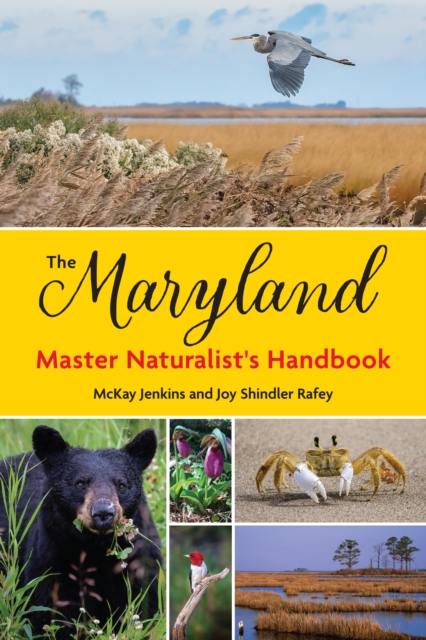
The Maryland Master Naturalist's Handbook
An essential guide to Maryland's ecosystems, history, and conservation. Immerse yourself in the wonders of Maryland's diverse ecosystems with The Maryland Master Naturalist's Handbook. Edited by seasoned environmentalists McKay Jenkins and Joy Shindler Rafey, this essential guide explores the intricate tapestry of Maryland's natural world, from the geological foundations of the Susquehanna River to the vibrant ecosystems of the Chesapeake Bay. This book illustrates the deep connections among the state's history, its people, and the land they have long inhabited. It journeys through forests, rivers, and mountains while uncovering the complex interplay of flora, fauna, and human communities. Learn from experts in fields ranging across urban ecology, entomology, and climate science, who share their insights and passion for environmental stewardship. Essays cover essential topics such as: • Maryland land use history • Chesapeake Bay and urban ecology • Environmental justice • Geology, soils, and botany • Invasive species • Birds, insects, fish, amphibians, reptiles, and mammals • Citizen science • Climate change in Maryland This volume serves as the primary text for the Maryland Master Naturalist training course and encourages a broader audience to engage in ecological restoration and conservation efforts. Whether you're a budding naturalist or an experienced environmentalist, this book will deepen your understanding of Maryland's ecological systems and empower you to contribute to the preservation of its natural beauty.
eBook


The secret lives of Drosophila flies
Flies of the genus Drosophila, and particularly those of the species Drosophila melanogaster, are best known as laboratory organisms. As with all model organisms, they were domesticated for empirical studies, but they also continue to exist as wild populations. Decades of research on these flies in the laboratory have produced astounding and important insights into basic biological processes, but we have only scratched the surface of what they have to offer as research organisms. An outstanding challenge now is to build on this knowledge and explore how natural history has shaped D. melanogaster in order to advance our understanding of biology more generally.
Journal Article


The Climate of Rebellion in the Early Modern Ottoman Empire
The Climate of Rebellion in the Early Modern Ottoman Empire explores the serious and far-reaching impacts of Little Ice Age climate fluctuations in Ottoman lands. This study demonstrates how imperial systems of provisioning and settlement that defined Ottoman power in the 1500s came unraveled in the face of ecological pressures and extreme cold and drought, leading to the outbreak of the destructive Celali Rebellion (1595–1610). This rebellion marked a turning point in Ottoman fortunes, as a combination of ongoing Little Ice Age climate events, nomad incursions and rural disorder postponed Ottoman recovery over the following century, with enduring impacts on the region's population, land use and economy.
eBook


Sacred Habitat
Known as a time of revolutions in science, the early modern era
in Europe was characterized by the emergence of new disciplines and
ways of thinking. Taking this conceit a step further, Sacred
Habitat shows how Spanish friars and missionaries used new
scholarly approaches, methods, and empirical data from their
studies of ecology to promote Catholic goals and incorporate
American nature into centuries-old church traditions.
Ran Segev examines the interrelated connections between
Catholicism and geography, cosmography, and natural history-fields
of study that gained particular prominence during the sixteenth and
seventeenth centuries-and shows how these new bodies of knowledge
provided innovative ways of conceptualizing and transmitting
religious ideologies in the post-Reformation era. Weaving together
historical narratives on Spain and its colonies with scholarship on
the Catholic Reformation, Atlantic science, and environmental
history, Segev contends that knowledge about American nature
allowed pious Catholics to reconnect with their religious
traditions and enabled them to apply their beliefs to a foreign
land.
Sacred Habitat presents a fresh perspective on Catholic
renewal. Scholars of religion and historians of Spain, colonial
Latin America, and early modern science will welcome this
provocative intervention in the history of empire, science,
knowledge, and early modern Catholicism.
eBook