
Catalogue Search | MBRL


Are you sure you want to remove the book from the shelf?

{{itemTitle}}
3,240
result(s) for
"Natural resources Data processing."
Sort by:


Paradata and Transparency in Virtual Heritage
Computer-Generated Images (CGIs) are widely used and accepted in the world of entertainment but the use of the very same visualization techniques in academic research in the Arts and Humanities remains controversial. The techniques and conceptual perspectives on heritage visualization are a subject of an ongoing interdisciplinary debate. By demonstrating scholarly excellence and best technical practice in this area, this volume is concerned with the challenge of providing intellectual transparency and accountability in visualization-based historical research. Addressing a range of cognitive and technological challenges, the authors make a strong case for a wider recognition of three-dimensional visualization as a constructive, intellectual process and valid methodology for historical research and its communication.
eBook
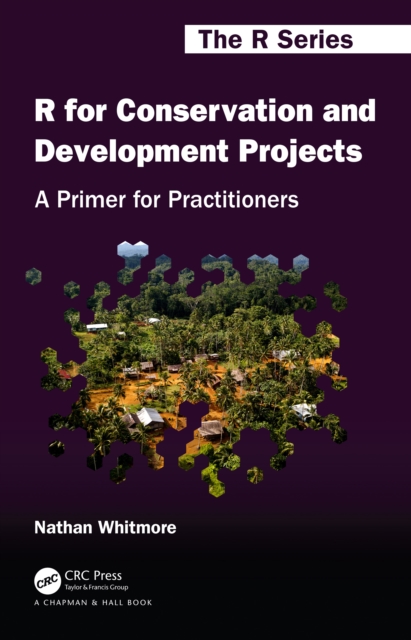
R for Conservation and Development Projects
This book is bridging the gap for organisations and individuals, in an English as a second language setting, who need to learn and use R in a part-time professional context. It gives people with a non-technical background a set of skills to understand the usefulness of graphing, mapping, and modelling in R, using relatable examples throughout. It also provides background on inference and data integration in project management to assist the reader in understanding the logic and utility behind evidence-based decision making. The book explains the major functions in R in clear terms, making it accessible to everyone, with the aim to demystify R and give people the confidence to use it.
Key Features:
Foundation sections on inference and evidence, and data integration in project management
Exploration of R usage through a narrative examining a generic integrated conservation and development project
A final section on R for reproducible workflow
Accompanied by an R package
eBook

Remote Sensing and GIS in Natural Resource Management: Comparing Tools and Emphasizing the Importance of In-Situ Data
Remote sensing (RS) and Geographic Information Systems (GISs) provide significant opportunities for monitoring and managing natural resources across various temporal, spectral, and spatial resolutions. There is a critical need for natural resource managers to understand the expanding capabilities of image sources, analysis techniques, and in situ validation methods. This article reviews key image analysis tools in natural resource management, highlighting their unique strengths across diverse applications such as agriculture, forestry, water resources, soil management, and natural hazard monitoring. Google Earth Engine (GEE), a cloud-based platform introduced in 2010, stands out for its vast geospatial data catalog and scalability, making it ideal for global-scale analysis and algorithm development. ENVI, known for advanced multi- and hyperspectral image processing, excels in vegetation monitoring, environmental analysis, and feature extraction. ERDAS IMAGINE specializes in radar data analysis and LiDAR processing, offering robust classification and terrain analysis capabilities. Global Mapper is recognized for its versatility, supporting over 300 data formats and excelling in 3D visualization and point cloud processing, especially in UAV applications. eCognition leverages object-based image analysis (OBIA) to enhance classification accuracy by grouping pixels into meaningful objects, making it effective in environmental monitoring and urban planning. Lastly, QGIS integrates these remote sensing tools with powerful spatial analysis functions, supporting decision-making in sustainable resource management. Together, these tools when paired with in situ data provide comprehensive solutions for managing and analyzing natural resources across scales.
Journal Article

An inventory of biodiversity data sources for conservation monitoring
Many conservation managers, policy makers, businesses and local communities cannot access the biodiversity data they need for informed decision-making on natural resource management. A handful of databases are used to monitor indicators against global biodiversity goals but there is no openly available consolidated list of global data sets to help managers, especially those in high-biodiversity countries. We therefore conducted an inventory of global databases of potential use in monitoring biodiversity states, pressures and conservation responses at multiple levels. We uncovered 145 global data sources, as well as a selection of global data reports, links to which we will make available on an open-access website. We describe trends in data availability and actions needed to improve data sharing. If the conservation and science community made a greater effort to publicise data sources, and make the data openly and freely available for the people who most need it, we might be able to mainstream biodiversity data into decision-making and help stop biodiversity loss.
Journal Article

Gas production in the Barnett Shale obeys a simple scaling theory
Natural gas from tight shale formations will provide the United States with a major source of energy over the next several decades. Estimates of gas production from these formations have mainly relied on formulas designed for wells with a different geometry. We consider the simplest model of gas production consistent with the basic physics and geometry of the extraction process. In principle, solutions of the model depend upon many parameters, but in practice and within a given gas field, all but two can be fixed at typical values, leading to a nonlinear diffusion problem we solve exactly with a scaling curve. The scaling curve production rate declines as 1 over the square root of time early on, and it later declines exponentially. This simple model provides a surprisingly accurate description of gas extraction from 8,294 wells in the United States’ oldest shale play, the Barnett Shale. There is good agreement with the scaling theory for 2,057 horizontal wells in which production started to decline exponentially in less than 10 y. The remaining 6,237 horizontal wells in our analysis are too young for us to predict when exponential decline will set in, but the model can nevertheless be used to establish lower and upper bounds on well lifetime. Finally, we obtain upper and lower bounds on the gas that will be produced by the wells in our sample, individually and in total. The estimated ultimate recovery from our sample of 8,294 wells is between 10 and 20 trillion standard cubic feet.
Journal Article

Perspectives in machine learning for wildlife conservation
Inexpensive and accessible sensors are accelerating data acquisition in animal ecology. These technologies hold great potential for large-scale ecological understanding, but are limited by current processing approaches which inefficiently distill data into relevant information. We argue that animal ecologists can capitalize on large datasets generated by modern sensors by combining machine learning approaches with domain knowledge. Incorporating machine learning into ecological workflows could improve inputs for ecological models and lead to integrated hybrid modeling tools. This approach will require close interdisciplinary collaboration to ensure the quality of novel approaches and train a new generation of data scientists in ecology and conservation.
Animal ecologists are increasingly limited by constraints in data processing. Here, Tuia and colleagues discuss how collaboration between ecologists and data scientists can harness machine learning to capitalize on the data generated from technological advances and lead to novel modeling approaches.
Journal Article

The state of the art and taxonomy of big data analytics: view from new big data framework
Big data has become a significant research area due to the birth of enormous data generated from various sources like social media, internet of things and multimedia applications. Big data has played critical role in many decision makings and forecasting domains such as recommendation systems, business analysis, healthcare, web display advertising, clinicians, transportation, fraud detection and tourism marketing. The rapid development of various big data tools such as Hadoop, Storm, Spark, Flink, Kafka and Pig in research and industrial communities has allowed the huge number of data to be distributed, communicated and processed. Big data applications use big data analytics techniques to efficiently analyze large amounts of data. However, choosing the suitable big data tools based on batch and stream data processing and analytics techniques for development a big data system are difficult due to the challenges in processing and applying big data. Practitioners and researchers who are developing big data systems have inadequate information about the current technology and requirement concerning the big data platform. Hence, the strengths and weaknesses of big data technologies and effective solutions for Big Data challenges are needed to be discussed. Hence, due to that, this paper presents a review of the literature that analyzes the use of big data tools and big data analytics techniques in areas like health and medical care, social networking and internet, government and public sector, natural resource management, economic and business sector. The goals of this paper are to (1) understand the trend of big data-related research and current frames of big data technologies; (2) identify trends in the use or research of big data tools based on batch and stream processing and big data analytics techniques; (3) assist and provide new researchers and practitioners to place new research activity in this domain appropriately. The findings of this study will provide insights and knowledge on the existing big data platforms and their application domains, the advantages and disadvantages of big data tools, big data analytics techniques and their use, and new research opportunities in future development of big data systems.
Journal Article
Examination of the spatial-temporal variations in terrestrial water reserves and green efficiency of water resources in China’s three northeastern provinces
Using technological advancements and analyzing urban water consumption patterns, this article employs GRACE satellite data and statistical records to conduct a comprehensive assessment and evaluation of water resource utilization efficiency across 34 prefecture-level cities in China’s three northeastern provinces—Liaoning, Jilin, and Heilongjiang—over the period spanning from 2003 to 2020. By utilizing the sophisticated Super-SBM model, the study delves into the spatial and temporal variations in terrestrial water reserves and green water usage efficiency. Additionally, the Tobit model is introduced to investigate the influencing factors of water resource utilization efficiency. The primary findings of the study are outlined below: The spatial distribution of terrestrial water resources in the three northeastern provinces reveals a clear north-south gradient, with abundant resources in the northern regions and scarcity in the southern parts. Seasonal fluctuations, albeit present, are relatively modest, with higher water storage levels typically observed in spring and summer, and lower levels in autumn and winter. Regarding the static water use efficiency among the 34 prefecture-level cities, Panjin stands out with the highest efficiency, whereas Qiqihar ranks lowest. Notably, 91.18% of the cities exhibit medium to high efficiency levels, reflecting commendable performance in water utilization throughout the region. Almost half of the cities have experienced an improvement in their water use efficiency compared to the previous year, signaling a gradual enhancement in water utilization capabilities. The average total factor productivity across the three northeastern provinces stands at 1.012, representing an annual growth rate of 1.2%. The efficiency of water resource utilization in these provinces is intricately linked to the technological progress index. To enhance water resource utilization efficiency, it is imperative to introduce advanced technologies, increase research investments, and foster technological advancements.
Journal Article
The First Wetland Inventory Map of Newfoundland at a Spatial Resolution of 10 m Using Sentinel-1 and Sentinel-2 Data on the Google Earth Engine Cloud Computing Platform
Wetlands are one of the most important ecosystems that provide a desirable habitat for a great variety of flora and fauna. Wetland mapping and modeling using Earth Observation (EO) data are essential for natural resource management at both regional and national levels. However, accurate wetland mapping is challenging, especially on a large scale, given their heterogeneous and fragmented landscape, as well as the spectral similarity of differing wetland classes. Currently, precise, consistent, and comprehensive wetland inventories on a national- or provincial-scale are lacking globally, with most studies focused on the generation of local-scale maps from limited remote sensing data. Leveraging the Google Earth Engine (GEE) computational power and the availability of high spatial resolution remote sensing data collected by Copernicus Sentinels, this study introduces the first detailed, provincial-scale wetland inventory map of one of the richest Canadian provinces in terms of wetland extent. In particular, multi-year summer Synthetic Aperture Radar (SAR) Sentinel-1 and optical Sentinel-2 data composites were used to identify the spatial distribution of five wetland and three non-wetland classes on the Island of Newfoundland, covering an approximate area of 106,000 km2. The classification results were evaluated using both pixel-based and object-based random forest (RF) classifications implemented on the GEE platform. The results revealed the superiority of the object-based approach relative to the pixel-based classification for wetland mapping. Although the classification using multi-year optical data was more accurate compared to that of SAR, the inclusion of both types of data significantly improved the classification accuracies of wetland classes. In particular, an overall accuracy of 88.37% and a Kappa coefficient of 0.85 were achieved with the multi-year summer SAR/optical composite using an object-based RF classification, wherein all wetland and non-wetland classes were correctly identified with accuracies beyond 70% and 90%, respectively. The results suggest a paradigm-shift from standard static products and approaches toward generating more dynamic, on-demand, large-scale wetland coverage maps through advanced cloud computing resources that simplify access to and processing of the “Geo Big Data.” In addition, the resulting ever-demanding inventory map of Newfoundland is of great interest to and can be used by many stakeholders, including federal and provincial governments, municipalities, NGOs, and environmental consultants to name a few.
Journal Article