
Catalogue Search | MBRL


Are you sure you want to remove the book from the shelf?

{{itemTitle}}
15,703
result(s) for
"Natural resources Developing countries."
Sort by:


Cultivating peace : conflict and collaboration in natural resource management
While the dimensions, levels, and intensity of conflict can vary greatly, so too can the opportunities for conflict resolution. Cultivating Peace presents original case studies from Africa, Asia, and Latin America, interspersed with essays on the cultural dimensions of conflict, the meaning of stakeholder analysis, the impact of development interventions on peace and conflict, and the policy dimensions of conflict management. The case studies present important developing-world experience on moving from conflict to collaborative modes of management. The accompanying essays draw on the case studies, grounding theory in hard-won experience. This cross-fertilization of practical experience with conceptual insight creates a unique dialogue on lessons learned and identifies strategic gaps in our understanding of this complex and important issue.
eBook

Plundered nations? : successes and failures in natural resource extraction
\"The study of natural resource extraction in resource-rich countries often shows that plunder, rather than prosperity, has become the norm. Management of natural resources differs widely in every state; a close examination of the decision-making chains in various states highlights the key principles that need to be followed to avoid distortion and dependence. This book consists of eight case studies investigating the political economy of the decision chain, revealing where various states have met with success, or failed disastrously. This original research provides a unique insight into how different countries have handled their resource extraction. This book is essential reading for students, researchers and policy makers working across development economics and natural resource economics.\"--Provided by publisher.
Book

Rents to riches? : the political economy of natural resource-led development
This volume emphasizes instead the notion of 'good fit,' taking the position that welfare-promoting policies, institutions, and governance must be tailored, at least in part, to a country's specific context. In this vein, the volume presents an analytical framework for assessing a country's political economy and institutional environment as it relates to natural resource management and, on that basis, it offers a substantial set of targeted prescriptions across the natural resource value chain that are technically sound and compatible with the identified underlying incentives. In other words, the objective of this book is to help development practitioners unravel the political economy dynamics surrounding natural resource management in order to complement their technically grounded engagement. To this end, the analytical approach has been two-pronged. First, case studies were conducted on the political economy of the hydrocarbon and mineral value chains in 13 countries in the Africa, East Asia and Pacific, and Latin America and the Caribbean regions. Second, in light of this empirical material, the book highlights the current frontier of applied political economy analysis on resource dependence. This volume synthesizes the empirical and the theoretical with an emphasis on illuminating the implications for operational engagement in resource-dependent settings.
eBook


Environment, Scarcity, and Violence
The Earth's human population is expected to pass eight billion by the year 2025, while rapid growth in the global economy will spur ever increasing demands for natural resources. The world will consequently face growing scarcities of such vital renewable resources as cropland, fresh water, and forests. Thomas Homer-Dixon argues in this sobering book that these environmental scarcities will have profound social consequences--contributing to insurrections, ethnic clashes, urban unrest, and other forms of civil violence, especially in the developing world.
Homer-Dixon synthesizes work from a wide range of international research projects to develop a detailed model of the sources of environmental scarcity. He refers to water shortages in China, population growth in sub-Saharan Africa, and land distribution in Mexico, for example, to show that scarcities stem from the degradation and depletion of renewable resources, the increased demand for these resources, and/or their unequal distribution. He shows that these scarcities can lead to deepened poverty, large-scale migrations, sharpened social cleavages, and weakened institutions. And he describes the kinds of violence that can result from these social effects, arguing that conflicts in Chiapas, Mexico and ongoing turmoil in many African and Asian countries, for instance, are already partly a consequence of scarcity.
Homer-Dixon is careful to point out that the effects of environmental scarcity are indirect and act in combination with other social, political, and economic stresses. He also acknowledges that human ingenuity can reduce the likelihood of conflict, particularly in countries with efficient markets, capable states, and an educated populace. But he argues that the violent consequences of scarcity should not be underestimated--especially when about half the world's population depends directly on local renewables for their day-to-day well-being. In the next decades, he writes, growing scarcities will affect billions of people with unprecedented severity and at an unparalleled scale and pace.
Clearly written and forcefully argued, this book will become the standard work on the complex relationship between environmental scarcities and human violence.
eBook

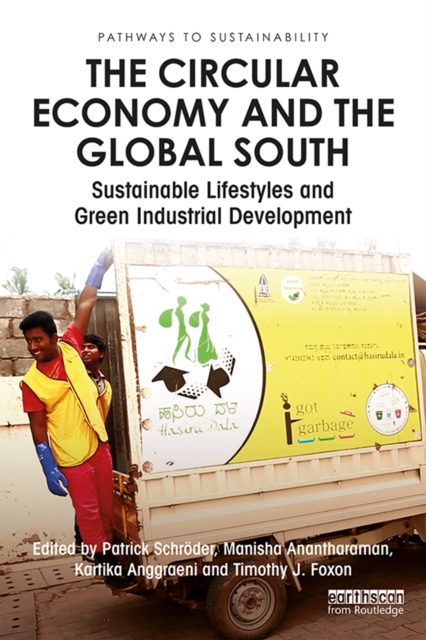
The Circular Economy and the Global South
The circular economy is a policy approach and business strategy that aims to improve resource productivity, promote sustainable consumption and production, and reduce environmental impacts. This book examines the relevance of the circular economy in the context of developing countries, something which to date is little understood.
This volume highlights examples of circular economy practices in developing country contexts in relation to small and medium enterprises (SMEs), informal sector recycling and national policy approaches. It examines a broad range of case studies, including Argentina, Brazil, China, Colombia, India, Indonesia, Kenya, South Africa and Thailand, and illustrates how the circular economy can be used as a new lens and possible solution to cross-cutting development issues of pollution and waste, employment, health, urbanisation and green industrialisation. In addition to more technical and policy-oriented contributions, the book also critically discusses existing narratives and pathways of the circular economy in the Global North and South, and how these differ or possibly even conflict with each other. Finally, the book critically examines under what conditions the circular economy will be able to reduce global inequalities and promote human development in the context of the Sustainable Development Goals.
Presenting a unique social sciences perspective on the circular economy discourse, this book is relevant to students and scholars studying sustainability in economics, business studies, environmental politics and development studies.
eBook


Rural planning in developing countries
This book provides an international perspective on rural planning, focused on developing countries. It examines conventional development planning and innovative local planning approaches, drawing together lessons from recent experience of rural planning and land use. The authors examine past and current practice and ways that land use planning and management of natural resources can underpin sustainable local livelihoods. They draw on case studies from Africa, Asia and Latin America to present findings relevant throughout the developing world.
eBook