
Catalogue Search | MBRL


Are you sure you want to remove the book from the shelf?

{{itemTitle}}
39
result(s) for
"Naturalists England Biography."
Sort by:


Buckets from an English Sea
Buckets from an English Sea offers a new view of what inspired Darwin and provoked his work. Stunning events early in the voyage of the Beagle challenged his deeply held conviction that people are innately good. This study of 1832 highlights the resources available to the young Darwin as he worked to secure humanity's innate goodness, most especially matters of historical criticism.
eBook

Who was Charles Darwin?
An introduction to the life and accomplishments of the nineteenth-century British naturalist Charles Darwin.
BOOK
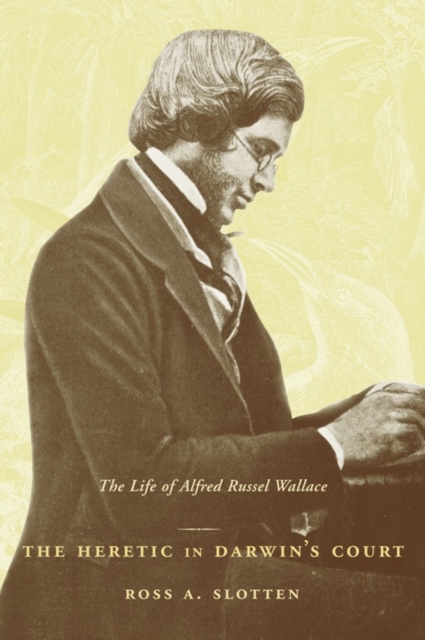
The Heretic in Darwin's Court
During their lifetimes, Alfred Russel Wallace and Charles Darwin shared credit and fame for the independent and near-simultaneous discovery of natural selection. Together, the two men spearheaded one of the greatest intellectual revolutions in modern history, and their rivalry, usually amicable but occasionally acrimonious, forged modern evolutionary theory. Yet today, few people today know much about Wallace. The Heretic in Darwin's Court explores the controversial life and scientific contributions of Alfred Russel Wallace—Victorian traveler, scientist, spiritualist, and co-discoverer with Charles Darwin of natural selection. After examining his early years, the biography turns to Wallace’s twelve years of often harrowing travels in the western and eastern tropics, which place him in the pantheon of the greatest explorer-naturalists of the nineteenth century. Tracing step-by-step his discovery of natural selection—a piece of scientific detective work as revolutionary in its implications as the discovery of the structure of DNA—the book then follows the remaining fifty years of Wallace’s eccentric and entertaining life. In addition to his divergence from Darwin on two fundamental issues—sexual selection and the origin of the human mind—he pursued topics that most scientific figures of his day conspicuously avoided, including spiritualism, phrenology, mesmerism, environmentalism, and life on Mars. Although there may be disagreement about his conclusions, Wallace’s intellectual investigations into the origins of life, consciousness, and the universe itself remain some of the most inspired scientific accomplishments in history. This authoritative biography casts new light on the life and work of Alfred Russel Wallace and the importance of his twenty-five-year relationship with Charles Darwin.
eBook

Darwin : portrait of a genius
Darwin{u2019}s revolutionary career is the perfect vehicle for historian Paul Johnson. Marked by the insightful observation, spectacular wit, and highly readable prose for which Johnson is so well regarded, Darwin brings the gentleman-scientist and his times brilliantly into focus. From Darwin{u2019}s birth into great fortune to his voyage aboard the Beagle, to the long-delayed publication of his masterpiece, Johnson delves into what made this Victorian gentleman into a visionary scientist{u2014}and into the tragic flaws that later led Darwin to support the burgeoning eugenics movement.
Book

G. Evelyn Hutchinson and the Invention of Modern Ecology
Stephen J. Gould declared G. Evelyn Hutchinson the most important ecologist of the twentieth century. E. O. Wilson pronounced him \"one of the few scientists who could unabashedly be called a genius.\" In this fascinating book, Nancy G. Slack presents for the first time the full life story of this brilliant scientist who was also a master teacher, a polymath, and a delightful friend and correspondent.
Based on full access to Hutchinson's archives and extensive interviews with him and many who knew him, the author evaluates his important contributions to modern ecology and his profound influence as a mentor. Filled with information available nowhere else, the book draws a vibrant portrait of an original scientific thinker who was also a man of remarkable personal appeal.
eBook
Thomas Huxley
Dubbed 'Darwin's Bulldog' for his combative role in the Victorian controversies over evolutionary theory, Thomas Huxley has been widely regarded as the epitome of the professional scientist who emerged in the nineteenth century from the restrictions of ecclesiastical authority and aristocratic patronage. Yet from the 1850s until his death in 1895, Huxley always defined himself as a 'man of science', a moral and religious figure, not a scientist. Exploring his relationships with his wife, fellow naturalists, clergymen and men of letters, White presents a new analysis of the authority of science, literature, and religion during the Victorian period, showing how these different practices were woven into a fabric of high culture, and integrated into institutions of print, education and research. He provides a substantially different view of Huxley's role in the evolution debates, and of his relations with his scientific contemporaries, especially Richard Owen and Charles Darwin.
eBook


Charles Darwin and the evolution revolution
On the Origin of Species, published in 1858, transformed our view of the world and made Charles Darwin one of the most controversial figures in science. This biography begins much earlier with his long search for a profession, his five-year voyage around the world on the Beagle, and the decades-long intellectual journey he made in his study and garden.
eBook