
Catalogue Search | MBRL


Are you sure you want to remove the book from the shelf?

{{itemTitle}}
404
result(s) for
"Naturalists History."
Sort by:

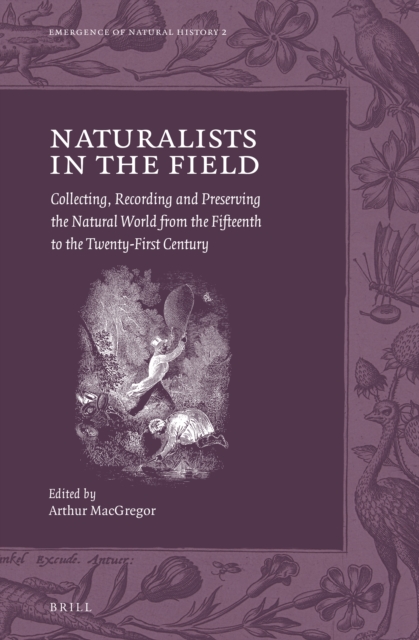
Naturalists in the Field
Through the personal narratives those who have struggled over the past five centuries and more to comprehend and to document the natural world, the progress of natural history from speculative pursuit to systematic science is here explored, contextualized and illustrated.
eBook


Deep things out of darkness
Natural history, the deliberate observation of the environment, is arguably the oldest science. From purely practical beginnings as a way of finding food and shelter, natural history evolved into the holistic, systematic study of plants, animals, and the landscape. Deep Things out of Darkness chronicles the rise, decline, and ultimate revival of natural history within the realms of science and public discourse. Ecologist John G. T. Anderson focuses his account on the lives and contributions of an eclectic group of men and women, from John Ray, John Muir, Charles Darwin, and Rachel Carson, who endured remarkable hardships and privations in order to learn more about their surroundings. Written in an engaging narrative style and with an extensive bibliography of primary sources, the book charts the journey of the naturalist's endeavor from prehistory to the present, underscoring the need for natural history in an era of dynamic environmental change.
eBook


Good Observers of Nature
In \"Good Observers of Nature\" Tina Gianquitto examines nineteenth-century American women's intellectual and aesthetic experiences of nature and investigates the linguistic, perceptual, and scientific systems that were available to women to describe those experiences. Many women writers of this period used the natural world as a platform for discussing issues of domesticity, education, and the nation. To what extent, asks Gianquitto, did these writers challenge the prevalent sentimental narrative modes (like those used in the popular flower language books) and use scientific terminology to describe the world around them? The book maps the intersections of the main historical and narrative trajectories that inform the answer to this question: the changing literary representations of the natural world in texts produced by women from the 1820s to the 1880s and the developments in science from the Enlightenment to the advent of evolutionary biology. Though Gianquitto considers a range of women's nature writing (botanical manuals, plant catalogs, travel narratives, seasonal journals, scientific essays), she focuses on four writers and their most influential works: Almira Phelps (Familiar Lectures on Botany, 1829), Margaret Fuller (Summer on the Lakes, in 1843), Susan Fenimore Cooper (Rural Hours, 1850), and Mary Treat (Home Studies in Nature, 1885). From these writings emerges a set of common concerns about the interaction of reason and emotion in the study of nature, the best vocabularies for representing objects in nature (local, scientific, or moral), and the competing systems for ordering the natural world (theological, taxonomic, or aesthetic). This is an illuminating study about the culturally assumed relationship between women, morality, and science.
eBook

A butterfly journey : Maria Sibylla Merian, artist and scientist
The amazing story of the life and work of the renowned botanical artist Maria Sibylla Merian (1647-1717) is told alongside her beautiful illustrations of butterflies in this elegant book. A woman ahead of her time, she was an intrepid explorer, naturalist, scholar, as well as a magnificent artist. This book tells Merian's incredible life story alongside colorful reproductions of her engravings and watercolors of the butterflies she encountered during her lifetime in Germany and the Netherlands, and her seminal trip to the Dutch colony of Surinam. The book recounts her monumental expedition, her work as an advocate for the slave laborers of Suriname, and her important studies of the anatomy and life cycle of the butterfly. Author Boris Friedewald employs Merian's favorite insect as a metaphor for the artist's own pioneering evolution from budding entomologist to educator, activist, and artist.-- Source other than Library of Congress.
Book
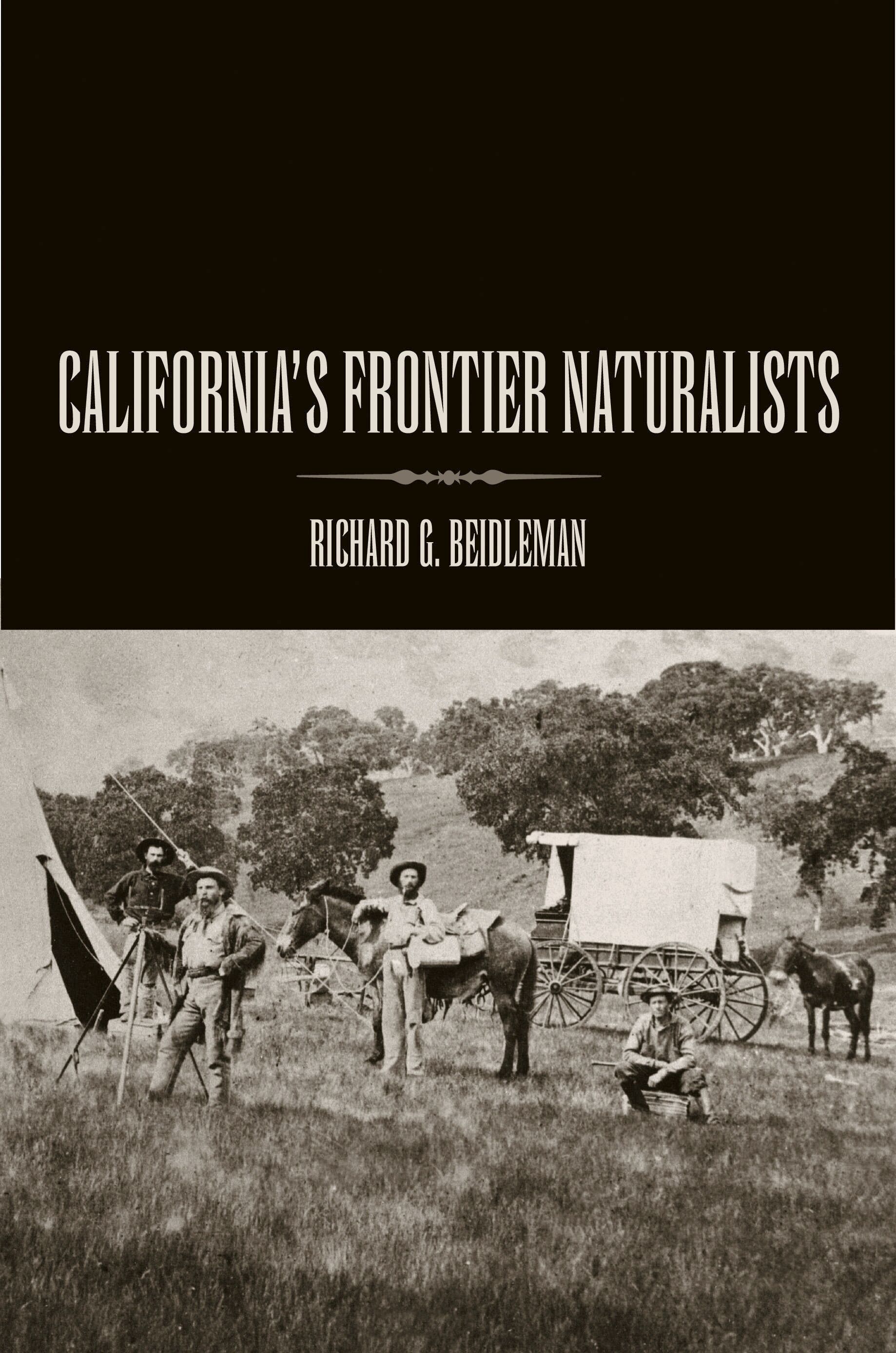
California's frontier naturalists
This book chronicles the fascinating story of the enthusiastic, stalwart, and talented naturalists who were drawn to California’s spectacular natural bounty over the decades from 1786, when the La Pérouse Expedition arrived at Monterey, to the Death Valley expedition in 1890–91, the proclaimed “end” of the American frontier. Richard G. Beidleman’s engaging and marvelously detailed narrative describes these botanists, zoologists, geologists, paleontologists, astronomers, and ethnologists as they camped under stars and faced blizzards, made discoveries and amassed collections, kept journals and lost valuables, sketched flowers and landscapes, recorded comets and native languages. He weaves together the stories of their lives, their demanding fieldwork, their contributions to science, and their exciting adventures against the backdrop of California and world history.
eBook

Out of school and into nature : the Anna Comstock story
\"A picture book biography about naturalist and artist Anna Comstock (1854-1930), who defied social conventions and pursued the study of science. She pioneered a movement to encourage schools to conduct science and nature classes for children outdoors, thereby increasing students' interest in nature\" -- Provided by publisher.
Book

Refiguring the Map of Sorrow
Recent decades have witnessed an explosion of interest in both autobiography and environmental literature. In Refiguring the Map of Sorrow, Mark Allister brings these two genres together by examining a distinct form of grief narrative, in which the writers deal with mourning by standing explicitly both outside and inside the text: outside in writing about the natural world; inside in making that exposition part of the grieving process.
Building on Peter Fritzell's thesis in Nature Writing and America that the best American nature writing blends Aristotelian natural history and Augustinian confession, this work of literary interpretation draws on psychoanalytical narrative theory, studies of grieving, autobiography theory, and ecocriticism for its insights into how nature writing can become an autobiographical, healing act.
Allister examines works by Terry Tempest Williams, Sue Hubbell, Peter Matthiessen, Bill Barich, William Least Heat-Moon, and Gretel Ehrlich in order to demonstrate the difficulty of hearing nature speak, and of translating terrain and self into language and form. As he focuses on the many ways in which humans connect-often deeply and urgently-to animals or the land, Allister vastly extends our understanding of \"relational\" autobiography.
eBook