
Catalogue Search | MBRL


Are you sure you want to remove the book from the shelf?

{{itemTitle}}
177,894
result(s) for
"Nature "
Sort by:

Morning, sunshine!
\"As we all wake up, the outside world bustles with life! Discover new facts about familiar creatures-from fluttering moths and scurrying beetles to shy foxes and humming bees-as they go about their morning activities. In the city, the countryside, and the suburbs, nature can be found everywhere!\"-- Provided by publisher.
Book

The nature of the beasts
It is widely known that such Western institutions as the museum, the university, and the penitentiary shaped Japan’s emergence as a modern nation-state. Less commonly recognized is the role played by the distinctly hybrid institution—at once museum, laboratory, and prison—of the zoological garden. In this eye-opening study of Japan’s first modern zoo, Tokyo’s Ueno Imperial Zoological Gardens, opened in 1882, Ian Jared Miller offers a refreshingly unconventional narrative of Japan’s rapid modernization and changing relationship with the natural world. As the first zoological garden in the world not built under the sway of a Western imperial regime, the Ueno Zoo served not only as a staple attraction in the nation’s capital—an institutional marker of national accomplishment—but also as a site for the propagation of a new “natural” order that was scientifically verifiable and evolutionarily foreordained. As the Japanese empire grew, Ueno became one of the primary sites of imperialist spectacle, a microcosm of the empire that could be traveled in the course of a single day. The meaning of the zoo would change over the course of Imperial Japan’s unraveling and subsequent Allied occupation. Today it remains one of Japan’s most frequently visited places. But instead of empire in its classic political sense, it now bespeaks the ambivalent dominion of the human species over the natural environment, harkening back to its imperial roots even as it asks us to question our exploitation of the planet’s resources.
eBook

You are here : poetry in the natural world
\"For many years, \"nature poetry\" has evoked images of Romantic poets standing on mountain tops. But our poetic landscape has changed dramatically, and so has our planet. Edited and introduced by the twenty-fourth Poet Laureate of the United States, Ada Limón, this book challenges what we think we know about \"nature poetry,\" illuminating the myriad ways our landscapes--both literal and literary--are changing. You Are Here features fifty previously unpublished poems from some of the nation's most accomplished poets, including Joy Harjo, Diane Seuss, Rigoberto González, Jericho Brown, Aimee Nezhukumatathil, Paul Tran, and more. Each poem engages with its author's local landscape--be it the breathtaking variety of flora in a national park, or a lone tree flowering persistently by a bus stop--offering an intimate model of how we relate to the world around us and a beautifully diverse range of voices from across the United States. Joyful and provocative, wondrous and urgent, this singular collection of poems offers a lyrical reimagining of what \"nature\" and \"poetry\" are today, inviting readers to experience both anew.\"-- Provided by publisher.
Book
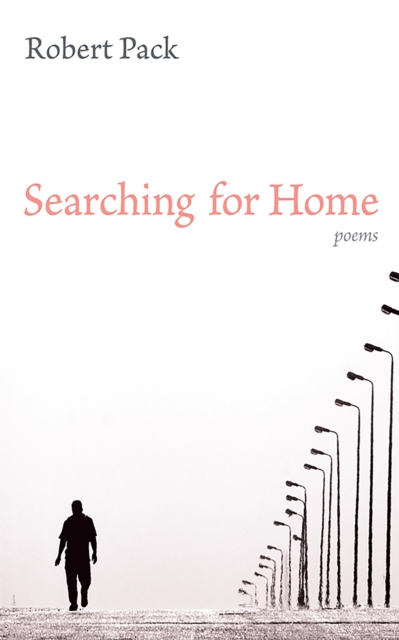
Searching for Home
Searchingfor Home, Packs splendid twenty-second collection of poems,written largely during his last year of life, centers on the search formeaning. At its heart are sequences of poems about three figures, each a seekerafter some physical or conceptual home where uncertainties are overcome. CharlesDarwin circumnavigates the world and gleans the evidence for his theory ofevolution but seems to sanction a godless world of randomness and struggle. EscapingNazis, Albert Einstein immigrates to America, where he fights for peace whileunsuccessfully trying to prove his unified field theory. Pogromsforce the poets scholarly Uncle Phil from Russia to America, where he lives inreduced circumstances and longs to relocate to Israel. Searching for meaning informs other deeply felt poems, likewise renderedin supple metrical language, as do themes of empathy, peace, humor, and thebeauty of naturepushbacks against disappointment, mortality, and the humanpropensity for cruelty and violence. It is a landscape dotted with rememberedmoments of joy and wonder: otters slide down a muddy slope, kids put on ahilarious version of The Odyssey, adog teases a little boy. . . . Searching for Home is both a vision ofPacks own odyssey and his final testament to what matters.
eBook


Peony Vertigo
Poems emerging from deep memory and shifting landscapes to joyously engage flora, fauna, and self.In her latest collection, Peony Vertigo , Jan Conn's poetic sensibility disperses and gathers, careens and slides, in and out of relation with the endangered world.
eBook

When you go into nature
\"When you go into nature, just look around you. This gentle introduction to mindfulness and meditation encourages children to take cues from the creatures and sights around them, giving readers tools to manage worry and big feelings. Kid-friendly illustrations make the lessons accessible for little heads and hearts\"-- Provided by publisher.
Book
