
Catalogue Search | MBRL


Are you sure you want to remove the book from the shelf?

{{itemTitle}}
10
result(s) for
"Nature Effect of human beings on Alaska."
Sort by:

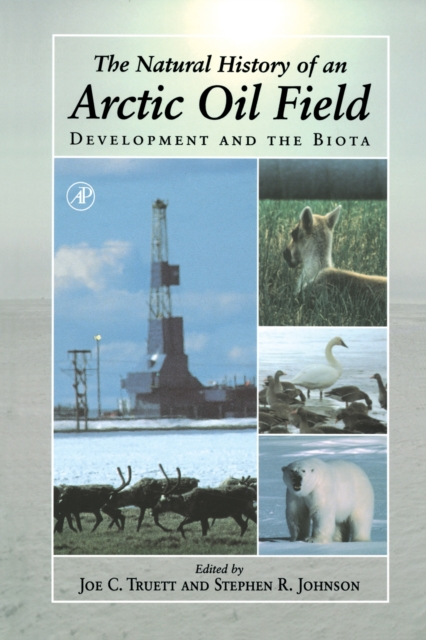
The natural history of an arctic oil field : development and the biota
In spite of the harsh conditions that characterize the Arctic, it is a surprisingly fragile ecosystem.The exploration for oil in the Arctic over the past 30 years has had profound effects on the plants and animals that inhabit this frozen clime.The Natural History of an Arctic Oil Field synthesizes decades of research on these myriad impacts.
eBook
North to the future : an offline adventure through the changing wilds of Alaska
\"At the age of twenty-one, college student Ben Weissenbach set out into the Alaskan wilderness armed with little more than inspiration from his literary heroes and a growing interest in climate change. What meets him there is a landscape both stark and awe-inspiring-a part of the world seen by few outside a small contingent of scientists with big personalities. There's Roman Dial, the larger-than-life field scientist who leads him on a five week journey into the Alaskan backcountry. There's Kenji Yoshikawa, the isolated researcher who leaves Ben alone for eleven days to care for his remote cabin, where temperatures at night drop to -49 degrees Fahrenheit. And there's Matt Nolan, the independent glaciologist who flies planes onto glaciers. As Ben's mental and physical resilience is tested, he discovers far more than his own limits; struck by the landscape's staggering beauty and sheer indifference to humanity, Ben emerges from each experience with a new perspective on our modern relationships to technology-and a deep sense of wonder for our natural world\"-- Provided by publisher.
BOOK

Caribou herds of northwest Alaska, 1850-2000
In his final, major publication Ernest S. \"Tiger\" Burch Jr.
reconstructs the distribution of caribou herds in northwest Alaska
using data and information from research conducted over the past
several decades as well as sources that predate western science by
more than one hundred years. Additionally, he explores human and
natural factors that contributed to the demise and recovery of
caribou and reindeer populations during this time. Burch provides
an exhaustive list of published and unpublished literature and
interviews that will intrigue laymen and experts alike. The
unflinching assessment of the roles that humans and wolves played
in the dynamics of caribou and reindeer herds will undoubtedly
strike a nerve. Supplemental essays before and after the unfinished
work add context about the author, the project of the book, and the
importance of both.
eBook

Among Wolves
Alaska's wolves lost their fiercest advocate, Gordon Haber, when
his research plane crashed in Denali National Park in 2009.
Passionate, tenacious, and occasionally brash, Haber, a former
hockey player and park ranger, devoted his life to Denali's wolves.
He weathered brutal temperatures in the wild to document the wolves
and provided exceptional insights into wolf behavior. Haber's
writings and photographs reveal an astonishing degree of
cooperation between wolf family members as they hunt, raise pups,
and play, social behaviors and traditions previously unknown. With
the wolves at risk of being destroyed by hunting and trapping, his
studies advocated for a balanced approach to wolf management. His
fieldwork registered as one of the longest studies in wildlife
science and had a lasting impact on wolf policies. Haber's field
notes, his extensive journals, and stories from friends all come
together in Among Wolves to reveal much about both the
wolves he studied and the researcher himself. Wolves continue to
fascinate and polarize people, and Haber's work continues to
resonate.
eBook

Diffusion modeling reveals effects of multiple release sites and human activity on a recolonizing apex predator
Background
Reintroducing predators is a promising conservation tool to help remedy human-caused ecosystem changes. However, the growth and spread of a reintroduced population is a spatiotemporal process that is driven by a suite of factors, such as habitat change, human activity, and prey availability. Sea otters (
Enhydra lutris
) are apex predators of nearshore marine ecosystems that had declined nearly to extinction across much of their range by the early 20th century. In Southeast Alaska, which is comprised of a diverse matrix of nearshore habitat and managed areas, reintroduction of 413 individuals in the late 1960s initiated the growth and spread of a population that now exceeds 25,000.
Methods
Periodic aerial surveys in the region provide a time series of spatially-explicit data to investigate factors influencing this successful and ongoing recovery. We integrated an ecological diffusion model that accounted for spatially-variable motility and density-dependent population growth, as well as multiple population epicenters, into a Bayesian hierarchical framework to help understand the factors influencing the success of this recovery.
Results
Our results indicated that sea otters exhibited higher residence time as well as greater equilibrium abundance in Glacier Bay, a protected area, and in areas where there is limited or no commercial fishing. Asymptotic spread rates suggested sea otters colonized Southeast Alaska at rates of 1–8 km/yr with lower rates occurring in areas correlated with higher residence time, which primarily included areas near shore and closed to commercial fishing. Further, we found that the intrinsic growth rate of sea otters may be higher than previous estimates suggested.
Conclusions
This study shows how predator recolonization can occur from multiple population epicenters. Additionally, our results suggest spatial heterogeneity in the physical environment as well as human activity and management can influence recolonization processes, both in terms of movement (or motility) and density dependence.
Journal Article
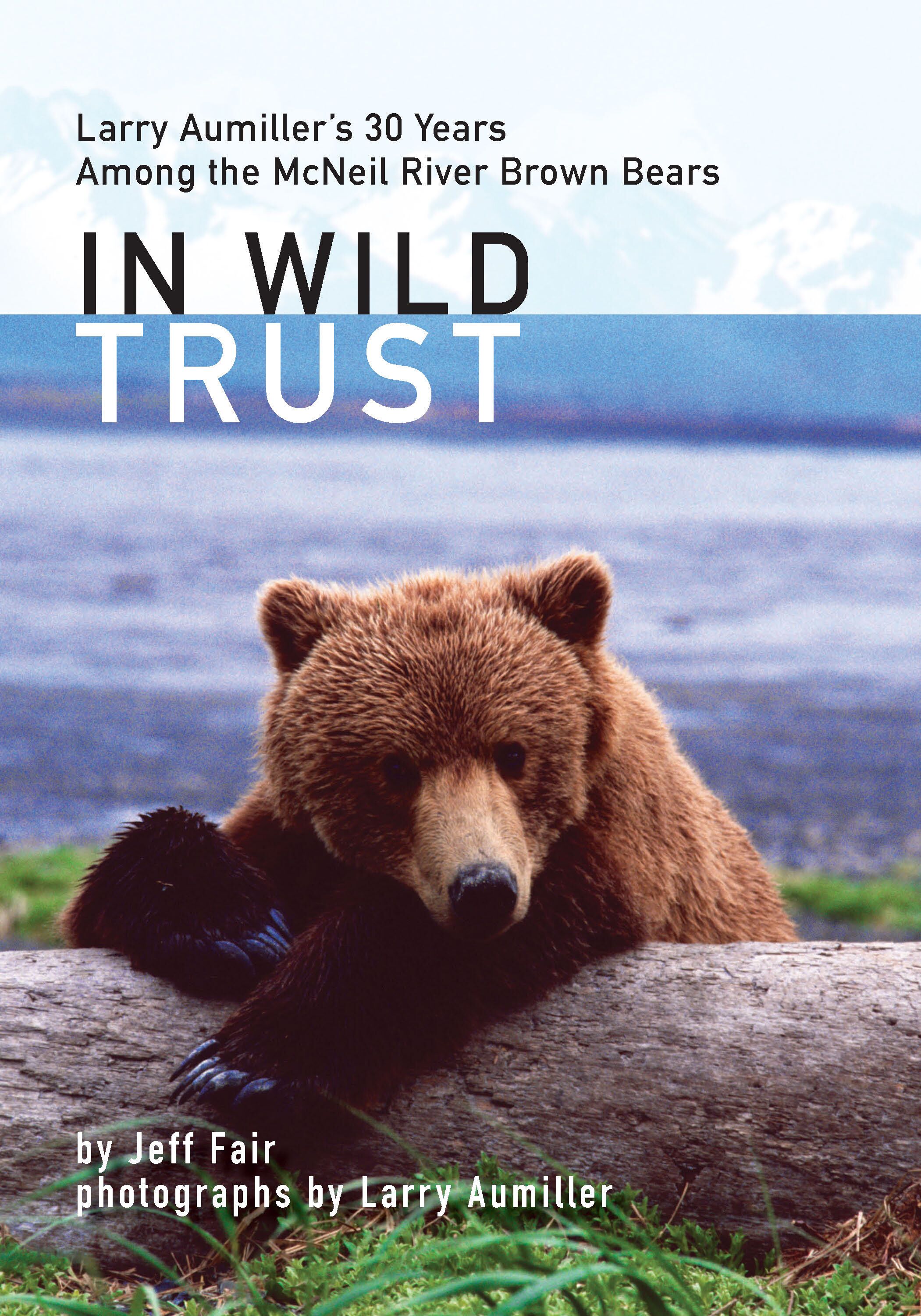
In Wild Trust
For thirty years, Larry Aumiller lived in close company with the
world's largest grouping of brown bears, returning by seaplane
every spring to the wilderness side of Cook Inlet, two hundred and
fifty miles southwest of Anchorage to work as a manager, teacher,
guide, and more. Eventually-without the benefit of formal training
in wildlife management or ecology-he become one of the world's
leading experts on brown bears, the product of an unprecedented
experiment in peaceful coexistence. This book celebrates Aumiller's
achievement, telling the story of his decades with the bears
alongside his own remarkable photographs. As both professional
wildlife managers and ordinary citizens alike continue to struggle
to bridge the gap between humans and the wild creatures we've
driven out, In Wild Trust is an inspiring account of what
we can achieve.
eBook

The natural history of an arctic oil field : development and the biota / edited by Joe C. Truett and Stephen R. Johnson
In spite of the harsh conditions that characterize the Arctic, it is a surprisingly fragile ecosystem. The exploration for oil in the Arctic over the past 30 years has had profound effects on the plants and animals that inhabit this frozen clime. The Natural History of an Arctic Oil Field synthesizes decades of research on these myriad impacts. Specialists with years of field experience have contributed to this volume to create the first widely available synopsis of the ecology and wildlife biology of animals and plants living in close association with an actively producing oil field.
eBook

Biocultural Diversity and Indigenous Ways of Knowing
At the dawn of the third millennium, dramatic challenges face human civilization everywhere. Relations between human beings and their environment are in peril, with mounting threats to both biological diversity of life on earth and cultural diversity of human communities. The peoples of the Circumpolar Arctic are at the forefront of these challenges and lead the way in seeking meaningful responses. In Biocultural Diversity and Indigenous Ways of Knowing: Human Ecology in the Arctic Karim-Aly Kassam positions the Arctic and sub-Arctic as a homeland rather than simply as a frontier for resource exploitation. Kassam aims to empirically and theoretically illustrate the synthesis between the cultural and the biological, using human ecology as a conceptual and analytical lens. Drawing on research carried out in partnership with indigenous northern communities, three case studies illustrate that subsistence hunting and gathering are not relics of an earlier era but rather remain essential to both cultural diversity and to human survival. This book deals with contemporary issues such as climate change, indigenous knowledge, and the impact of natural resource extraction. It is a narrative of community-based research, in the service of the communities for the benefit of the communities. It provides resource-based industry, policy makers, and students with an alternative way of engaging indigenous communities and transforming our perspective on conservation of ecological and cultural diversity.
eBook
After the Spill
In 1989, the Exxon Valdez spilled millions of gallons of oil into Prince William Sound. At that time, \"no one knew how best to help these sick animals\" (TIME FOR KIDS). Find out the lessons that have been learned from this disaster and how the animals are recovering.
Magazine Article