
Catalogue Search | MBRL


Are you sure you want to remove the book from the shelf?

{{itemTitle}}
22
result(s) for
"Nature Religious aspects Comparative studies."
Sort by:

Learning love from a tiger : religious experiences with nature
\"Learning Love from a Tiger explores the vibrancy and variety of humans' sacred encounters with the natural world, gathering a range of stories culled from Christian, Muslim, Hindu, Mayan, Himalayan, Buddhist, and Chinese shamanic traditions. Readers will delight in tales of house cats who teach monks how to meditate, rivers that grant salvation, shamans who shape-shift into jaguars, crickets who perform Catholic mass, and many others. More than a collection of wonderful stories, this book introduces important concepts and approaches that underlie much recent work in environmental ethics, religion, and ecology. Capper's light touch prompts readers to engage their own views of humanity's place in the natural world and in particular question longstanding assumptions of human superiority\"--Provided by publisher.
Book

Learning love from a tiger
Learning Love from a Tiger explores the vibrancy and variety of humans' sacred encounters with the natural world, gathering a range of stories culled from Christian, Muslim, Hindu, Mayan, Himalayan, Buddhist, and Chinese shamanic traditions. Readers will delight in tales of house cats who teach monks how to meditate, shamans who shape-shift into jaguars, crickets who perform Catholic mass, rivers that grant salvation, and many others. In addition to being a collection of wonderful stories, this book introduces important concepts and approaches that underlie much recent work in environmental ethics, religion, and ecology. Daniel Capper's light touch prompts readers to engage their own views of humanity's place in the natural world and question longstanding assumptions of human superiority.
eBook

Being-in-Creation: Human Responsibility in an Endangered World
What is the proper relationship between human beings and the more-than-human world? This philosophical question, which underlies vast environmental crises, forces us to investigate the tension between our extraordinary powers, which seem to set us apart from nature, even above it, and our thoroughgoing ordinariness, as revealed by the evolutionary history we share with all life. The contributors to this volume ask us to consider whether the anxiety of unheimlichkeit, which in one form or another absorbed so much of twentieth-century philosophy, might reveal not our homelessness in the cosmos but a need for a fundamental belongingness and implacement in it.
eBook

Beauty and Art as Pathways to Healing After Sexual Violence: A Comparative Study in the DRC and Canada
Conflict-related sexual violence against men in the Democratic Republic of the Congo (DRC) has profound psychological, emotional, relational, and spiritual consequences. Nevertheless, male survivors can achieve post-traumatic growth through processes that rebuild fractured identities, foster resilience, and cultivate renewed purpose. This article adopts a comparative framework by combining (a) original Canadian qualitative data—an Interpretative Phenomenological Analysis (IPA) study entitled “Silent No More: Surviving Male Rape,” conducted with survivors and trauma-informed practitioners—and (b) a phenomenologically informed synthesis of peer-reviewed studies, NGO/UN reports, and survivor testimonies from the DRC. The Canadian component focuses on the journey from victimhood to survivorship, demonstrating how breaking silence, being believed, and receiving compassionate, trauma-informed care foster meaning-making, resilience, and post-traumatic growth. The DRC component foregrounds culturally rooted pathways to recovery—especially communal and music-based practices—within conflict-affected settings. Across contexts, we identify convergent themes: beauty as a relational and embodied experience that regulates affect and restores safety; creative practices (music, visual arts, storytelling, ritual, and nature-based activity) as vehicles for dignity, connection, and purpose; and self-transcendent emotions (awe, gratitude, and wonder) that support the transition from threat to contemplation and agency. Divergences reflect cultural and structural conditions: in the DRC, healing often unfolds through community-embedded practices amid insecurity and stigma; whereas in Canada, clinical resources are more accessible, but masculine norms and isolation can impede disclosure. We argue that aesthetic and communal practices can complement clinical care and propose practice implications for arts-based, culturally grounded interventions, as well as a comparative research agenda.
Journal Article

Myth, Meaning, and the Work of Life: Enuma Elish and the Garden of Eden (Genesis 2:4–3:24) on the Value of Human Labor and Memory
This article offers a new comparison of the ancient Mesopotamian story Enuma Elish and the biblical Garden of Eden story (Genesis 2:4–3:24) as a case study that demonstrates how attention to myth theory and comparative method might improve studies of ancient Southwest Asian literatures. This comparison illustrates the connection between myth, meaning making, and the lived experiences that produced and perpetuated these myths by focusing on the cultural value of work and memory as expressed in both narratives. In contrast to previous modes of comparison that conclude with claims to the Bible’s superiority, this comparison uses tools from myth studies and comparative religion toward a clearer understanding of the cultural messaging of both myths regarding the purpose of human life.
Journal Article
Nature, Spirituality, and Place: Comparative Studies between Emerson and Zhuang Zi
Very rich scholarly works have been produced to perform a comparative study between Emerson and Zhuang Zi. Many scholars in their comparative research have tried to find how Emerson and the transcendentalists such as Thoreau borrow ideas from Daoism. In this article, I will take a different approach. I aim to find how Emerson and Zhuang Zi’s pursuit of spirituality in nature shapes different types of sense of place. The concept of spirituality is related to the pursuit of meaning in life and self-transcendence. This concept has gradually gained attention from the branches of religion, philosophy, geography, and psychology since, currently, due to the fast urbanization process, more people are separated from their land and move into cities. I will make a comparison between Emerson and Zhuang Zi from the concepts of spirituality, nature, and place. This perspective will shed light on the question of the conservation of various places due to their value and meaning, although I will not discuss conservation issues in this paper. In this article, I will first give a brief introduction to the meaning of spirituality by focusing on the three dimensions of this concept, which include meaning, self-transcendence, and spiritual practices. Then, I will discuss how the concept of nature in Emerson and Zhuang Zi’s works is related to these three dimensions. Finally, I will examine why Emerson and Zhuang Zi treat wilderness and agricultural land, respectively, as a place.
Journal Article

Aesthetics and Analysis in Writing on Religion
This book addresses a fundamental dilemma in religious studies. Exploring the tension between humanistic and social scientific approaches to thinking and writing about religion, Daniel Gold develops a line of argument that begins with the aesthetics of academic writing in the field. He shows that successful writers on religion employ characteristic aesthetic strategies in communicating their visions of human truths. Gold examines these strategies with regard to epistemology and to the study of religion as a collective endeavor.
eBook

Ecological imaginations in the world religions : an ethnographic analysis
The field of religion and ecology is an emerging and growing movement that is becoming relevant and influential in the world.It seeks to analyse, encourage, inspire, use, compare, and combine religious traditions to engage and shape environmental issues.Tony Watling seeks to ethnographically analyse this important field and its expressions.
eBook
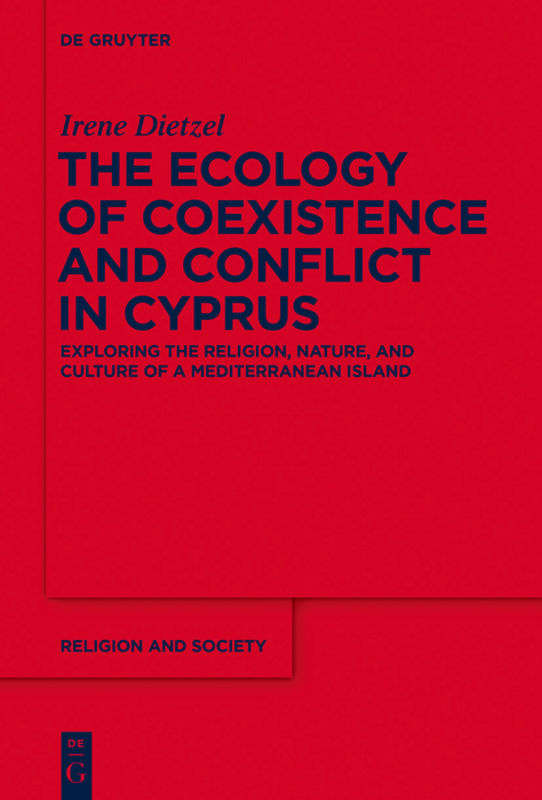
The Ecology of Coexistence and Conflict in Cyprus
The series Religion and Society (RS) contributes to the exploration of religions as social systems - both in Western and non-Western societies; in particular, it examines religions in their differentiation from, and intersection with, other cultural systems, such as art, economy, law and politics. Due attention is given to paradigmatic case or comparative studies that exhibit a clear theoretical orientation with the empirical and historical data of religion and such aspects of religion as ritual, the religious imagination, constructions of tradition, iconography, or media. In addition, the formation of religious communities, their construction of identity, and their relation to society and the wider public are key issues of this series.
eBook

MATERIALISM AND LIFE SATISFACTION A SOCIOLOGICAL AND CHRISTIAN COMPARATIVE APPROACH
This paper discusses the similarities and differences between sociological and Christian approaches (focused on the Bible and the Church Fathers' teachings) regarding the relationship between materialism and life satisfaction. The theoretical analysis gives reasons that advocate the view that there are resemblances between the two perspectives regarding materialism (greed or avarice in theological language) features and the impact of these values on life satisfaction. Both approaches argue for a less materialistic way of life in order to become generally happier. Nevertheless, if science gives research-based proofs to this relationship, Christianity states that worship of God, and not material goods, is the only way to get true happiness. Finally, the paper attempts to give some possible explanations for these similarities between sociology and Christianity. First, similarly to the Christian religion, some sociologists (i.e. Marx, Veblen, and Beaudrillard) criticise materialism and consumption society. Second, the scale construction can rely on popular notions of materialism, thus some items can have religious backgrounds. Eventually, the Bible and the Church Fathers' special concern with the human nature lead to some thoughts about man that have been confirmed by researchers.
Journal Article