
Catalogue Search | MBRL


Are you sure you want to remove the book from the shelf?

{{itemTitle}}
3,282
result(s) for
"Navajo Indians"
Sort by:


Foragers and Farmers of the Northern Kayenta Region
Foragers and Farmers of the Northern Kayenta Region presents the results of a major archaeological excavation project on Navajo tribal land in the Four Corners area and integrates this new information with existing knowledge of the archaeology of the northern Kayenta region. The excavation of thirty-three sites provides a cross section of prehistory from which Navajo Nation archaeologists retrieved a wealth of information about subsistence, settlement, architecture, and other aspects of past lifeways. The project’s most important contributions involve the Basketmaker and Archaic periods, and include a large number of radiocarbon dates on high-quality samples. Dating back to the early Archaic period (ca. 7000 BC) and ranging forward through the Basketmaker components to the Puebloan period, this volume is a powerful record of ancient peoples and their cultures. Detailed supplementary data will be available on the University of Utah Press Web site upon publication of this summary volume.
eBook

A Dinâe history of Navajoland
\"An overview of Navajo history from pre-Columbian time to the present, written for the Navajo community and highlighting Navajo oral history\"-- Provided by publisher.
Book

Carbon Sovereignty
For almost fifty years, coal dominated the Navajo economy. But in
2019 one of the Navajo Nation's largest coal plants closed. This
comprehensive new work offers a deep dive into the complex inner
workings of energy shift in the Navajo Nation. Geographer Andrew
Curley, a member of the Navajo Nation, examines the history of coal
development within the Navajo Nation, including why some Diné
supported coal and the consequences of doing so. He explains the
Navajo Nation's strategic choices to use the coal industry to
support its sovereignty as a path forward in the face of ongoing
colonialism. Carbon Sovereignty demonstrates the mechanism
of capitalism through colonialism and the construction of resource
sovereignty, in both the Navajo Nation's embrace and its rejection
of a coal economy. For the people of the Navajo Nation, energy
sovereignty is dire and personal. Thanks to on-the-ground
interviews with Diné coal workers, environmental activists, and
politicians, Curley documents the real consequences of change as
they happened. While some Navajo actors have doubled down for coal,
others have moved toward transition. Curley argues that political
struggles ultimately shape how we should understand coal,
capitalism, and climate change. The rise and fall of coal magnify
the nuance and complexity of change. Historical and contemporary
issues intermingle in everyday life with lasting consequences.
eBook


Dreaming of sheep in Navajo country
Dreaming of Sheep in Navajo Country offers a fresh interpretation of the history of Navajo (Din ) pastoralism. The dramatic reduction of livestock on the Navajo Reservation in the 1930s -- when hundreds of thousands of sheep, goats, and horses were killed -- was an ambitious attempt by the federal government to eliminate overgrazing on an arid landscape and to better the lives of the people who lived there. Instead, the policy was a disaster, resulting in the loss of livelihood for Navajos -- especially women, the primary owners and tenders of the animals -- without significant improvement of the grazing lands.
Livestock on the reservation increased exponentially after the late 1860s as more and more people and animals, hemmed in on all sides by Anglo and Hispanic ranchers, tried to feed themselves on an increasingly barren landscape. At the beginning of the twentieth century, grazing lands were showing signs of distress. As soil conditions worsened, weeds unpalatable for livestock pushed out nutritious native grasses, until by the 1930s federal officials believed conditions had reached a critical point. Well-intentioned New Dealers made serious errors in anticipating the human and environmental consequences of removing or killing tens of thousands of animals.
Environmental historian Marsha Weisiger examines the factors that led to the poor condition of the range and explains how the Bureau of Indian Affairs, the Navajos, and climate change contributed to it. Using archival sources and oral accounts, she describes the importance of land and stock animals in Navajo culture. By positioning women at the center of the story, she demonstrates the place they hold as significant actors in Native American and environmental history.
Dreaming of Sheep in Navajo Country is a compelling and important story that looks at the people and conditions that contributed to a botched policy whose legacy is still felt by the Navajos and their lands today.
eBook

The Navajo : the past and present of the Dine
\"Explains Navajo history and highlights Navajo life in modern society\"-- Provided by publisher.
Book

Bitter Water
Many know that the removal and relocation of Indigenous peoples from traditional lands is a part of the United States' colonial past, but few know that-in an expansive corner of northeastern Arizona-the saga continues. The 1974 Settlement Act officially divided a reservation established almost a century earlier between the Diné (Navajo) and the Hopi, and legally granted the contested land to the Hopi. To date, the U.S. government has relocated between 12,000 and 14,000 Diné from Hopi Partitioned Lands, and the Diné-both there and elsewhere-continue to live with the legacy of this relocation.Bitter Waterpresents the narratives of four Diné women who have resisted removal but who have watched as their communities and lifeways have changed dramatically. The book, based on 25 hours of filmed personal testimony, features the women's candid discussions of their efforts to carry on a traditional way of life in a contemporary world that includes relocation and partitioned lands; encroaching Western values and culture; and devastating mineral extraction and development in the Black Mesa region of Arizona. Though their accounts are framed by insightful writings by both Benally and Diné historian Jennifer Nez Denetdale, Benally lets the stories of the four women elders speak for themselves.Scholars, media, and other outsiders have all told their versions of this story, but this is the first book that centers on the stories of women who have lived it-in their own words in Navajo as well as the English translation. The result is a living history of a contested cultural landscape and the unique worldview of women determined to maintain their traditions and lifeways, which are so intimately connected to the land. This book is more than a collection of stories, poetry, and prose. It is a chronicle of resistance as spoken from the hearts of those who have lived it.
eBook
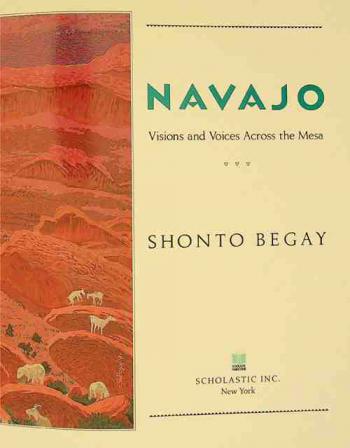

Nihikéyah
This anthology of essays offers perspectives of the Navajo
homeland, nihikéyah , highlighting Diné examinations and
understandings of the land. While various books have investigated
Native American reservations and homelands, this book is from Diné
individuals' experiences, observations, and examinations. Poets,
writers, and scholars frame their thoughts on four key questions:
What are the thoughts/perspectives on nihikéyah/Navajo homeland?
What challenges does nihikéyah face in the coming generations, and
what should all peoples know about nihikéyah? And how can nihikéyah
build a strong and positive Navajo Nation for the rest of this
century and beyond? The authors come from a variety of backgrounds
and use multiple approaches to discuss Diné history in the U.S.
Southwest, as well as forward-looking examinations of the Navajo
Nation. Together, the essays shed new light on Diné homeland and
the challenges to the Navajo homeland and its peoples.
Contributors Mario Atencio Shawn Attakai Wendy
Shelly Greyeyes Rex Lee Jim Manny Loley Jonathan Perry Jake Skeets
Jennifer Jackson Wheeler
eBook