
Catalogue Search | MBRL


Are you sure you want to remove the book from the shelf?

{{itemTitle}}
1,467
result(s) for
"Navies Europe."
Sort by:

Europe, small navies and maritime security : balancing traditional roles and emergent threats in the 21st century
This book seeks to identify and address gaps in our understanding of maritime security and the role of small navies in Europe. The majority of Europe's navies are small, yet they are often called upon to address a complex array of traditional and non-traditional threats. This volume examines the role of small navies within the European security architecture, by discussing areas of commonality and difference between navies, and arguing that it is not possible to fully understand either maritime strategy or European security without taking into account the actions of small navies. It contains a number of case studies that provide an opportunity to explore how different European states view the current security environment and how naval policy has undergone significant changes within the lifetime of the existing naval assets. In addition, the book examines how maritime security and naval development in Europe might evolve, given that economic forecasts will likely limit the potential procurement of larger' naval assets in the future, which means that European states will increasingly have to do more with less in the maritime domain. This book will be of much interest to students of maritime strategy, naval power, strategic studies, European politics andinternational relationsin general.
Book
Report of Operations and Condition of Command, 1 July 1961-30 June 1962 Berlin-Related Naval Activities during 1961-62
U.S. Navy. Europe describes the Deployment of Anti-submarine warfare carrier groups in the eastern Atlantic
Government Document
East Germany/ Present Political and Economic Situation
U.S. Navy. Europe. Commander-in-Chief describes [Political conditions; Economic conditions] in East Germany including the mood of German Democratic Republic citizens and German Democratic Republic refugees as well as Food shortages
Government Document
East Germany: Soviet-East German Relations Enclosures Attached
U.S. Navy. Europe. Commander-in-Chief discusses Germany (Democratic Republic)-Soviet Union relations with regard to East German internal affairs, and relays a description, provided by a defector, of the Organizational structures of the Germany (Democratic Republic). Ministry for Security and its [Intelligence collection; Intelligence operations] against the U.S. Army. Europe. Military Liaison Mission to Group of Soviet Forces (German Democratic Republic)
Government Document


Germany and the Ottoman Empire, 1914-1918
Questioning whether the Germans were actually as influential or dominant in the Ottoman empire as most standard works suggest, the author attacks the myths surrounding Turkey's role in the war. Originally published in 1968. The Princeton Legacy Library uses the latest print-on-demand technology to again make available previously out-of-print books from the distinguished backlist of Princeton University Press. These editions preserve the original texts of these important books while presenting them in durable paperback and hardcover editions. The goal of the Princeton Legacy Library is to vastly increase access to the rich scholarly heritage found in the thousands of books published by Princeton University Press since its founding in 1905.
eBook

The modern world-system II
Immanuel Wallerstein's highly influential, multi-volume opus, The Modern World-System, is one of this century's greatest works of social science. An innovative, panoramic reinterpretation of global history, it traces the emergence and development of the modern world from the sixteenth to the twentieth century.
eBook

Balancing on Land and at Sea : Do States Ally against the Leading Global Power?
Scholars often interpret balance of power theory to imply that great powers almost always balance against the leading power in the system, and they conclude that the absence of a counterbalancing coalition against the historically unprecedented power of the United States after the end of the Cold War is a puzzle for balance of power theory. They are wrong on both counts. Balance of power theory is not universally applicable. Its core propositions about balancing strategies and the absence of sustained hegemonies apply to the European system and perhaps to some other autonomous continental systems but not to the global maritime system. Sea powers are more interested in access to markets than in territorial aggrandizement against other great powers. Consequently, patterns of coalition formation have been different in the European system and in the global maritime system during the last five centuries. An empirical analysis demonstrates that counterhegemonic balancing is frequent in Europe but much less frequent in the global system. Higher concentrations of power in the global system lead to fewer and smaller rather than more frequent and larger balancing coalitions, as well as to more frequent and larger alliances with the leading sea power than against it.
Journal Article

Between dominance and decline: status anxiety and great power rivalry
This article investigates the role of status considerations in the response of dominant powers to the rise of emergent states. Accordingly, the hypothesis explored is that dominant actors are prone to fear that they will lose their upper rank, and, due to this status anxiety, resist the efforts of emergent powers to match or surpass them. The article begins by explaining why political actors deem status important and puts forward a theory of status anxiety in world politics. The more pronounced is this anxiety across status dimensions (economic and military capabilities as well as prestige), the higher the likelihood of conflict. This argument is then tested against competing theories of dominant power behaviour in two cases: the relations between France and Britain from the 1740s to Napoleon and those between Britain and Germany from the 1880s to World War One.
Journal Article
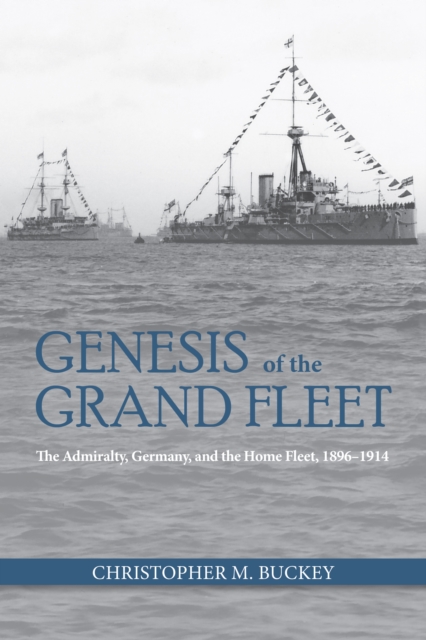
Genesis of the Grand Fleet: The Admiralty, Germany, and the Home Fleet, 1896-1914
Genesis of the Grand Fleet: The Admiralty, Germany, and the Home Fleet, 1896-1914 tells the story of the prewar predecessor to the Royal Navy's war-winning Grand Fleet: the Home Fleet. Established in early 1907 by First Sea Lord Sir John Fisher, the Home Fleet combined an active core of powerful armored warships with a unification of the various reserve divisions of warships previously under the control of the three Royal Navy home port commands. Fisher boasted that the new Home Fleet would be able to counter the growing German Hochseeflotte. While these boasts were accurate, they were not the sole motivation behind the Home Fleet's establishment. The Liberal Party's landslide victory in the 1906 General Election made fiscal economy on the part of the Admiralty even more important than before, and this significantly influenced the Home Fleet's creation. Subsequently the Home Fleet suffered a sustained campaign of criticism by the commanderinchief of the Channel Fleet, Lord Charles Beresford. This campaign ruined many careers including Beresford's and resulted in the assimilation of the Channel Fleet into the Home Fleet in 1909. From 1910 onward the Home Fleet steadily evolved and became the most important single command in the Royal Navy, and the Home Fleet's successive commandersinchief had influence on strategic policy rivaled only by the Board of Admiralty. The last prewar commander of the Home Fleet, Admiral Sir George Callaghan achieved this influence by impressing the civilian head of the Admiralty, Winston Churchill. A driven reformer, Churchill's influence was almost as important as Fisher's. Against this backdrop of political drama, Genesis of the Grand Fleet: The Admiralty, Germany, and the Home Fleet, 1896-1914 explains how Britain maintained its maritime preeminence in the early twentieth century. As Christopher Buckey describes, the fleet sustained Britain and her allies' path to victory in World War I.
eBook