
Catalogue Search | MBRL


Are you sure you want to remove the book from the shelf?

{{itemTitle}}
3,218
result(s) for
"Navigation History"
Sort by:

Navigation from then to now
\"This book for elementary readers highlights how technology has changed the way people find their way from place to place. Full-color photos and a running timeline help show how changes in ways we travel and new technology have carried us from using to stars to today's GPS turn-by-turn directions. A glossary, further resources, and an index are included\"-- Provided by publisher.
Book

Maritime Networks in the Mycenaean World
In this book, Thomas F. Tartaron presents a new and original reassessment of the maritime world of the Mycenaean Greeks of the Late Bronze Age. By all accounts a seafaring people, they enjoyed maritime connections with peoples as distant as Egypt and Sicily. These long-distance relations have been celebrated and much studied; by contrast, the vibrant worlds of local maritime interaction and exploitation of the sea have been virtually ignored. Dr Tartaron argues that local maritime networks, in the form of 'coastscapes' and 'small worlds', are far more representative of the true fabric of Mycenaean life. He offers a complete template of conceptual and methodological tools for recovering small worlds and the communities that inhabited them. Combining archaeological, geoarchaeological and anthropological approaches with ancient texts and network theory, he demonstrates the application of this scheme in several case studies. This book presents new perspectives and challenges for all archaeologists with interests in maritime connectivity.
eBook

The history of navigation
Today travellers by land, sea and air take accurate navigation for granted but it was not always thus. The author, a highly experienced sailor, sets out to record the development of navigational techniques from the earliest time, five millenniums ago. As explorers started to venture offshore into the unknown they had to rely on the sun and stars for direction. From this pioneers turned to mathematics, astrolobes, sextants and increasing accurate clocks to measure latitude and later longitude. More recently major breakthroughs with electronic navigation, GPS and other satellite systems have revolutionised travel. Focusing primarily but not exclusively on marine navigation, the author weaves a fascinating course through the successes and failures of mankind's quest to explore his world. The result is a thoroughly entertaining and informative work which has no rival. -- Dust jacket flap.
Book

Mastering the Inland Seas
Theodore J. Karamanski's sweeping maritime history demonstrates the far-ranging impact that the tools and infrastructure developed for navigating the Great Lakes had on the national economies, politics, and environment of continental North America. Synthesizing popular as well as original historical scholarship, Karamanski weaves a colorful narrative illustrating how disparate private and government interests transformed these vast and dangerous waters into the largest inland water transportation system in the world.
Karamanski explores both the navigational and sailing tools of First Nations peoples and the dismissive and foolhardy attitude of early European maritime sailors. He investigates the role played by commercial boats in the Underground Railroad, as well as how the federal development of crucial navigational resources exacerbated sectionalism in the antebellum United States. Ultimately Mastering the Inland Sea shows the undeniable environmental impact of technologies used by the modern commercial maritime industry. This expansive story illuminates the symbiotic relationship between infrastructure investment in the region's interconnected waterways and North America's lasting economic and political development.
eBook

The Indian Ocean
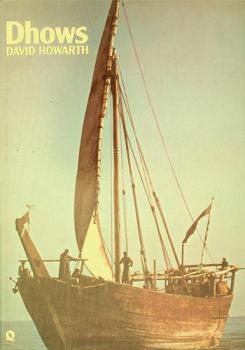
In this stimulating and authoritative overview, Michael Pearson reverses the traditional angle of maritime history and looks from the sea to its shores - its impact on the land through trade, naval power, travel and scientific exploration. This vast ocean, both connecting and separating nations, has shaped many countries' cultures and ideologies through the movement of goods, people, ideas and religions across the sea.
The Indian Ocean moves from a discussion of physical elements, its shape, winds, currents and boundaries, to a history from pre-Islamic times to the modern period of European dominance. Going far beyond pure maritime history, this compelling survey is an invaluable addition to political, cultural and economic world history.
eBook

Fifty ships that changed the course of history : a nautical history of the world
\"A visual history of economic development in fifty ships, starting from the earliest known record, Pharaoh Khufu's solar barge (roughly 5000 years ago), to MS Allure of the Seas, the biggest passenger ship ever built (longer than the Eiffel Tower is tall).\"-- Provided by publisher.
Book

Venetian Shipping
This book provides a comprehensive picture of Venice's shipping industry from the days of glory to its definitive decline, challenging the accepted hierarchy of the political, economic, and environmental factors impacting the history of the maritime republic.
eBook
Empires of the sea : maritime power networks in world history
\"Empires of the Sea brings together studies of maritime empires from the Bronze Age to the Eighteenth Century. The volume aims to establish maritime empires as a category for the (comparative) study of premodern empires, and from a partly 'non-western' perspective. The book includes contributions on Mycenaean sea power, Classical Athens, the ancient Thebans, Ptolemaic Egypt, The Genoese Empire, power networks of the Vikings, the medieval Danish Empire, the Baltic empire of Ancien Râegime Sweden, the early modern Indian Ocean, the Melaka Empire, the (non-European aspects of the) Portuguese Empire and Dutch East India Company, and the Pirates of Caribbean.\"--Back cover.
Book

Shipping, Trade and Crusade in the Medieval Mediterranean
The cutting-edge papers in this collection reflect the wide areas to which John Pryor has made significant contributions in the course of his scholarly career. They are written by some of the world's most distinguished practitioners in the fields of Crusading history and the maritime history of the medieval Mediterranean. His colleagues, students and friends discuss questions including ship construction in the fourth and fifteenth centuries, navigation and harbourage in the eastern Mediterranean, trade in Fatimid Egypt and along the Iberian Peninsula, military and social issues arising among the crusaders during field campaigns, and wider aspects of medieval warfare. All those with an interest in any of these subjects, whether students or specialists, will need to consult this book.
eBook