
Catalogue Search | MBRL


Are you sure you want to remove the book from the shelf?

{{itemTitle}}
4,500
result(s) for
"Nazi atrocities"
Sort by:

Through Soviet Jewish Eyes
Most view the relationship of Jews to the Soviet Union through the lens of repression and silence. Focusing on an elite group of two dozen Soviet-Jewish photographers, including Arkady Shaykhet, Alexander Grinberg, Mark Markov-Grinberg, Evgenii Khaldei, Dmitrii Baltermants, and Max Alpert,Through Soviet Jewish Eyespresents a different picture. These artists participated in a social project they believed in and with which they were emotionally and intellectually invested-they were charged by the Stalinist state to tell the visual story of the unprecedented horror we now call the Holocaust.These wartime photographers were the first liberators to bear witness with cameras to Nazi atrocities, three years before Americans arrived at Buchenwald and Dachau. In this passionate work, David Shneer tells their stories and highlights their work through their very own images-he has amassed never-before-published photographs from families, collectors, and private archives.Through Soviet Jewish Eyeshelps us understand why so many Jews flocked to Soviet photography; what their lives and work looked like during the rise of Stalinism, during and then after the war; and why Jews were the ones charged with documenting the Soviet experiment and then its near destruction at the hands of the Nazis.
eBook

Breeding Contempt
Most closely associated with the Nazis and World War II atrocities, eugenics is sometimes described as a government-orchestrated breeding program, other times as a pseudo-science, and often as the first step leading to genocide. Less frequently it is recognized as a movement having links to the United States. But eugenicsdoeshave a history in this country, and Mark A. Largent tells that story by exploring one of its most disturbing aspects, the compulsory sterilization of more than 64,000 Americans.The book begins in the mid-nineteenth century, when American medical doctors began advocating the sterilization of citizens they deemed degenerate. By the turn of the twentieth century, physicians, biologists, and social scientists championed the cause, and lawmakers in two-thirds of the United States enacted laws that required the sterilization of various criminals, mental health patients, epileptics, and syphilitics. The movement lasted well into the latter half of the century, and Largent shows how even today the sentiments that motivated coerced sterilization persist as certain public figures advocate compulsory birth control-such as progesterone shots for male criminals or female welfare recipients-based on the same assumptions and motivations that had brought about thousands of coerced sterilizations decades ago.
eBook

Memoir of a Gulag Actress
In an abridged translation that retains the grace and passion of the original, Klots and Ufberg present the stunning memoir of a young woman who became an actress in the Gulag. Tamara Petkevich had a relatively privileged childhood in the beautiful, impoverished Petrograd of the Soviet regime's early years, but when her father—a fervent believer in the Communist ideal—was arrested, 17-year-old Tamara was branded a \"daughter of the enemy of the people.\" She kept up a search for her father while struggling to support her mother and two sisters, finish school, and enter university. Shortly before the Russian outbreak of World War II, Petkevich was forced to quit school and, against her better judgment, she married an exiled man whom she had met in the lines at the information bureau of the NKVD (People's Commissariat of Internal Affairs). Her mother and one sister perished in the Nazi siege of Leningrad, and Petkevich was herself arrested. With cinematic detail, Petkevich relates her attempts to defend herself against absurd charges of having a connection to the Leningrad terrorist center, counter-revolutionary propaganda, and anti-Semitism that resulted in a sentence of seven years' hard labor in the Gulag. While Petkevich became a professional actress in her own right years after her release from the Gulag, she learned her craft on the stages of the camps scattered across the northern Komi Republic. The existence of prisoner theaters and troupes of political prisoners such as the one Petkevich joined is a little-known fact of Gulag life. Petkevich's depiction not only provides a unique firsthand account of this world within a world but also testifies to the power of art to literally save lives. As Petkevich moves from one form of hardship to another she retains her desire to live and her ability to love. More than a firsthand record of atrocities committed in Stalinist Russia, Memoir of a Gulag Actress is an invaluable source of information on the daily life and culture of the Soviet Union at the time. Russian literature about the Gulag remains vastly underepresented in the United States, and Petkevich's unforgettable memoir will go a long way toward filling this gap. Supplemented with photographs from the author's personal archive, Petkevich's story will be of great interest to general readers, while providing an important resource for historians, political scientists, and students of Russian culture and history.
eBook

Communal priorities
Throughout the period of the Second World War, the Anglo-Jewish community was mainly preoccupied with internal conflict, particularly over Zionism, and domestic problems, the most pressing of which was British anti-semitism. The primary concern of this book is to study perceptions of Nazi atrocities, and it is fundamental to an understanding of these that we set them firmly within the context of British Jewish life at that time. Such an approach will go a considerable way in explaining how and why Anglo-Jewry responded as it did. To understand this we must examine the major concerns of Anglo-Jewish life at this
Book Chapter


The Nazi Genocide of the Roma
Using the framework of genocide, this volume analyzes the patterns of persecution of the Roma in Nazi-dominated Europe. Detailed case studies of France, Austria, Romania, Croatia, Ukraine, and Russia generate a critical mass of evidence that indicates criminal intent on the part of the Nazi regime to destroy the Roma as a distinct group. Other chapters examine the failure of the West German State to deliver justice, the Romani collective memory of the genocide, and the current political and historical debates. As this revealing volume shows, however inconsistent or geographically limited, over time, the mass murder acquired a systematic character and came to include ever larger segments of the Romani population regardless of the social status of individual members of the community.
eBook
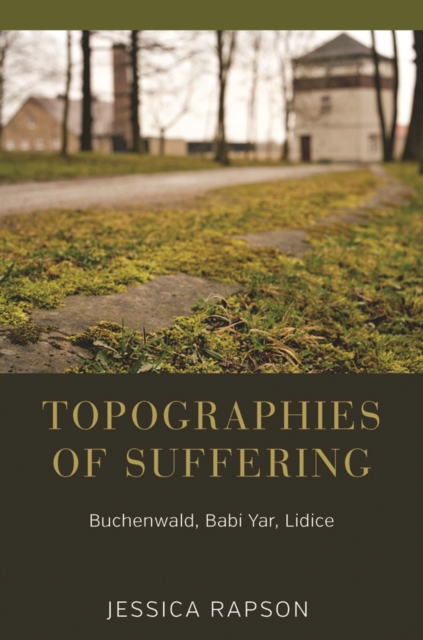
Topographies of suffering
At the forefront of transcultural innovations in memory studies. Provides a new interdisciplinary approach to the study of Holocaust commemoration, combining approaches from literary ecocriticism, cultural geography and cultural studies. Sheds new light on transnational networks of Holocaust memory.
eBook

Why did they kill? : Cambodia in the shadow of genocide
Of all the horrors human beings perpetrate, genocide stands near the top of the list. Its toll is staggering: well over 100 million dead worldwide. Why Did They Kill? is one of the first anthropological attempts to analyze the origins of genocide. In it, Alexander Hinton focuses on the devastation that took place in Cambodia from April 1975 to January 1979 under the Khmer Rouge in order to explore why mass murder happens and what motivates perpetrators to kill. Basing his analysis on years of investigative work in Cambodia, Hinton finds parallels between the Khmer Rouge and the Nazi regimes. Policies in Cambodia resulted in the deaths of over 1.7 million of that country's 8 million inhabitants—almost a quarter of the population--who perished from starvation, overwork, illness, malnutrition, and execution. Hinton considers this violence in light of a number of dynamics, including the ways in which difference is manufactured, how identity and meaning are constructed, and how emotionally resonant forms of cultural knowledge are incorporated into genocidal ideologies.
eBook

Victims and Survivors of Nazi Human Experiments
While the coerced human experiments are notorious among all the atrocities under National Socialism, they have been marginalised by mainstream historians. This book seeks to remedy the marginalisation, and to place the experiments in the context of the broad history of National Socialism and the Holocaust. Paul Weindling bases this study on the reconstruction of a victim group through individual victims’ life histories, and by weaving the victims’ experiences collectively together in terms of different groupings, especially gender, ethnicity and religion, age, and nationality. The timing of the experiments, where they occurred, how many victims there were, and who they were, is analysed, as are hitherto under-researched aspects such as Nazi anatomy and executions. The experiments are also linked, more broadly, to major elements in the dynamic and fluid Nazi power structure and the implementation of racial policies. The approach is informed by social history from below, exploring both the rationales and motives of perpetrators, but assessing these critically in the light of victim narratives.
eBook
