
Catalogue Search | MBRL


Are you sure you want to remove the book from the shelf?

{{itemTitle}}
3,192
result(s) for
"Neanderthals."
Sort by:


EL APROVECHAMIENTO DE URSUS SPE LAE US EN EL PALEOLÍTICO MEDIO. NOVEDADES DESDE LA CUEVA DE EL ESQUILLÉU
La relación entre los neandertales y el oso cavernario--Ursus spelaeus--durante el Pleistoceno Superior ha sido objeto de controversia debido a que la historiografía tradicional sugería ideas relativas a un posible culto hacia esta especie, junto con otras teorías que respaldan la caza masiva de estos animales. Sin embargo, las pruebas que vinculan una interacción entre el Homo neanderthalensis y el Ursus spelaeus en Europa son limitadas y fragmentarias, y proceden mayormente de Italia, Alemania o Francia, en los alrededores de los Alpes. Hasta la fecha, no se habían encontrado restos de Ursus spelaeus con evidencias de actividad humana en el Paleolítico Medio en la Península Ibérica. No obstante, este artículo presenta y analiza las consecuencias del descubrimiento de una ulna de Ursus spelaeus con marcas de corte, hallada en los niveles musterienses de la cueva del Esquilléu en Cantabria. Este hallazgo, identificado tras un minucioso estudio de la muestra osteológica disponible, representa un nuevo aporte a este debate, ya que amplía el ámbito geográfico y sugiere que las revisiones tafonómicas podrían ser una fuente de nuevas evidencias.
Journal Article
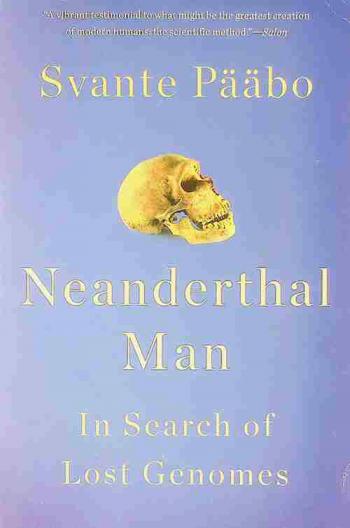
Neanderthal man : in search of lost genomes
\"What can we learn from the genes of our closest evolutionary relatives? Neanderthal Man tells the story of geneticist Svante P�a�abo's mission to answer that question, beginning with the study of DNA in Egyptian mummies in the early 1980s and culminating in his sequencing of the Neanderthal genome in 2009. From P�a�abo, we learn how Neanderthal genes offer a unique window into the lives of our hominin relatives and may hold the key to unlocking the mystery of why humans survived while Neanderthals went extinct. Drawing on genetic and fossil clues, P�a�abo explores what is known about the origin of modern humans and their relationship to the Neanderthals and describes the fierce debate surrounding the nature of the two species' interactions. A riveting story about a visionary researcher and the nature of scientific inquiry, Neanderthal Man offers rich insight into the fundamental question of who we are\"-- Provided by publisher.
Book

Neanderthal man : in search of lost genomes
\"What can we learn from the genes of our closest evolutionary relatives? Neanderthal Man tells the story of geneticist Svante Pääbo's mission to answer that question, beginning with the study of DNA in Egyptian mummies in the early 1980s and culminating in his sequencing of the Neanderthal genome in 2009. From Pääbo, we learn how Neanderthal genes offer a unique window into the lives of our hominin relatives and may hold the key to unlocking the mystery of why humans survived while Neanderthals went extinct. Drawing on genetic and fossil clues, Pääbo explores what is known about the origin of modern humans and their relationship to the Neanderthals and describes the fierce debate surrounding the nature of the two species' interactions. A riveting story about a visionary researcher and the nature of scientific inquiry, Neanderthal Man offers rich insight into the fundamental question of who we are\"-- Provided by publisher.
Book

DALLA PREISTORIAALLA MODERNITA. IDENTITA E FASCISMO NELL'OPERADIANTONIO PENNACCHI
Nell'opera di Antonio Pennacchi, il fascismo si configura come una questione d'identita, prima di tutto dal punto di vista territoriale, essendo l'autore originario di una delle citta di fondazione; in secondo luogo da un punto di vista biografico, considerata la sua lunga e articolata militanza politica, inaugurata con l'iscrizione al Msi; e infine da un punto di vista sociale, dato che Pennacchi, operaio in fabbrica per molti anni, non rinuncera mai a definire la bonifica delle Paludi Pontine come una riforma \"di struttura marxista\". La rappresentazione del fascismo si salda cosi alla creazione di un mito individuale, familiare e territoriale. Il Ventennio costituisce il contesto storico-sociale entro cui prende corpo l'epopea della famiglia Peruzzi, le cui vicende continueranno ad essere narrate fino all'epoca contemporanea (Canale Mussolini. Parte prima e Parte seconda; La strada del mare). Ma la rappresentazione del fascismo supera anacronisticamente i limiti della propria pertinenza storica per estendersi fino all'uomo di Neanderthal, prototipo di un'alternativa storico-antropologica indefettibilmente perduta (Le iene del Circeo; Camerata Neandertal) divenendo una questione sovrastorica e sovratemporale. Parole chiave: fascismo, Paludi Pontine, identita, Latina, Pennacchi, memoria, letteratura italiana contemporanea.
Journal Article