
Catalogue Search | MBRL


Are you sure you want to remove the book from the shelf?

{{itemTitle}}
211
result(s) for
"Negri, Antonio"
Sort by:
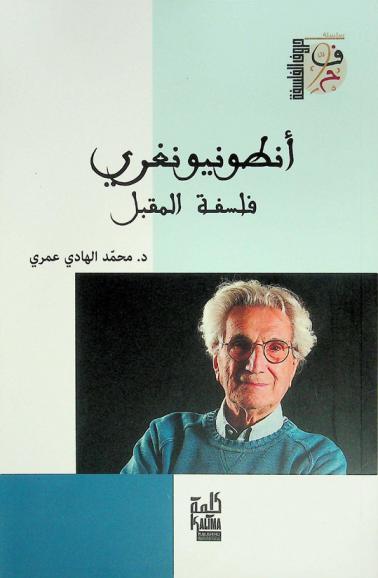
أنطونيو نغري : فلسفة المقبل
يقدم هذا الكتاب دراسة معمقة لفكر الفيلسوف والمفكر الإيطالي أنطونيو نغري، مستعرض فلسفته المتميزة التي تركز على مفهوم \"المقبل\" وتحديات التحولات الاجتماعية والسياسية. استكشاف الجوانب النظرية لفلسفة نغري. تحليل مفهوم \"المقبل\" كأداة لفهم التغيير والتحول. علاقة الفكر النغري بالواقع المعاصر والإمكانيات المستقبلية. بأسلوبه البحثي العميق، يعيد الدكتور محمد الهادي عمري صياغة أفكار نغري لتصبح أكثر قربا من القارئ العربي، مسلط الضوء على دور الفكر النقدي في مواجهة قضايا العصر.
BOOK

The Philosophy of Antonio Negri, Volume One
This collection of essays is the first of its kind in English on the work of Antonio Negri, the Italian philosopher and political theorist. The spectacular success of Empire, Negri's collaboration with Michael Hardt, has brought Negri's writing to a new, wider audience. A substantial body of his writing is now available to an English-speaking readership. Outstanding contributors – including Michael Hardt, Sergio Bologna, Kathi Weeks and Nick Dyer-Witheford - reveal the variety and complexity of Negri's thought and explore its unique relevance to modern politics. Negri is one of the most sophisticated analysts of modern political philosophy. Philosophers and critics alike find his work both difficult and exhilarating, engaging as it does with Marx, Spinoza, Deleuze, Guattari, Tronti and others. This book is ideal for readers who want to get to grips with Negri's key themes, in particular his theories on labour, capital, power, the state and revolution. It makes a great introduction to his work for students of political philosophy, as well as providing a comprehensive critical approach for Negri enthusiasts.
eBook


The Persistence of the Negative
Through a series of incisive readings of leading theoretical figures of affirmationism – Jacques Derrida, Gilles Deleuze, Bruno Latour, Antonio Negri and Alain Badiou – Benjamin Noys contests the tendency of recent theory to rely on affirmation, and especially an affirmative thinking of resistance. He reveals a profound current of negativity that allows theory to return to its political calling.
eBook

Common Democracy
At a time when representative democracies are in deep crisis, this article examines the debate over representation as it appears in contemporary Marxist and poststructuralist political thought. The article discusses, more specifically, Ernesto Laclau’s defense of political representation and pits this against Michael Hardt and Antonio Negri’s vision of an “absolute democracy” beyond representation, in order to chart a path between and beyond both contrasting positions. The crux of the argument is that in participatory democracies political governance becomes a common affair: a public good accessible to all members of a community on the basis of equality. Such a democratic regime contrasts with both representative democracies, where the assembled demos is excluded from any effective participation in the everyday exercise of major political power, as well as direct democracy, where the collective sovereign would be fully present to itself, total and undivided. Common political representation is open to all, inclusive, participatory, and accountable.
Journal Article

Empire's New Clothes: Reading Hardt and Negri
First published in 2004. Routledge is an imprint of Taylor & Francis, an informa company.
eBook

Left melodrama
‘Left melodrama’ is a form of contemporary political critique that combines thematic elements and narrative structures of the melodramatic genre with a political perspective grounded in a left theoretical tradition, fusing them to dramatically interrogate oppressive social structures and unequal relations of power. It is also a new form of what Walter Benjamin called ‘left melancholy’, a critique that deadens what it examines by employing outdated and insufficient analyses to current exploitations. Left melodrama is melancholic insofar as its use of older leftist critical methods disavows its attachments to the failed promises of left political-theoretical critique: that it could provide direct means to freedom and moral rightness. Left melodrama is melodramatic insofar as it incorporates the specific melodramatic narrative, style and promise of the text that stands in for its disavowed attachments: the
Manifesto of the Communist Party
. Whereas the
Manifesto
's critical power promised radical political transformation, left melodrama incorporates the
Manifesto
's melodramatic style in an effort to revivify that promise. It thus inhibits the creation of new critical methods appropriate to our current historical moment and occludes Marx and Engels' warning that the possibility of radical transformation is diminished when the past furnishes the vision for the future. Left melodrama can be found in the texts of Giorgio Agamben, Michael Hardt and Antonio Negri; their reincorporation of the
Manifesto
's melodrama both contributes to their widespread success and undercuts their critical capacities to examine and challenge the inequalities, injustices and unfreedom that shape the present moment.
Journal Article

Dialogue with Antonio Negri: A Few Thoughts on the Lecture “Metropolis as a Post-Industrial Factory”
On November 27 and 29, 2014, Prof. WANG Hui, the Director of Tsinghua Institute for Advanced Study in Humanities and Social Sciences in Beijing, invited Prof. Antonio Negri, one of Italy's most leading Marxist philosophers and activists, to give a series of lectures. I was invited by Prof. WANG Hui to offer comments and reflections on one of Prof. Antonio Negri’s lectures, titled “The Metropolis as Post-Industrial Factory”. New Bloom published this article in Chinese based on the transcripts of the above lecture. It was translated into English by Ngai Pun. Acknowledgement: I was invited by Christian Fuchs, the editor of tripleC, to publish this Dialogue as a memorial to Prof. Antonio Negri, who passed away on 16 December 2023 at the age of 90.
Journal Article
