
Catalogue Search | MBRL


Are you sure you want to remove the book from the shelf?

{{itemTitle}}
417
result(s) for
"Neonatal hematology"
Sort by:

Juvenile myelomonocytic leukaemia and Noonan syndrome: A case study
Both Noonan syndrome and juvenile myelomonocytic leukemia are characterised by hyperactivation of the Ras/ MAPK signalling pathway, and as such may manifest concurrently. Here, we report a case study involving twins who originally presented with a petechial rash and a marked thrombocytopenia. Over time, the haematological picture developed into a juvenile myelomonocytic leukemia, and given the rare nature of this disorder, prompted review for other clinical manifestations, thus ultimately allowing the haematologist to consider a syndromic disorder. Key words: Juvenile myelomonocytic leukaemia, Noonan syndrome, Ras/MAPK signalling pathway.
Journal Article

Maternal and perinatal predictors of newborn iron status
Describes iron status at birth in a population sample of children enrolled in the cohort study 'Growing Up in New Zealand'. Measures cord blood serum ferritin (SF) and haemoglobin (Hb) concentrations, and determines associations of SF and Hb with maternal and birth characteristics such as demographics, pregnancy health and history, and dietary factors. Source: National Library of New Zealand Te Puna Matauranga o Aotearoa, licensed by the Department of Internal Affairs for re-use under the Creative Commons Attribution 3.0 New Zealand Licence.
Journal Article
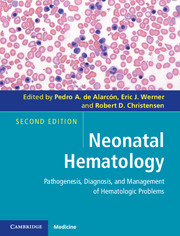
Neonatal Hematology
Neonatal hematology is a fast-growing field, and hematologic problems occur in the majority of sick neonates. Focusing on clinical issues and problem-solving, this is a fully revised and updated revision of a successful practical guide to the pathogenesis, recognition and management of hematologic problems in the neonate. The second edition begins with chapters on the history of neonatal hematology, hematopoiesis, and the immunologic system. Subsequent sections are devoted to erythrocyte disorders, platelet disorders, leucocyte disorders, immunologic disorders and hemostatic disorders. New to this edition are an expanded coverage of neonatal oncology, cord blood utilization, neonatal screening, prenatal diagnosis and hyperbilirubinemia. Written by practising physicians specializing in pediatric hematology, neonatology, immunology, pediatric infectious disease and transfusion medicine, this is an essential text for pediatric hematologists, NICU specialists, neonatologists and neonatal nurse practitioners.
eBook

Myelopoiesis related to perinatal spleen
Adult murine spleen is known to have a major role in the development of dendritic cell (DC) subsets, including conventional DC and plasmacytoid DC. In this lab, long‐term cultures (LTCs) established from murine spleen support continuous production of novel dendritic‐like cells, termed LTC‐DC. An in vivo equivalent subset also exists in spleen, namely L‐DC. As co‐cultures using LTC‐derived splenic stroma support the outgrowth of L‐DC from spleen and bone marrow sources, it is likely that spleen represents an important niche for DC development. To investigate the appearance of L‐DC during ontogeny, spleen was isolated from embryonic and neonatal mice of different ages for analysis of myeloid and DC subsets. Perinatal spleen was also used to establish co‐cultures for identification of progenitors, and LTCs were established from spleens for assessment of stromal competence. Although spleen from 16‐day embryos (E16.5) contained myeloid cells, DC subsets did not appear until day 4 after birth (D4). However, murine spleen at D0 contained progenitors, which could seed co‐cultures for L‐DC production. LTC could not be established from spleen until D4. The appearance of L‐DC after D4 in spleen is dependent on the formation of the appropriate stromal microenvironment which occurs in the early postnatal period.
Journal Article

Clinical Scenarios
This chapter contains sections titled:
Clinical Scenario 1
Clinical Scenario 2
Clinical Scenario 3
Clinical Scenario 4
Clinical Scenario 5
Clinical Scenario 6
Clinical Scenario 7
Clinical Scenario 8
Clinical Scenario 9
Clinical Scenario 10
Book Chapter
Normal Ranges for Hematology and Palsma Chemistry and Conversion Table for Units
This chapter contains sections titled:
Reference
Book Chapter
Drug Dosages used in the Equine Colic Patient
This chapter contains sections titled:
Reference
Book Chapter

Diagnosis of neonatal sepsis: the past, present and future
Sepsis remains a significant cause of neonatal mortality and morbidity, especially in low- and middle-income countries. Neonatal sepsis presents with nonspecific signs and symptoms that necessitate tests to confirm the diagnosis. Early and accurate diagnosis of infection will improve clinical outcomes and decrease the overuse of antibiotics. Current diagnostic methods rely on conventional culture methods, which is time-consuming, and may delay critical therapeutic decisions. Nonculture-based techniques including molecular methods and mass spectrometry may overcome some of the limitations seen with culture-based techniques. Biomarkers including hematological indices, cell adhesion molecules, interleukins, and acute-phase reactants have been used for the diagnosis of neonatal sepsis. In this review, we examine past and current microbiological techniques, hematological indices, and inflammatory biomarkers that may aid sepsis diagnosis. The search for an ideal biomarker that has adequate diagnostic accuracy early in sepsis is still ongoing. We discuss promising strategies for the future that are being developed and tested that may help us diagnose sepsis early and improve clinical outcomes.ImpactReviews the clinical relevance of currently available diagnostic tests for sepsis.Summarizes the diagnostic accuracy of novel biomarkers for neonatal sepsis.Outlines future strategies including the use of omics technology, personalized medicine, and point of care tests.
Journal Article

Role of hematological parameters in the early detection of clinical cases for septicemia among neonates: A hospital-based study from Chennai, India
Neonatal sepsis, a leading cause of newborn mortality, arises from systemic infections due to an immature immune system. Its subtle early symptoms complicate timely diagnosis. Hematological parameters act as an indicator for early detection, crucial for prompt treatment, improving prognosis, and are not a challenging or cumbersome process.
The primary objective was to evaluate the significance of hematological parameters including red blood cell (RBC), WBC, and platelet counts in the context of neonatal sepsis.
This hospital-based cohort study examined 73 neonates admitted to the neonatal intensive care unit (NICU) of Saveetha Medical College and Hospital, Chennai, India during the period of January 2023 to March 2024. All the new born patients were presented with blood culture-confirmed septicemia.
The investigation identified Klebsiella pneumoniae as the most prevalent etiological agent (26.02%), followed by Coagulase-Negative Staphylococci (CONS) and Acinetobacter baumannii (both 8.2%). Alterations in total leukocyte count and hematocrit were observed in 57% and 68.1% of cases, respectively, providing a prompt indication of infection status. Subsequent analyses revealed prominent leukocytosis, hematocrit irregularities, and thrombocytopenia, frequently manifesting in septic cases and demonstrating potential as early markers for neonatal sepsis.
The study highlights the diagnostic value of hematological alterations, such as leukocytosis and hematocrit distortion, in the prompt identification of septicemia among neonates. Based on the findings, it is recommended that routine hematological screening to be integrated as a standard component of neonatal sepsis diagnosis for rapid investigation of neonatal sepsis.
Journal Article

Role of complete blood count in the diagnosis of culture-proven neonatal sepsis: a systematic review and meta-analysis
ObjectiveNeonatal sepsis is a significant cause of morbidity and mortality, particularly in preterm infants. Despite its routine use in adults, the diagnostic utility of complete blood count (CBC) in neonatal sepsis remains debated. This systematic review and meta-analysis aimed to evaluate the diagnostic accuracy of CBC parameters for neonatal sepsis.MethodsThis review was registered at PROSPERO (CRD42023476510). MEDLINE, Embase, CINAHL and the Cochrane Library were searched from database inception to 28 October 2024. Observational studies of neonates with sepsis, published in English, were included. Pooled diagnostic accuracy metrics were calculated for CBC parameters, including the white cell count (WCC), neutrophil count and immature-to-total neutrophil ratio (ITR). Bias was assessed using a modified QUADAS-2 tool.ResultsFunctional CBC parameters like ITR and mean neutrophil volume (MNV) showed moderate diagnostic accuracy. Pooled analysis revealed that an ITR >0.20 had 66.3% sensitivity and 85.4% specificity for neonatal sepsis. MNV also showed promising diagnostic utility, but substantial heterogeneity across studies (I2>0.80) limited its generalisability. Traditional parameters like the WCC and platelet count had lower diagnostic accuracy.ConclusionsThe CBC is a rapid, cost-effective test requiring minimal blood volume, making it a practical adjunct in neonatal diagnostics. Functional parameters like ITR and MNV show the potential to complement existing approaches but are insufficient as stand-alone diagnostic tools. Further research is needed to validate their clinical utility and address heterogeneity in study designs.
Journal Article