
Catalogue Search | MBRL


Are you sure you want to remove the book from the shelf?

{{itemTitle}}
33
result(s) for
"Netherlandish colonies."
Sort by:

Leprosy and colonialism : Suriname under Dutch rule, 1750-1950
Leprosy and colonialism investigates the history of leprosy in Suriname within the context of Dutch colonial power and racial conflict, from the plantation economy and the age of slavery to its legacy in the modern colonial state. It explores the relationship between the modern stigmatization and exclusion of people affected with leprosy, and the political tensions and racial fears originating in colonial slave society, exerting their influence until after the decolonization up to the present day. In the book colonial sources are read from shifting perspectives, of the colonial rulers and, 'from below', the ruled. Though leprosy is today a neglected tropical disease, recognizing influences of our colonial heritage in our global management of health and disease, and exploring the perspectives of other cultures are essential in a time in which migration movements make the permeability of boundaries, and transmission of diseases, more common then perhaps ever before.-- Source other than Liibary of congress.
Book

Global Calvinism
A comprehensive study of the connection between Calvinist
missions and Dutch imperial expansion during the early modern
period \"A tour de force offering the reader the
best study of global Calvinism in the realms of the Dutch East
India Company.\"-Ronnie Po-Chia Hsia, editor,
Calvinism and Religious Toleration in the Dutch Golden
Age Calvinism went global in the seventeenth and
eighteenth centuries, as close to a thousand Dutch Reformed
ministers, along with hundreds of lay chaplains, attached
themselves to the Dutch East India and West India companies. Across
Asia, Africa, and the Americas where the trading companies set up
operation, Dutch ministers sought to convert \"pagans,\" \"Moors,\"
Jews, and Catholics and to spread the cultural influence of
Protestant Christianity. As Dutch ministers labored under the
auspices of the trading companies, the missionary project
coalesced, sometimes grudgingly but often readily, with empire
building and mercantile capitalism. Simultaneously, Calvinism
became entangled with societies around the world as encounters with
indigenous societies shaped the development of European religious
and intellectual history. Though historians have traditionally
treated the Protestant and European expansion as unrelated
developments, the global reach of Dutch Calvinism offers a unique
opportunity to understand the intermingling of a Protestant faith,
commerce, and empire.
eBook

Imagining the Americas in print : books, maps and encounters in the Atlantic world
\"In Imagining the Americas in Print, Michiel van Groesen reveals the variety of ways in which publishers and printers in early modern Europe gathered information about the Americas, constructed a narrative, and used it to further colonial ambitions in the Atlantic world (1500-1700). The essays examine the creative ways in which knowledge was manufactured in printing workshops. Collectively they bring to life the vivid print culture that determined the relationship between the Old World and the New in the Age of Encounters, and chart the genres that reflected and shaped the European imagination, and helped to legitimate ideologies of colonialism in the next two centuries\"-- Provided by publisher.
Book
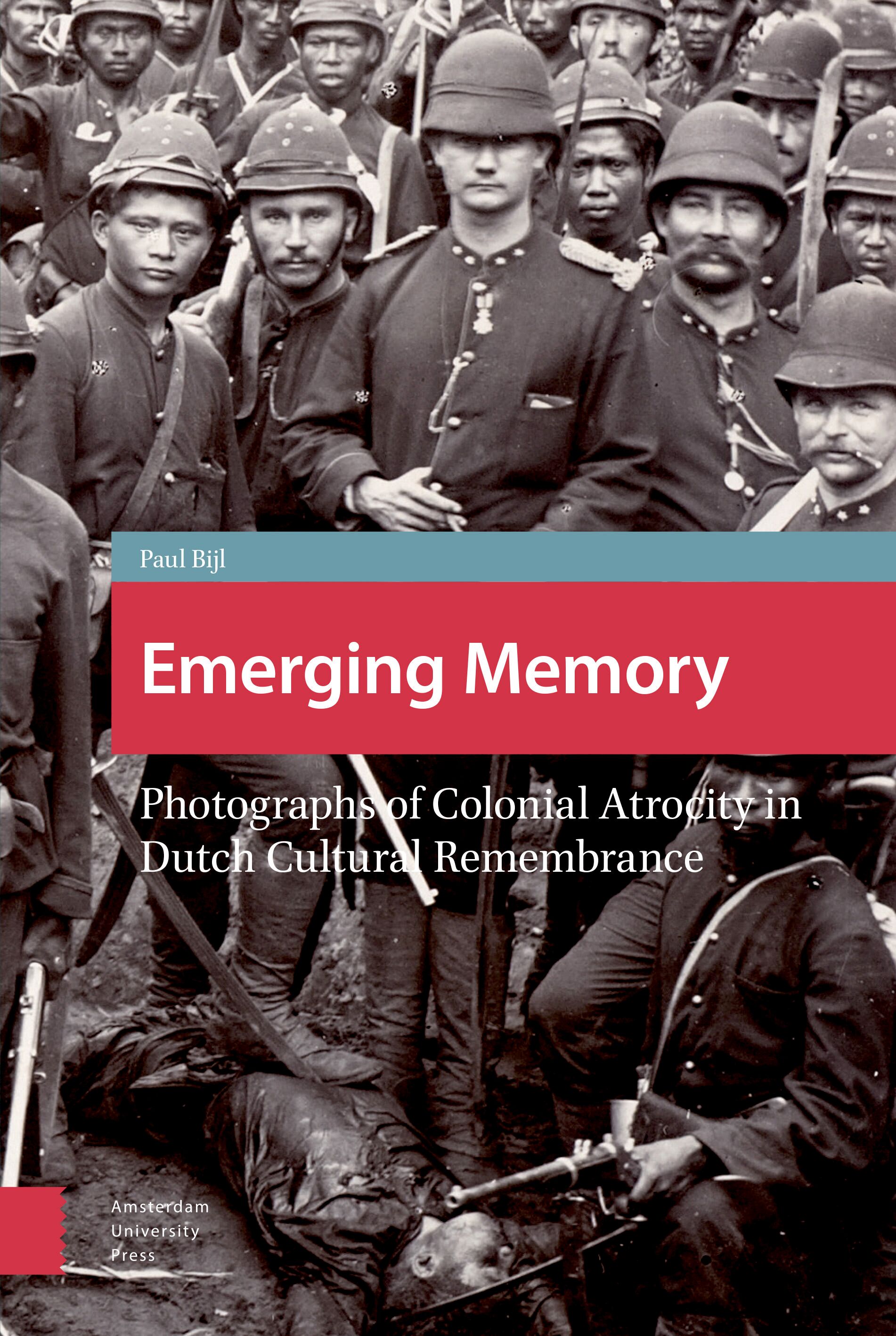
Emerging Memory
This incisive volume brings together postcolonial studies, visual culture and cultural memory studies to explain how the Netherlands continues to rediscover its history of violence in colonial Indonesia. Dutch commentators have frequently claimed that the colonial past and especially the violence associated with it has been 'forgotten' in the Netherlands. Uncovering 'lost' photographs and other documents of violence has thereby become a recurring feature aimed at unmasking a hidden truth.
The author argues that, rather than absent, such images have been consistently present in the Dutch public sphere and have been widely available in print, on television and now on the internet. Emerging Memory: Photographs of Colonial Atrocity in Dutch Cultural Remembrance shows that between memory and forgetting there is a haunted zone from which pasts that do not fit the stories nations live by keep on emerging and submerging while retaining their disturbing presence.
eBook

Emerging Memory
This incisive volume brings together postcolonial studies, visual culture and cultural memory studies to explain how the Netherlands continues to rediscover its history of violence in colonial Indonesia. Dutch commentators have frequently claimed that the colonial past and especially the violence associated with it has been 'forgotten' in the Netherlands. Uncovering 'lost' photographs and other documents of violence has thereby become a recurring feature aimed at unmasking a hidden truth. The author argues that, rather than absent, such images have been consistently present in the Dutch public sphere and have been widely available in print, on television and now on the internet. Emerging Memory: Photographs of Colonial Atrocity in Dutch Cultural Remembrance shows that between memory and forgetting there is a haunted zone from which pasts that do not fit the stories nations live by keep on emerging and submerging while retaining their disturbing presence.
eBook

Formosa Under the Dutch
First published in 1903, this volume explored the history of Formosa (now Taiwan) under Dutch occupation between 1624 and 1661 and its Catholic Mission, along with shedding some light on its early history.
eBook

Secret Trades, Porous Borders
Over the course of the half century from 1865 to 1915, the British and Dutch delineated colonial spheres, in the process creating new frontiers. This book analyzes the development of these frontiers in Insular Southeast Asia as well as the accompanying smuggling activities of the opium traders, currency runners, and human traffickers who pierced such newly drawn borders with growing success.The book presents a history of the evolution of this 3000-km frontier, and then inquires into the smuggling of contraband: who smuggled and why, what routes were favored, and how effectively the British and Dutch were able to enforce their economic, moral, and political will. Examining the history of states and smugglers playing off one another within a hidden but powerful economy of forbidden cargoes, the book also offers new insights into the modern political economies of Southeast Asia.
eBook

Uncertainty, Anxiety, Frugality
The story of leprosy in the Dutch East Indies from the beginning of the 19th century to the middle of the 20th reveals important themes in the colonial enterprise across the territory that is today's Indonesia. Operating in a territory with only a few hundred Western-trained doctors and a population in the tens of millions, Dutch colonial officials approached leprosy with uncertainty and anxiety.
In the early 19thcentury, the Dutch administrationsimply removed sufferers from public view: campaigns targetted anyone \"looking ugly\". Towards the end of the century, colonial science considered leprosy a hereditary disease of tropical subjects, and therefore undeserving of the colonial government's limited resources. The leprosariums were emptied.
At the start of the 20th century, a growing understanding that leprosy was spread by a bacillus caused a panic that leprosy might spread from the tropics to the colonial metropole. The mixed emotions of pity, fear and revulsion associated with management of the disease intensified, and fed into broader debates on colonial policy. The experts were unsure, and resources were never forthcoming, and despite a view that \"bacteria are the same everywhere\", Dutch leprosy treatment in the East Indies mobilized traditional healing practices and relied on home care.
Leo van Bergen's detailed, attentive study to changing policies for treatment and prevention of leprosy (now often called Hansen's disease) is fascinating medical history, and provides a useful lens for understanding colonialism in Indonesia.
eBook

Heaven’s Wrath
Heaven's Wrath explores the religious thought and religious rites of the early Dutch Atlantic world. D. L. Noorlander argues that the Reformed Church and the West India Company forged and maintained a close union, with considerable consequences across the seventeenth century. Noorlander questions the core assumptions about why the Dutch failed to establish a durable empire in America. He downplays the usual commercial explanations and places the focus instead on the tremendous expenses incurred in the Calvinist-backed war and the Reformed Church's meticulous, worried management of colonial affairs. By pinpointing the issues that hampered the size and import of the Dutch Atlantic world, Noorlander revises core notions about the organization and aims of the Dutch empire, the culture of the West India Company, and the very shape of Dutch society.
eBook