
Catalogue Search | MBRL


Are you sure you want to remove the book from the shelf?

{{itemTitle}}
1,064
result(s) for
"Netherlands -- Religion"
Sort by:

Consuls and captives : Dutch-North African diplomacy in the early modern Mediterranean
\"Analyzes how negotiations between Dutch consuls and North African rulers over the liberation of Dutch sailors helped create a new diplomatic order in the western Mediterranean\"-- Provided by publisher.
Book

New Netherland and the Dutch Origins of American Religious Liberty
The settlers of New Netherland were obligated to uphold religious toleration as a legal right by the Dutch Republic's founding document, the 1579 Union of Utrecht, which stated that \"everyone shall remain free in religion and that no one may be persecuted or investigated because of religion.\" For early American historians this statement, unique in the world at its time, lies at the root of American pluralism.
New Netherland and the Dutch Origins of American Religious Libertyoffers a new reading of the way tolerance operated in colonial America. Using sources in several languages and looking at laws and ideas as well as their enforcement and resistance, Evan Haefeli shows that, although tolerance as a general principle was respected in the colony, there was a pronounced struggle against it in practice. Crucial to the fate of New Netherland were the changing religious and political dynamics within the English empire. In the end, Haefeli argues, the most crucial factor in laying the groundwork for religious tolerance in colonial America was less what the Dutch did than their loss of the region to the English at a moment when the English were unusually open to religious tolerance. This legacy, often overlooked, turns out to be critical to the history of American religious diversity.
By setting Dutch America within its broader imperial context,New Netherland and the Dutch Origins of American Religious Libertyoffers a comprehensive and nuanced history of a conflict integral to the histories of the Dutch republic, early America, and religious tolerance.
eBook

Christian Moderns
Across much of the postcolonial world, Christianity has often become inseparable from ideas and practices linking the concept of modernity to that of human emancipation. To explore these links, Webb Keane undertakes a rich ethnographic study of the century-long encounter, from the colonial Dutch East Indies to post-independence Indonesia, among Calvinist missionaries, their converts, and those who resist conversion. Keane's analysis of their struggles over such things as prayers, offerings, and the value of money challenges familiar notions about agency. Through its exploration of language, materiality, and morality, this book illuminates a wide range of debates in social and cultural theory. It demonstrates the crucial place of Christianity in semiotic ideologies of modernity and sheds new light on the importance of religion in colonial and postcolonial histories.
eBook
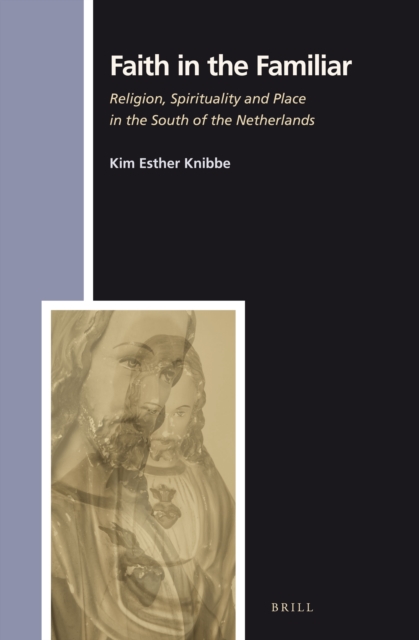
Faith in the familiar : religion, spirituality and place in the south of the Netherlands
Faith in the familiar is an ethnography of religious change in the Netherlands, discussing Catholicism and popular forms of New Age. It focuses on the location of religion in local life and how people relate to religious authority.
eBook

Rape in the republic, 1609-1725 : formulating Dutch identity
By examining depictions of rape in pamphlets, plays, poems, and advice manuals, this book underscores the significance of sex and gender in the construction of Dutch identity during the period of the Revolt of the Netherlands and beyond.
eBook
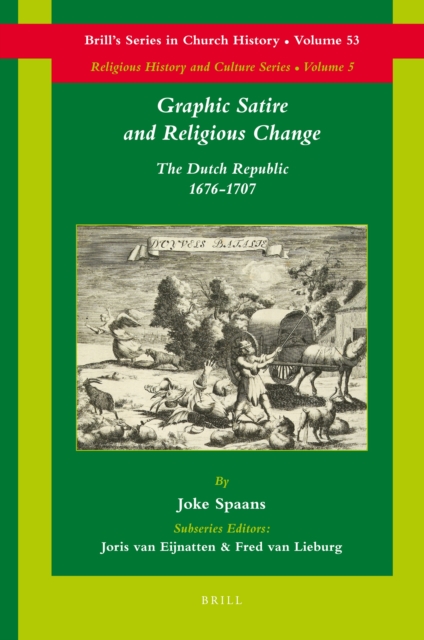
Graphic Satire and Religious Change
Based on a small corpus of enigmatic satirical prints, so far ignored by art historians and historians of religion, this book traces covert debates on the shortcomings of early modern religious culture, and directions for reform, in the Dutch Republic.
eBook

The Emergence of the Science of Religion in the Netherlands
anthropology; cultural; development; ethnology; evolution; history; intellectual; nineteenth-century; religious; science; studies; theology
eBook


Global Calvinism
A comprehensive study of the connection between Calvinist
missions and Dutch imperial expansion during the early modern
period \"A tour de force offering the reader the
best study of global Calvinism in the realms of the Dutch East
India Company.\"-Ronnie Po-Chia Hsia, editor,
Calvinism and Religious Toleration in the Dutch Golden
Age Calvinism went global in the seventeenth and
eighteenth centuries, as close to a thousand Dutch Reformed
ministers, along with hundreds of lay chaplains, attached
themselves to the Dutch East India and West India companies. Across
Asia, Africa, and the Americas where the trading companies set up
operation, Dutch ministers sought to convert \"pagans,\" \"Moors,\"
Jews, and Catholics and to spread the cultural influence of
Protestant Christianity. As Dutch ministers labored under the
auspices of the trading companies, the missionary project
coalesced, sometimes grudgingly but often readily, with empire
building and mercantile capitalism. Simultaneously, Calvinism
became entangled with societies around the world as encounters with
indigenous societies shaped the development of European religious
and intellectual history. Though historians have traditionally
treated the Protestant and European expansion as unrelated
developments, the global reach of Dutch Calvinism offers a unique
opportunity to understand the intermingling of a Protestant faith,
commerce, and empire.
eBook

A question of balance
This book offers a cross-national analysis of judicial decisions and legislative action in three religiously pluralistic Western democracies-the United States, France, and the Netherlands-that shows how each balances individual rights with communal bonds and adheres to or retreats from human rights norms for women and religious practices.
eBook