
Catalogue Search | MBRL


Are you sure you want to remove the book from the shelf?

{{itemTitle}}
634
result(s) for
"Neurobehavioral disorders."
Sort by:


Neurobehavioral Alterations from Noise Exposure in Animals: A Systematic Review
Ecosystems are increasingly involved and influenced by human activities, which are ever-increasing. These activities are mainly due to vehicular, air and sea transportation, thus causing possible repercussions on the fauna that exists there. The aim of this systematic review is to investigate the possible consequences that these activities may have in the field of animal neurobehavior, with special emphasis on the species involved, the most common environment concerned, the noise source and the disturbance that is caused. This research includes articles published in the major databases (PubMed, Cochrane Library, Scopus, Embase, Web of Sciences); the online search yielded 1901 references. After selection, 49 articles (14 reviews and 35 original articles) were finally scrutinized. The main problems that were reported were in relation to movement, reproduction, offspring care and foraging. In live experiments carried out, the repercussions on the marine environment mainly concerned altered swimming, shallower descents, less foraging and an escape reaction for fear of cetaceans and fish. In birds, alterations in foraging, vocalizations and nests were noted; laboratory studies, on the other hand, carried out on small mammals, highlighted spatio-temporal cognitive alterations and memory loss. In conclusion, it appears that greater attention to all ecosystems should be given as soon as possible so as to try to achieve a balance between human activity and the well-being of terrestrial fauna.
Journal Article

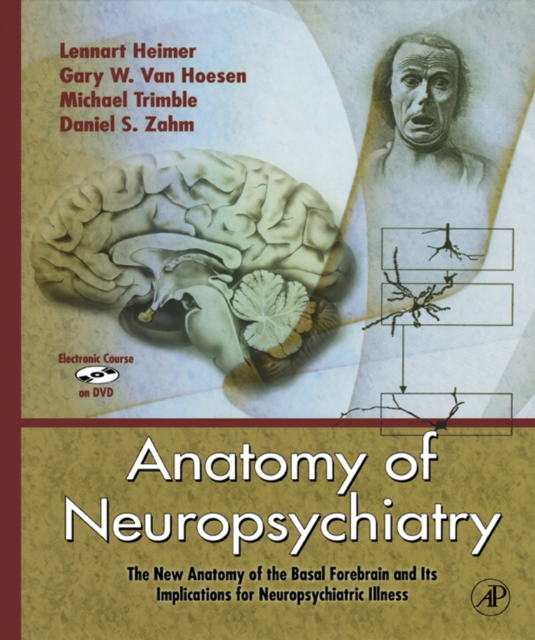
Anatomy of Neuropsychiatry
This book presents the anatomical systems that take part in the scientific and clinical study of emotional functions and neuropsychiatric disorders. It discusses the limbic system-the cortical and subcortical structures in the human brain involved in emotion, motivation, and emotional association with memory-at length and how this is no longer a useful guide to the study of psychiatric disorders. The book provides an understanding of brain anatomy, with an emphasis on the new anatomical framework which has emerged during the last quarter century. The goal is to help the reader develop an understanding of the gross anatomical organization of the human forebrain. All disc-based content for this title is now available on the Web. * A re-evaluation of brain anatomy, with an emphasis on the new anatomical framework which has emerged during the last quarter century* A compellingly expanded conceptualization of Broca's famous limbic lobe* Clinical and basic science boxes highlighting specific concepts, structures, or neuronal circuits from a clinical perspective
eBook


Descriptive Psychopathology
In order to accurately describe and diagnose psychiatric illness, practitioners require in-depth knowledge of the signs and symptoms of behavioral disorders. Descriptive Psychopathology provides a broad review of the psychopathology of psychiatric illness, beyond the limitations of the DSM and ICD criteria. Beginning with a discussion of the background to psychiatric classification, the authors explore the problems and limitations of current diagnostic systems. The following chapters then present the principles of psychiatric examination and diagnosis, described with accompanying patient vignettes and summary tables, and related to different diagnostic concerns. A thought-provoking conclusion proposes a restructuring of psychiatric classification based on the psychopathology literature and its validating data. Written for psychiatry and neurology residents, clinical psychologists, behavioral neurologists, clinical psychology students and psychiatric nurse practitioners, it is invaluable to anyone who accepts the responsibility for the care of patients with behavioral syndromes.
eBook

Neurotribes : the legacy of autism and the future of neurodiversity
\"A groundbreaking book that upends conventional thinking about autism and suggests a broader model for acceptance, understanding, and full participation in society for people who think differently\"-- Provided by publisher.
Book

Yipping Tiger
Perminder Sachdev explores the complexity of the human brain through ten fascinating case-studies from the neuropsychiatric clinic. From alien hand syndrome, anorexia nervosa, frontal lobe dysfunction and phantom limb to coprolalia in Tourettes Syndrome, dementia and golfer's cramp, he provides an understanding of how each disorder has been conceptualised and treated and the challenges that it poses for both the neuropshychiatrist and his patient.
eBook

Neuropsychology of cardiovascular disease
\"Cardiovascular disease (CVD) is the leading cause of morbidity and mortality in the United States and most westernized nations. Both CVDs and their risk factors confer substantial risk for stroke and dementia, but are also associated with more subtle changes in brain structure and function and cognitive performance prior to such devastating clinical outcomes. It has been suggested that there exists a continuum of brain abnormalities and cognitive difficulties associated with increasingly severe manifestations of cardiovascular risk factors and diseases that precede vascular cognitive impairment and may ultimately culminate in stroke or dementia.This second edition examines the relations of a host of behavioral and biomedical risk factors, in addition to subclinical and clinical CVDs, to brain and cognitive function. Associations with dementia and pre-dementia cognitive performance are reported, described, and discussed with a focus on underlying brain mechanisms. Future research agendas are suggested, and clinical implications are considered. The volume is a resource for professionals and students in neuropsychology, behavioral medicine, neurology, cardiology, cardiovascular and behavioral epidemiology, gerontology, geriatric medicine, nursing, adult developmental psychology, and for other physicians and health care professionals who work with patients with, or at risk for, CVDs\"-- Provided by publisher.
Book
Introduction to Neuropsychotherapy
This groundbreaking volume provides a theoretical overview and clinical guidelines for the application of neuropsychotherapy. It takes a multidisciplinary approach, combining neuropsychological knowledge with recent conceptualizations from neuroscience and psychotherapy, with special emphasis on the role of working alliance.
The first part of the book focuses on the historical roots of neuropsychotherapy. Then, a framework of interpersonal process in neuropsychotherapy and conceptualization for clinical purposes are described. Resistance is described through a historical perspective of conceptualizations to the present-day demands of understanding this phenomenon in the process of neuropsychotherapy. In addition, the neuropsychology of emotions is presented in a therapeutic process through a case intervention.
The latter chapters of the book are concerned with special interest interventions and psychotherapeutic working methods suited for neuropsychotherapy.
Representing a wide variety of theoretical, research oriented, clinical neuropsychological and psychotherapeutic expertise, this book will interest professionals in neuropsychological rehabilitation and those working with patients with cognitive, emotional and behavioral disorders in in-patient and out-patient settings.
eBook