
Catalogue Search | MBRL


Are you sure you want to remove the book from the shelf?

{{itemTitle}}
59
result(s) for
"New Jersey Fiction."
Sort by:

This is the story of you
Seventeen-year-old Mira lives in a small island beach town off the coast of New Jersey year-round, and when a devastating superstorm strikes she will face the storm's wrath and the destruction it leaves behind alone.
Book

Made in Newark
What does it mean to turn the public library or museum into a civic forum?Made in Newarkdescribes a turbulent industrial city at the dawn of the twentieth century and the ways it inspired the library's outspoken director, John Cotton Dana, to collaborate with industrialists, social workers, educators, and New Women.This is the story of experimental exhibitions in the library and the founding of the Newark Museum Associationùa project in which cultural literacy was intertwined with civics and consumption. Local artisans demonstrated crafts, connecting the cultural institution to the department store, school, and factory, all of which invoked the ideal of municipal patriotism. Today, as cultural institutions reappraise their relevance,Made in Newarkexplores precedents for contemporary debates over the ways the library and museum engage communities, define heritage in a multicultural era, and add value to the economy.
eBook


New Jersey's Environments
Americans often think of New Jersey as an environmental nightmare. As seen from its infamous turnpike, which is how many travelers experience the Garden State, it is difficult not to be troubled by the wealth of industrial plants, belching smokestacks, and hills upon hills of landfills. Yet those living and working in New Jersey often experience a very different environment. Despite its dense population and urban growth, two-thirds of the state remains covered in farmland and forest, and New Jersey has a larger percentage of land dedicated to state parks and forestland than the average for all states. It is this ecological paradox that makes New Jersey important for understanding the relationship between Americans and their natural world.
InNew Jersey's Environments, historians, policy-makers, and earth scientists use a case study approach to uncover the causes and consequences of decisions regarding land use, resources, and conservation. Nine essays consider topics ranging from solid waste and wildlife management to the effects of sprawl on natural disaster preparedness. The state is astonishingly diverse and faces more than the usual competing interests from environmentalists, citizens, and businesses.
This book documents the innovations and compromises created on behalf of and in response to growing environmental concerns in New Jersey, all of which set examples on the local level for nationwide and worldwide efforts that share the goal of protecting the natural world.
eBook

Henry Reed's baby-sitting service
Back in Grover's Corners, N.J., for the summer, Henry and his partner Midge establish a baby sitting service and find a disappearing child and a peacock among their charges.
Book
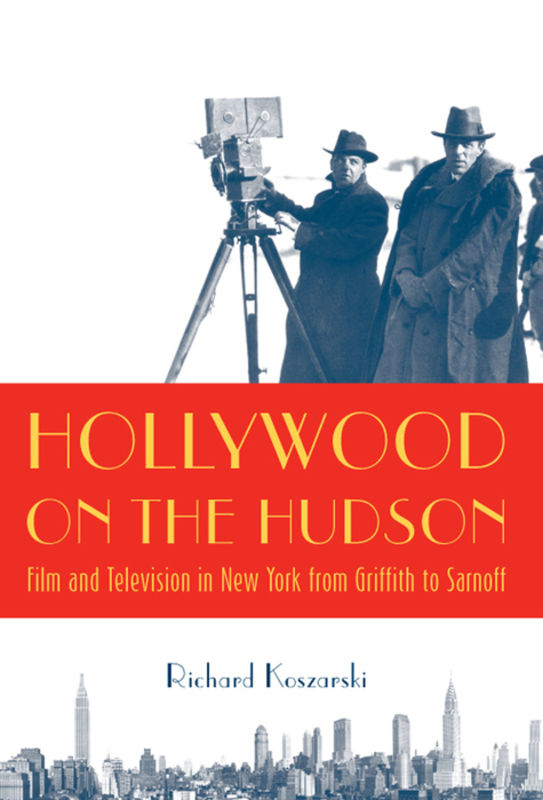
Hollywood on the Hudson
In Hollywood on the Hudson, Richard Koszarski rewrites an important part of the history of American cinema. During the 1920s and 1930s, film industry executives had centralized the mass production of feature pictures in a series of gigantic film factories scattered across Southern California, while maintaining New York as the economic and administrative center. But as Koszarski reveals, many writers, producers, and directors also continued to work here, especially if their independent vision was too big for the Hollywood production line.
eBook

Nicotine
The conventional one in a non-conventional family, Penny Baker inherits her father's childhood home in New Jersey. She finds the property not overgrown and abandoned, but occupied by a group of friendly anarchist squatters whom she finds unexpectedly charming, and who have renamed the property Nicotine House. The residents are defenders of smokers' rights, and they possess the type of passion and fervor Penny feels she's desperately lacking. As her family's lives begin to converge around the fate of the Nicotine House, a reckless confrontation between her old family and her new one changes everything.
Book

Reality by Other Means
This short story anthology by the author of The Godhead Trilogy \"reveals him to be one of the wittiest writers of contemporary speculative fiction\" (Publishers Weekly, starred review).Join the Abominable Snowman as, determined to transcend his cannibalistic past, he studies Tibetan Buddhism under the Dalai Lama. Pace the walls of Ilium with fair Helen as she tries to convince both sides to abandon their absurd Trojan War. Visit the nursery of Zenobia Garber, born to a Pennsylvania farm couple who accept her for the uncanny little biosphere she is. Scramble aboard the raft built by the passengers and crew of the sinking Titanic-and don't be surprised when the vessel transmutes into a world even more astonishing than the original Ship of Dreams. Reality by Other Means offers readers the most celebrated results from James Morrow's decades-long career designing fictive thought experiments. Anchored by seven previously uncollected stories, this omnibus ranges from social satire to theological hijinks, steampunk escapades to philosophical antics.
eBook

Maybe one day
Zoe thought that being cut from her ballet program was the worst thing that could happen, but when her best friend Olivia is diagnosed with a life-threatening disease, Zoe quickly learns that not being able to dance is the least of her problems.
Book

Adolescent Literacy: Learning and Understanding Content
Learning to read—amazing as it is to small children and their parents—is one thing. Reading to learn, explains Susan Goldman of the University of Illinois at Chicago, is quite another. Are today's students able to use reading and writing to acquire knowledge, solve problems, and make decisions in academic, personal, and professional arenas? Do they have the literacy skills necessary to meet the demands of the twenty-first century? To answer these questions, Goldman describes the increasingly complex comprehension, reasoning skills, and knowledge that students need as they progress through school and surveys what researchers and educators know about how to teach those skills. Successfully reading to learn requires the ability to analyze, synthesize, and evaluate information from multiple sources, Goldman writes. Effective readers must be able to apply different knowledge, reading, and reasoning processes to different types of content, from fiction to history and science, to news accounts and user manuals. They must assess sources of information for relevance, reliability, impartiality, and completeness. And they must connect information across multiple sources. In short, successful readers must not only use general reading skills but also pay close attention to discipline-specific processes. Goldman reviews the evidence on three different instructional approaches to reading to learn: general comprehension strategies, classroom discussion, and disciplinary content instruction. She argues that building the literacy skills necessary for U.S. students to read comprehensively and critically and to learn content in a variety of disciplines should be a primary responsibility for all of the nation's teachers. But outside of English, few subject-area teachers are aware of the need to teach subject-area reading comprehension skills, nor have they had opportunities to learn them themselves. Building the capacity of all teachers to meet the literacy needs of today's students requires long-term investment and commitment from the education community as well as society as a whole.
Journal Article