
Catalogue Search | MBRL


Are you sure you want to remove the book from the shelf?

{{itemTitle}}
30
result(s) for
"New Left -- United States -- History -- 20th century"
Sort by:

The rise and fall of the new American Revolution
\"The year 1968 is recalled most of all as a year when revolution beckoned or threatened. On the 50th anniversary of that tumultuous year, cultural historians Robert Cottrell and Blaine T. Browne provide a well-informed, up-to-date synthesis of the events that rocked the world, emphasizing the revolutionary possibilities.\"--Provided by publisher.
Book
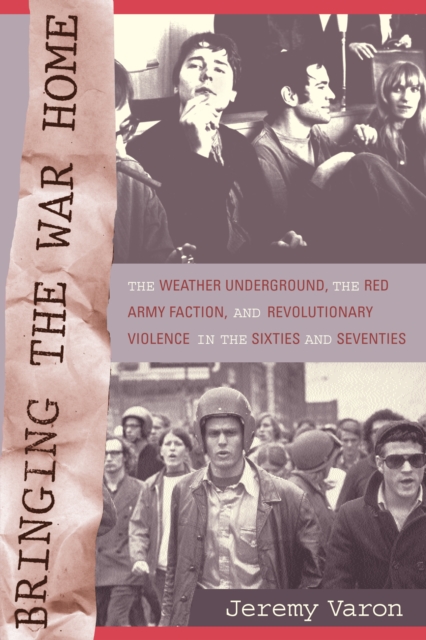
Bringing the War Home
In this first comprehensive comparison of left-wing violence in the United States and West Germany, Jeremy Varon focuses on America's Weather Underground and Germany's Red Army Faction to consider how and why young, middle-class radicals in prosperous democratic societies turned to armed struggle in efforts to overthrow their states. Based on a wealth of primary material, ranging from interviews to FBI reports, this book reconstructs the motivation and ideology of violent organizations active during the 1960s and 1970s. Varon conveys the intense passions of the era--the heat of moral purpose, the depth of Utopian longing, the sense of danger and despair, and the exhilaration over temporary triumphs. Varon's compelling interpretation of the logic and limits of dissent in democratic societies provides striking insights into the role of militancy in contemporary protest movements and has wide implications for the United States' current \"war on terrorism.\" Varon explores Weatherman and RAF's strong similarities and the reasons why radicals in different settings developed a shared set of values, languages, and strategies. Addressing the relationship of historical memory to political action, Varon demonstrates how Germany's fascist past influenced the brutal and escalating nature of the West German conflict in the 60s and 70s, as well as the reasons why left-wing violence dropped sharply in the United States during the 1970s. Bringing the War Home is a fascinating account of why violence develops within social movements, how states can respond to radical dissent and forms of terror, how the rational and irrational can combine in political movements, and finally how moral outrage and militancy can play both constructive and destructive roles in efforts at social change.
eBook

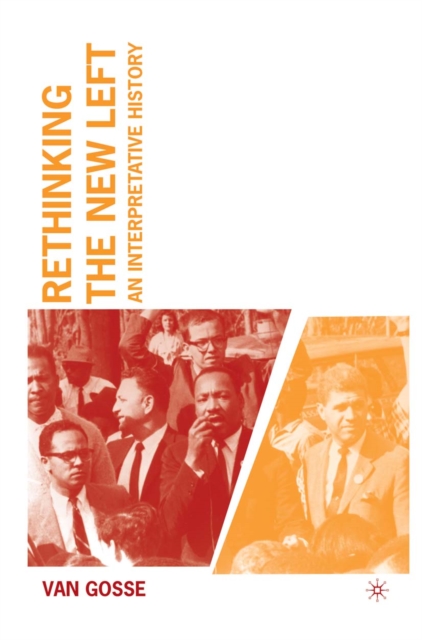
Rethinking the New Left : an interpretative history
Gosse, one of the foremost historians of the American postwar left, has crafted an engaging and concise synthetic history of the varied movements and organizations that have been placed under the broad umbrella known as the New Left.
eBook
The movement and the Middle East : how the Arab-Israeli conflict divided the American left
The Arab-Israeli conflict constituted a serious problem for the American Left in the 1960s: pro-Palestinian activists hailed the Palestinian struggle against Israel as part of a fundamental restructuring of the global imperialist order, while pro-Israeli leftists held a less revolutionary worldview that understood Israel as a paragon of democratic socialist virtue. This intra-left debate was in part doctrinal, in part generational. But further woven into this split were sometimes agonizing questions of identity. Jews were disproportionately well-represented in the Movement, and their personal and communal lives could deeply affect their stances vis-à-vis the Middle East. The Movement and the Middle East offers the first assessment of the controversial and ultimately debilitating role of the Arab-Israeli conflict among left-wing activists during a turbulent period of American history. Michael R. Fischbach draws on a deep well of original sources—from personal interviews to declassified FBI and CIA documents—to present a story of the left-wing responses to the question of Palestine and Israel. He shows how, as the 1970s wore on, the cleavages emerging within the American Left widened, weakening the Movement and leaving a lasting impact that still affects progressive American politics today.
eBook
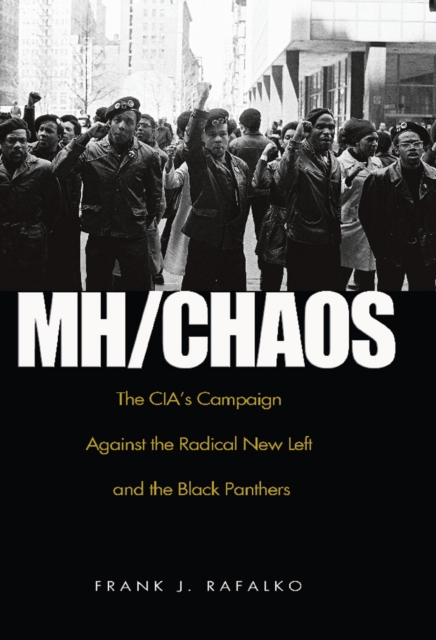
Mh/chaos
Operation MH/CHAOS was the code name for a domestic espionage project conducted by the Central Intelligence Agency in the late1960s and early 1970s. MH/CHAOS: The CIA's Campaign Against the Radical New Left and the Black Panters is an insider's account of the CIA's Counterintelligence Staff's Special Operations Group first charged by Presidents Lyndon Johnson and later by Richard Nixon to find foreign intelligence, terrorist, organizations or government contacts, controlling or influencing Anti-Vietnam War activists or American black extremists protesting, bombing and carrying out other anti-government, unlawful or illegal activities in the United States. The operation was launched under Director of Central Intelligence Richard Helms, by chief of counter-intelligence, James Jesus Angleton, and headed by Richard Ober. The program's goal was to unmask possible foreign influences on the student antiwar movement. The \"MH\" designation signified that the program had a worldwide area of operations. When President Nixon came to office in 1969, all of the existing domestic surveillance activities were consolidated into Operation MH/CHAOS and used CIA stations abroad to report on antiwar activities of United States citizens traveling abroad, employing methods such as physical surveillance and electronic eavesdropping, utilizing \"liaison services\" in maintaining such surveillance. The operations were later expanded to include 60 officers. In 1969, following the expansion, the operation began developing its own network of informants for the purposes of infiltrating various foreign antiwar groups located in foreign countries that might have ties to domestic groups. Eventually, CIA officers expanded the program to include other leftist or counter-cultural groups with no discernible connection to Vietnam, such as groups operating within the women's liberation
movement, including Students for a Democratic Society, the Black Panther Party and Women Strike for Peace. Also targeted was the Israeli embassy, and domestic Jewish groups such as the B'nai B'ritht. As a result of the Watergate break-in, involving two former CIA officers, Operation MH/CHAOS was discontinued. The secret nature of the program was exposed by Seymour Hersh in the New York Times on December 22, 1974. The following year, further details were revealed during Representative Bella Abzug's House Subcommittee on Government Information and individual Rights. The government, in response to the revelations, launched the Commission on CIA Activities Within the United States (The Rockefeller Commission), lead by then Vice President Nelson Rockefeller, to investigate the depth of the surveillance. In MH/CHOAS, the author, who is a former CIA officer, refutes the charges made by the New York Times and the Washington Post at the time that this domestic spying program first made headlines, and takes issue with conclusions of the Rockefeller Commission and the Church Committee. He relates how the Special Operations Group began, was staffed and how it was transformed into an anti-terrorist unit before it ceased operation. Rafalko details the information that Special Operations Group collected against the New Left and Black extremists and makes the case that the MHCHAOS program was justified, why the CIA was the logical agency to conduct the collection, and the consequences suffered later by American counterintelligence because of these investigations.
eBook

Spectres of 1919
A look at the violent \"Red Summer of 1919\" and its
intersection with the highly politicized New Negro movement and the
Harlem Renaissance
With the New Negro movement and the Harlem Renaissance, the
1920s was a landmark decade in African American political and
cultural history, characterized by an upsurge in racial awareness
and artistic creativity. In Spectres of 1919 Barbara Foley
traces the origins of this revolutionary era to the turbulent year
1919, identifying the events and trends in American society that
spurred the black community to action and examining the forms that
action took as it evolved.
Unlike prior studies of the Harlem Renaissance, which see 1919
as significant mostly because of the geographic migrations of
blacks to the North, Spectres of 1919 looks at that year
as the political crucible from which the radicalism of the 1920s
emerged. Foley draws from a wealth of primary sources, taking a
bold new approach to the origins of African American radicalism and
adding nuance and complexity to the understanding of a fascinating
and vibrant era.
eBook
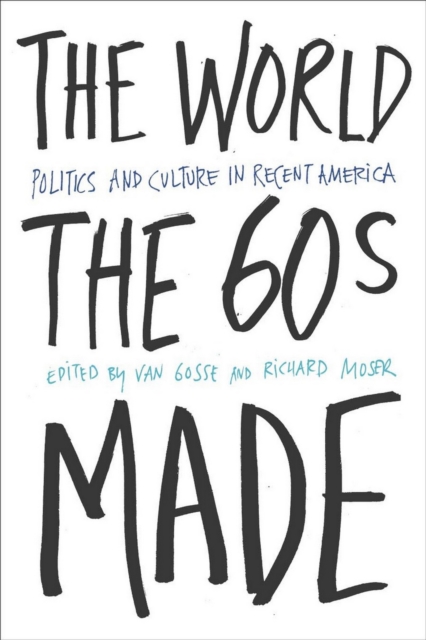
The World Sixties Made
How can we make sense of the fact that after decades of right-wing political mobilizing the major social changes wrought by the Sixties are more than ever part of American life?The World the Sixties Made,the first academic collection to treat the last quarter of the twentieth century as a distinct period of U.S. history, rebuts popular accounts that emphasize a conservative ascendancy. The essays in this volume survey a vast historical terrain to tease out the meaning of the not-so-long ago. They trace the ways in which recent U.S. culture and politics continue to be shaped by the legacy of the New Left's social movements, from feminism to gay liberation to black power. Together these essays demonstrate that the America that emerged in the 1970s was a nation profoundly, even radically democratized.
eBook

Exceptional Whites, Bad Jews: Racial Subjectivity, Anti-Zionism, and the Jewish New Left
It is often assumed that the 1967 Arab-Israeli War led to the \"wholesale conversion of the Jews to Zionism,\" as Norman Podhoretz famously phrased it. This \"conversion\" is equally, if often less explicitly, said to coincide with the end of the era of Jewish marginality in the U.S. and West more broadly, as Jews of European descent were half-included, half-conscripted, into normative structures of whiteness, class ascension, and citizenship. While this epochal shift in Jewish racial formation and political allegiance is undeniable especially in the context of large Jewish secular and religious institutions, at the time this \"conversion\" was seen as anything but inevitable. Many Jewish liberals, including Irving Howe, Seymour Lipset, and Nathan Glazer, and reactionaries such as Meir Kahane, saw Jewish overrepresentation and hypervisibility in New Left organizations such as Students for a Democratic Society, the Youth International Party, and the Socialist Workers Party as a sign that Jewish youth rejected Zionism as well as the Jewish rise into the middle class. That retrospectively we see Jewish racial formation and political alignment after 1967 as a fait accompli often relies on the erasure not only of mass Jewish participation in the New Left, but also the erasure of the New Left's anti-imperialist political commitments, including critique of expansive Israeli militarism and the settler colonial assumptions underlying Zionism. Looking at memoirs, pamphlets, histories, and original interviews with Jewish participants in the New Left, this article excavates the political alignments of Jewish New Left activists, exploring opposition to the U.S.'s new support of the Israeli state as well as the changing Ashkenazi Jewish racial assignment. Rather than finding Third World and Black Power critiques of Israel antisemitic, it was precisely the Jewish New Left's politics of international and multiracial solidarity that encouraged their support for Black Power critiques of Zionism. In this way, Jewish members of the New Left also attempted to critically challenge their own whiteness, aligning support for Israel after 1967 with support for the racial and economic structures of militarism and capitalism at home.
Journal Article

The Port Huron Statement
The Port Huron Statement was the most important manifesto of the New Left student movement of the 1960s. Initially drafted by Tom Hayden and debated over the course of three days in 1962 at a meeting of student leaders, the statement was issued by Students for a Democratic Society as their founding document. Its key idea, \"participatory democracy,\" proved a watchword for Sixties radicalism that has also reemerged in popular protests from the Arab Spring to Occupy Wall Street.
Featuring essays by some of the original contributors as well as prominent scholars who were influenced by the manifesto,The Port Huron Statementprobes the origins, content, and contemporary influence of the document that heralded the emergence of a vibrant New Left in American culture and politics. Opening with an essay by Tom Hayden that provides a sweeping reflection on the document's enduring significance, the volume explores the diverse intellectual and cultural roots of the Statement, the uneasy dynamics between liberals and radicals that led to and followed this convergence, the ways participatory democracy was defined and deployed in the 1960s, and the continuing resonances this idea has for political movements today. An appendix includes the complete text of the original document.
The Port Huron Statementoffers a vivid portrait of a unique moment in the history of radicalism, showing that the ideas that inspired a generation of young radicals more than half a century ago are just as important and provocative today.
Contributors:Robert Cohen, Richard Flacks, Jennifer Frost, Daniel Geary, Barbara Haber, Grace Elizabeth Hale, Tom Hayden, Michael Kazin, Nelson Lichtenstein, Jane Mansbridge, Lisa McGirr, James Miller, Robert J. S. Ross, Michael Vester, Erik Olin Wright.
eBook