
Catalogue Search | MBRL


Are you sure you want to remove the book from the shelf?

{{itemTitle}}
145
result(s) for
"New York/Regional : New York-Regional"
Sort by:

Lessons from Lockport
A long-time liberal activist gets an up-close political
education about conservative America when he moves to a small
town in upstate New York.
During a time of great national division and a growing
working-class rebellion that has turned American politics on
its head, a longtime liberal activist moves to a small town in
the conservative northwest corner of New York State. He becomes
a weekly opinion columnist for the city's two-hundred-year-old
daily newspaper. His columns force light into the dark corners
of local politics and provoke local debate over national
issues, from guns to climate change. Dozens of people begin to
speak to him about his columns, in stores, on the street, in
playgrounds, and beyond. His columns also spark fierce debate
in a community Facebook group that includes almost everyone in
town. The result is an up-close education about what makes
small-town America tick, just as small towns like this one are
driving a national political upheaval. Told through stories
that will entertain readers as well as make them think,
Lessons from Lockport offers a unique look at one of
the most misunderstood corners of American culture.
eBook

Bobby Darin
A multilayered portrait of this brash, gifted artist,
whose restless voice and spirit seem as alive today as
ever.
A performer who rivaled Sinatra, Bobby Darin rose from dire
poverty to become one of the biggest stars of his generation.
Dogged by chronic illness, he knew that time was not on his
side, and so, in a career full of dizzying twists and turns, he
did it all, moving from teen idol to Vegas song-and-dance man,
from hipster to folkie and back. In this biography, David
Evanier offers a multilayered portrait of this brash, gifted
artist, including the dark side of his celebrated marriage to
America's sweetheart, Sandra Dee, and the incredible family
secret that tore him apart at the end.
eBook

Staten Island's Elliottville
The story of a 19th century Staten Island town that
nurtured the careers of nationally significant reformers,
abolitionists, and transcendentalists.
This book traces five decades of community life in a
nineteenth-century Staten Island neighborhood informally called
Elliottville, where extraordinary people lived. Its history
illuminates the impact of transformative cultural, social,
economic, and political change stemming from abolitionism,
transcendentalism, the women's suffrage movement, and the rapid
growth of the nation. Begun in 1839 as a therapeutic retreat,
New Englanders with ties to Emerson settled there, forming a
distinctive community. Their achievements in art, literature,
and social reform attracted even more like-minded people,
including Francis George Shaw, George William Curtis, Theodore
Winthrop, Robert Gould Shaw, Helena de Kay Gilder, Charles de
Kay, Anna Leonowens, and Maria \"Midy\" Morgan. Its vibrant
intellectual life was threatened by an influx of Gilded Age men
in the 1870s and destroyed when a freight rail line separated
Elliottville from the Kill Van Kull. Drawing on a wealth of
archival material and unique maps and illustrations, this book
gives a vivid picture of how one small community could impact
the country's intellectual and social development.
eBook

The Redskins
The Redskins , James Fenimore Cooper's 1846 novel about the
Anti-Rent Wars in upstate New York, is now available in a scholarly
edition. The final work in the \"Littlepage trilogy,\" The
Redskins includes Cooper's enduring theme of Indigenous-White
relations but examines it in the context of contemporary tensions
between wealthy landlords and their tenant farmers in the Hudson
Valley region. The work is narrated in the voice of a privileged
landowner who presents an impassioned defense of the aristocratic
class in America and thus raises cardinal questions regarding
Cooper's own intentions and authorial control. Cooper himself was
often derided as an \"aristocrat\" in this later phase of his career,
and the novel can be read as both an endorsement of and a rebuttal
to that judgment. Edited by Hugh Egan, this volume includes
extensive historical background material as well as pertinent
textual notes based on the original manuscript. As part of the
series in the Writings of James Fenimore Cooper, this MLA-approved
edition of The Redskins will serve as the definitive text
for future teachers and scholars alike. The Writings of
James Fenimore Cooper The distinguished Cooper scholar
James Franklin Beard (1919-1989) began organizing the Writings of
James Fenimore Cooper in the late 1960s, as his work on publishing
the monumental Letters and Journals of James Fenimore Cooper came
to fulfillment. Beard's intention was to provide readers with sound
scholarly editions of Cooper's major works, based wherever possible
on authorial manuscripts. To date, the Writings of James Fenimore
Cooper has made available texts of many of Cooper's best-known
novels, as well as some of his most important works of political
and social commentary.
eBook
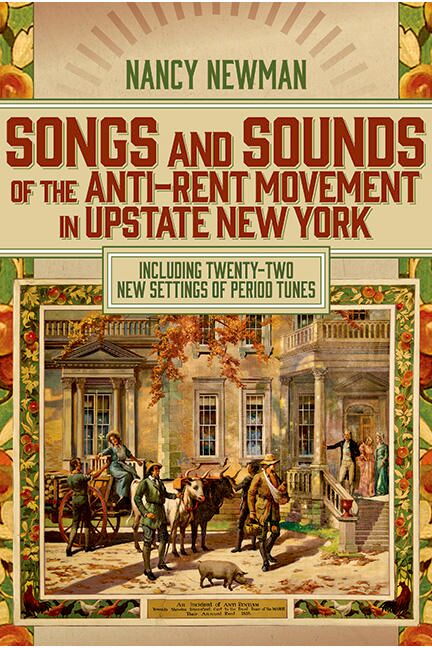
Songs and Sounds of the Anti-Rent Movement in Upstate New York
Upstate New York's Anti-Rent Movement is considered the last struggle over feudalism in the United States. Tenant farmers in the Hudson-Mohawk region engaged in organized protest throughout the 1840s to contest monopoly ownership of the land they worked. Arguing their cause in newspapers, on broadsides, and at rallies, their aspirations also took shape in poetry and song. More than twenty sets of lyrics (and one instrumental composition) were written at various stages of the conflict. Some of their musical sources, such as \"Old Dan Tucker\" and \"Bruce's Address,\" are still well known. Each fully contextualized song offers insight into the role vernacular music played in one of the nineteenth century’s major social reform movements.
This is the first book to gather the poetry and corresponding tunes into one publication. It provides detailed analysis of the repertory, followed by new musical scores of the songs, reconstructed from contemporary historical sources for study and performance. It also examines the movement’s later dramatization in novels, film, and public commemorations as successive generations grapple with its meaning.
eBook

The Bravo
The Bravo (1831) takes place in early eighteenth-century
Venice, when the \"Serene Republic\" had lost much of its glory,
leaving its oligarchs struggling to hold on to their family wealth
by manipulating the government and people through secret councils
and a figure-head doge. In 1844, Cooper called it \"in spirit, the
most American book I ever wrote\" because of its depiction of the
masses duped by demagoguery and the attempts of Congress to rein in
President Jackson, who Cooper saw as representing the popular will.
In the novel, the low-born hero, Jacopo Frontoni, is forced to
become an agent of the state because his unjustly imprisoned father
languishes in the infamous state prison. On the last page, Jacopo
is executed as a scapegoat for the crimes attributed to him of
which he is innocent, rendering his beloved insane. Only in a
subplot does a noble couple escape Venice to enjoy marriage. The
present text is based on all extant manuscript witnesses (including
a lengthy deleted section) and offers extensive explanatory notes.
eBook
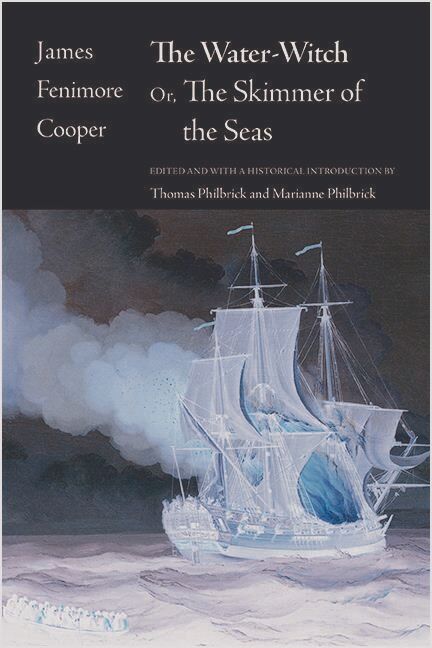
The Water-Witch
Chiefly set on the waters and islands of New York Harbor in the
early years of the 1700s, James Fenimore Cooper's novel The
Water-Witch (1830) paints a vivid picture of life in the
little colonial port. It was familiar territory for Cooper, who a
century later had served as a junior officer on board an
eighteen-gun sloop-of-war stationed at the Brooklyn Navy Yard. That
experience acquainted him with the navigational intricacies and
dangers with which his characters must deal as they carry out the
central action of the novel, the repeated attempts by a British
naval cruiser to capture the brigantine commanded by a notorious
smuggler known as the Skimmer of the Seas. As in all of Cooper's
nautical novels, the scenes of ship-handling and naval combat in
The Water-Witch are rendered with absolute authenticity,
but here he envelops them in a cloud of mystery and magic that is
dispersed only in the chaotic climax of the book. This scholarly
edition includes an informative historical introduction and
thorough explanatory notes. It also serves as an example of the
processes by which an authoritative text is established.
The Writings of James Fenimore Cooper The
distinguished Cooper scholar James Franklin Beard (1919-1989) began
organizing the Writings of James Fenimore Cooper in the late 1960s,
as his work on publishing the monumental Letters and Journals of
James Fenimore Cooper came to fulfillment. Beard's intention was to
provide readers with sound scholarly editions of Cooper's major
works, based wherever possible on authorial manuscripts. To date,
the Writings of James Fenimore Cooper has made available texts of
many of Cooper's best-known novels, as well as some of his most
important works of political and social commentary.
eBook
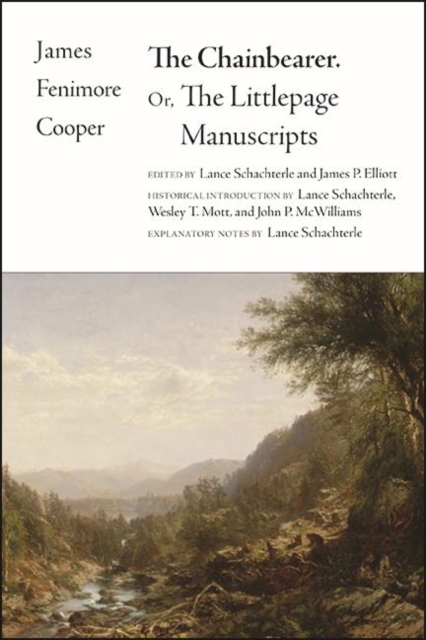
The Chainbearer
Cooper's The Chainbearer presents an exciting narrative that interrogates issues of what it means to own land. The novel examines the claims of ownership of wilderness land among Native Americans, New England squatters, and the old New York families with legal deeds.
eBook
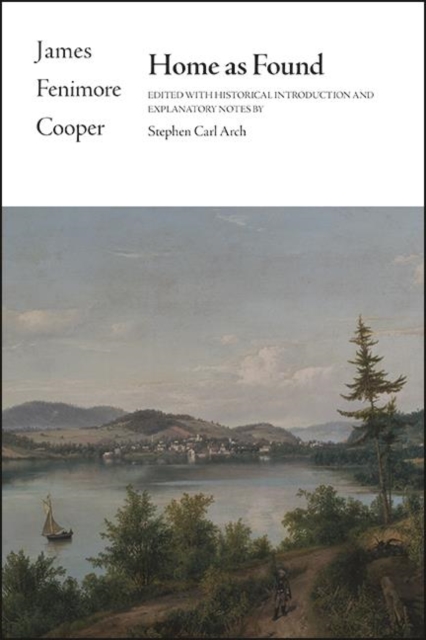
Home as Found
Within months of publishing Homeward Bound , James Fenimore
Cooper continued that story in a second, stand-alone novel,
Home as Found . One of the most important of his long
career, Home as Found is a novel of manners in which
Cooper satirized Wall Street speculation, jingoism, the penny
press, and high society, writing boisterously and with a sharp but
critical eye about a nation in transition. He revealed \"follies and
peculiarities\" of the young nation, but did so with a hope that the
advancing forces of democracy would not get turned aside by greed
and insular nationalism. In drawing rooms, ballrooms, and Wall
Street offices, Cooper sees clearly into the heart of the
democratic experiment, dramatizing conflicts that we are still
grappling with nearly two hundred years later. Stephen Carl Arch
provides a historical introduction discussing Cooper's composition
of the novel and its politicized reception in journals and
newspapers, along with detailed explanatory notes. This
authoritative edition draws upon the first edition, a partial
author's manuscript, and a substantial (but not complete)
amanuensis copy of the author's manuscript; and provides a full
scholarly apparatus discussing the editorial choices. It has been
approved by the Committee on Scholarly Editions of the Modern
Language Association. The Writings of James Fenimore
Cooper The distinguished Cooper scholar James Franklin
Beard (1919-1989) began organizing the Writings of James Fenimore
Cooper in the late 1960s, as his work on publishing the monumental
Letters and Journals of James Fenimore Cooper came to fulfillment.
Beard's intention was to provide readers with sound scholarly
editions of Cooper's major works, based wherever possible on
authorial manuscripts. To date, the Writings of James Fenimore
Cooper has made available texts of many of Cooper's best-known
novels, as well as some of his most important works of political
and social commentary.
eBook
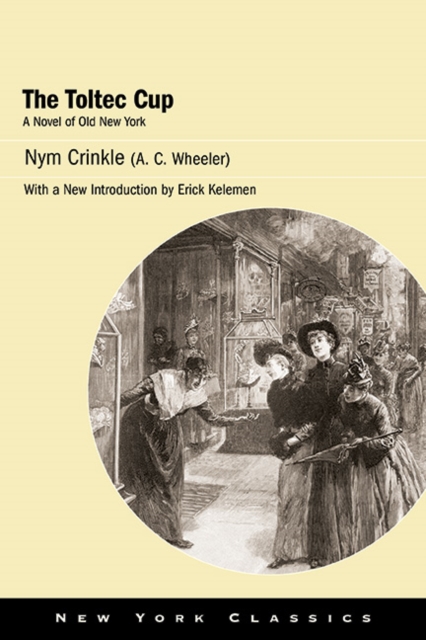
The Toltec Cup
The Toltec Cup was published in 1890 by A. C. Wheeler
under the pseudonym of \"Nym Crinkle.\" A tale of conspiracy and love
triangles, the novel centers on a mysterious silver cup covered in
hieroglyphs that goes missing just days after its owner's death.
New York Police Inspector John Wilder grows suspicious when someone
offers a huge reward for the cup's return. Wilder traces the reward
to Colin Carteret, an artist engaged to the murdered man's
daughter, who swears he did not know of the cup before the reward
appeared in the newspaper. Together, the two men follow a trail of
clues that lead them to New York City slums, a beautiful young
woman named Manuella Castleton, and a syndicate that believes that
the cup will lead to an extraordinary buried treasure. Contemporary
readers will enjoy the novel's remarkable depictions of
mid-nineteenth-century New York City. Roaming the Gas House
District, the Bowery, Union Square, Harlem, and the Meatpacking
District, The Toltec Cup explores a dynamic landscape and
diverse peoples. This new edition revives a forgotten world for a
new generation of readers.
eBook