
Catalogue Search | MBRL


Are you sure you want to remove the book from the shelf?

{{itemTitle}}
214
result(s) for
"New York (N.Y.) -- Race relations"
Sort by:


White Boy
How does a Jewish boy who spent the bulk of his childhood on the basketball courts of Brooklyn wind up teaching in one of the city's pioneering black studies departments?Naison's odyssey begins as Brooklyn public schools respond to a new wave of Black migrants and Caribbean immigrants, and established residents flee to virtually all-white parts.
eBook


Before Harlem
In the years between 1880 and 1915, New York City and its environs underwent a tremendous demographic transformation with the arrival of millions of European immigrants, native whites from the rural countryside, and people of African descent from both the American South and the Caribbean. While all groups faced challenges in their adjustment to the city, hardening racial prejudices set the black experience apart from that of other newcomers. Through encounters with each other, blacks and whites, both together and in opposition, forged the contours of race relations that would affect the city for decades to come.Before Harlemreveals how black migrants and immigrants to New York entered a world far less welcoming than the one they had expected to find. White police officers, urban reformers, and neighbors faced off in a hostile environment that threatened black families in multiple ways. Unlike European immigrants, who typically struggled with low-paying jobs but who often saw their children move up the economic ladder, black people had limited employment opportunities that left them with almost no prospects of upward mobility. Their poverty and the vagaries of a restrictive job market forced unprecedented numbers of black women into the labor force, fundamentally affecting child-rearing practices and marital relationships. Despite hostile conditions, black people nevertheless claimed New York City as their own. Within their neighborhoods and their churches, their night clubs and their fraternal organizations, they forged discrete ethnic, regional, and religious communities. Diverse in their backgrounds, languages, and customs, black New Yorkers cultivated connections to others similar to themselves, forming organizations, support networks, and bonds of friendship with former strangers. In doing so, Marcy S. Sacks argues, they established a dynamic world that eventually sparked the Harlem Renaissance. By the 1920s, Harlem had become both a tragedy and a triumph-undeniably a ghetto replete with problems of poverty, overcrowding, and crime, but also a refuge and a haven, a physical place whose very name became legendary.
eBook
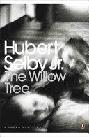
The willow tree
\"Bobby--young, black and happily in love with Hispanic girlfriend Maria--lives in a cramped Bronx apartment with his mother, his younger siblings and walls full of rats. But when Bobby and Maria are brutally attacked by a Hispanic gang, leaving the couple severely injured, everything changes. Maria may be lost, but, under the unusual care of the reclusive doctor he knows only as Moishe, Bobby might just have stumbled into a hopeful future of which he could never have previously dreamed.\"--Page 4 of cover.
Book

Black and White Manhattan
Race first emerged as an important ingredient of New York City's melting pot when it was known as New Amsterdam and was a fledgling colonial outpost on the North American frontier. This book details the arrival of the first immigrants, including African slaves, and traces encounters between the town's inhabitants of African, European, and Native American descent, showing how racial domination became key to the building of the settler colony at the tip of Manhattan Island. During the colonial era, the art of governing the city's diverse and factious population, the book reveals, involved the subordination of confessional, linguistic, and social antagonisms to binary racial difference. Everyday formations of race are investigated — in slave owning households, on the colonial city's streets, at its docks, taverns, and marketplaces, and in the adjacent farming districts. Even though the northern colonial port town afforded a space for black resistance, that setting did not, this book argues, effectively undermine the city's institution of black slavery. This history of New York City demonstrates that the process of racial formation and the mechanisms of racial domination were central to the northern colonial experience and to the founding of the United States.
eBook


City of islands : Caribbean intellectuals in New York
Tammy L. Brown uses the life stories of Caribbean intellectuals as \"windows\" into the dynamic history of immigration to New York and the long battle for racial equality in modern America. The majority of the 150, 000 black immigrants who arrived in the United States during the first-wave of Caribbean immigration to New York hailed from the English-speaking Caribbean—mainly Jamaica, Barbados, and Trinidad. Arriving at the height of the Industrial Revolution and a new era in black culture and progress, these black immigrants dreamed of a more prosperous future. However, northern-style Jim Crow hindered their upward social mobility. In response, Caribbean intellectuals delivered speeches and sermons, wrote poetry and novels, and created performance art pieces challenging the racism that impeded their success. Brown traces the influences of religion as revealed at Unitarian minister Ethelred Brown's Harlem Community Church and in Richard B. Moore's fiery speeches on Harlem street corners during the age of the \"New Negro.\" She investigates the role of performance art and Pearl Primus's declaration that \"dance is a weapon for social change\" during the long civil rights movement. Shirley Chisholm's advocacy for women and all working-class Americans in the House of Representatives and as a presidential candidate during the peak of the Feminist Movement moves the book into more overt politics. Novelist Paule Marshall's insistence that black immigrant women be seen and heard in the realm of American Arts and Letters at the advent of \"multiculturalism\" reveals the power of literature. The wide-ranging styles of Caribbean campaigns for social justice reflect the expansive imaginations and individual life stories of each intellectual Brown studies. In addition to deepening our understanding of the long battle for racial equality in America, these life stories reveal the powerful interplay between personal and public politics.
eBook


Constructing Belonging
Looking at the communities of Central and West Harlem in New York City, this study explores the locus, form and significance of socioeconomic differentiation for African American professional-managerial workers. It begins by considering centuries of New York City history and the structural elements of class inequality to present readers with the larger context of contemporary events. The primary objective of this study is to examine the everyday lives of black professionals in Harlem and determine what bearing income-generating activities have on ideology, consumption patterns and lifestyle, among other factors.
eBook