
Catalogue Search | MBRL


Are you sure you want to remove the book from the shelf?

{{itemTitle}}
35
result(s) for
"New York (State) Guidebooks."
Sort by:

New York City
Provides travel information about New York City, including cultural attractions, dining, nightlife, shopping, and lodging, with suggested itineraries, excursions, and practical information about the city.
Book
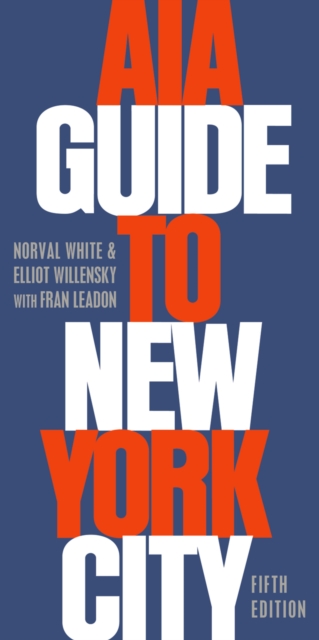
AIA Guide to New York City
\"There are two reasons the guide has entered the pantheon of New York books. One is its encyclopedic nature, and the other is its inimitable style--'smart, vivid, funny and opinionated' as the architectural historian Christopher Gray once summed it up in pithy W & W fashion.\"--The New York Times.
eBook


A Field Guide to Cape Cod
A richly illustrated full-color guide to the unique plants, wildlife, and environments of Cape Cod and the other nearby \"Outer Lands\"This essential guidebook presents the most abundantly illustrated and fascinating account of the natural history of Cape Cod, its nearby islands, Block Island, the western coast of Rhode Island, and southeastern Long Island ever published. Exploring the ecology and most common plants and animals of the various regional environments- beaches, dunes, salt marshes, heathlands, and coastal forests- the book also encompasses marine mammals, sea turtles, and fish offshore.Lavishly illustrated with images, maps, and photographs, the guide introduces readers to more than six hundred species of plants and animals of the region, including major whale and seal species. The book also provides a concise guide to the ecological history of the \"Outer Lands,\" the glacial geology of the region, and Cape Cod's major environmental challenges, from climate change and sea level rise to the loss of wild habitats due to development. For nature-loving local residents and visitors alike, this essential book will be a well-loved resource.
eBook


Paleoecological and stratigraphic controls on eurypterid Lagerstätten: a model for preservation in the mid-Paleozoic
Recent studies of eurypterid paleoecology suggest that formation of eurypterid Lagerstätten in the mid-Paleozoic of Laurentia was controlled by the presence of an ecological–taphonomic window that recurred predictably in nearshore, marginal environments during transgressions. We tested this hypothesis by performing a high-resolution taxonomic, environmental, and stratigraphic survey and quantitative analysis of all Silurian–Lower Devonian eurypterid-bearing intervals in the Appalachian basin, the most prolific region for eurypterid remains in the world. Canonical correspondence analysis of sedimentological and faunal associations revealed a strong lithologic gradient between groupings of eurypterid genera and associated taxa across the basin, and a significant association of eurypterids with microbialites (thrombolites, stromatolites) and evaporitic structures. Field observations confirmed that, stratigraphically, eurypterids in the basin frequently occur above the microbialite structures and beneath evaporites and other indicators of increased salinity or subaerial exposure. Following interpretation of these features within a sequence stratigraphic framework, we present a preservational model in which (1) eurypterids inhabited nearshore settings following freshening conditions concomitant with minor transgressions, (2) their remains were subsequently buried by storms or microbialite sediment baffling, and (3) subsequent long-term preservation of tissues was facilitated by regression and cyclical shallowing-up successions that promoted hypersalinity and anoxia. In the central and southern region of the basin, where microbial structures and evidence for hypersalinity are less common, a similar pattern of cyclical shallowing-upward deposition within eurypterid-bearing units holds. Thus, eurypterid preservation appears to reflect a combination of ecological preferences and abiotic conditions that promoted inhabitation and eventual preservation within the same setting. This study provides the first quantitative support for a sea level–based control on preservation of eurypterids and adds to the growing body of evidence that suggests that analysis of exceptional preservation in the fossil record benefits from interpretation within a sequence stratigraphic framework.
Journal Article


Design as an Indicator of Tourist Destination Change: The Concept Renewal Cycle at Watkins Glen State Park
For decades, the Tourism Area Life Cycle (TALC) model, its iterations, and its critics have shaped the conversation about change and adaptation at tourist destinations. However, few life cycle models consider the designed landscape as a factor in the evolutionary process or as a signifier of change. This oversight is problematic because the landscape, the aggregation of consciously designed spaces and amenities, is where tourism takes place. It is the physical manifestation of the tourist destination and therefore significantly influences how the site is organized, consumed, and evaluated. To illustrate the landscape’s importance, this article proposes a new life cycle model called the Concept Renewal Cycle (CRC), which tracks the intent of the designed landscape, the concept, to understand and document destination change. The model introduces and utilizes relevancy as the variable that determines concept success and instigates action. The proposed model and other prominent life cycle models are analyzed and compared through the case study of Watkins Glen State Park in New York state. While the other models struggle to reflect the evolution at Watkins Glen, the CRC shows resilience by eschewing TALC’s inevitable, time-based decline structure in favor of a cyclical pattern where concept revision allows for prolonged maturity.
Journal Article