
Catalogue Search | MBRL


Are you sure you want to remove the book from the shelf?

{{itemTitle}}
2,091
result(s) for
"New York culture"
Sort by:

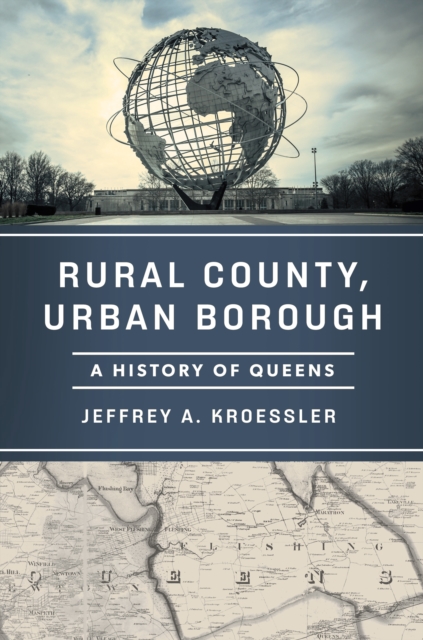
Rural County, Urban Borough
Once wetlands, Queens today is a crowded cityscape of dense urban neighborhoods and suburban sprawl. The largest of New York City's five boroughs by area, it has a larger population than every American city except Chicago, Los Angeles, and New York City itself. It possesses the most culturally, ethnically, linguistically, and religiously diverse population in the United States and possibly the world. This is the story of Queens, \"the world's borough,\" and how it transformed, in less than one hundred years, from an agricultural hinterland to a vital urban corridor. Rural County, Urban Borough is a history of place, charting the rapid transformation of the Queens landscape. It identifies what drove the borough's development, from public infrastructure, architecture, and transportation to technological innovation and urban planning. New York historian Jeffrey A. Kroessler takes us inside the backrooms and boardrooms where local powerbrokers shaped the borough's future, chronicling how its relationship with the city has evolved. He also shows the steps Queens residents from all backgrounds took to care for their neighborhoods and build their communities. Richly illustrated, this book underscores why Queens is integral to New York City and the wider world and reveals how, in its evolution, we see the whole arc of American urban history.
eBook


Berlin psychoanalytic
One hundred years after the Berlin Psychoanalytic Institute was established, this book recovers the cultural and intellectual history connected to this vibrant organization and places it alongside the London Bloomsbury group, the Paris Surrealist circle, and the Viennese fin-de-siècle as a crucial chapter in the history of modernism. Taking us from World War I Berlin to the Third Reich and beyond to 1940s Palestine and 1950s New York—and to the influential work of the Frankfurt School—Veronika Fuechtner traces the network of artists and psychoanalysts that began in Germany and continued in exile. Connecting movements, forms, and themes such as Dada, multi-perspectivity, and the urban experience with the theory and practice of psychoanalysis, she illuminates themes distinctive to the Berlin psychoanalytic context such as war trauma, masculinity and femininity, race and anti-Semitism, and the cultural avant-garde. In particular, she explores the lives and works of Alfred Döblin, Max Eitingon, Georg Groddeck, Karen Horney, Richard Huelsenbeck, Count Hermann von Keyserling, Ernst Simmel, and Arnold Zweig.
eBook


Buzz
p strongWinner, 2014 Distinguished Scholarship Award presented by the Animals & Society section of the American Sociological Association/strong Bees are essential for human survival—one-third of all food on American dining tables depends on the labor of bees. Beyond pollination, the very idea of the bee is ubiquitous in our culture: we can feel buzzed; we can create buzz; we have worker bees, drones, and Queen bees; we establish collectives and even have communities that share a hive-mind. In Buzz, authors Lisa Jean Moore and Mary Kosut convincingly argue that the power of bees goes beyond the food cycle, bees are our mascots, our models, and, unlike any other insect, are both feared and revered. In this fascinating account, Moore and Kosut travel into the land of urban beekeeping in New York City, where raising bees has become all the rage. We follow them as they climb up on rooftops, attend beekeeping workshops and honey festivals, and even put on full-body beekeeping suits and open up the hives. In the process, we meet a passionate, dedicated, and eclectic group of urban beekeepers who tend to their brood with an emotional and ecological connection that many find restorative and empowering. Kosut and Moore also interview professional beekeepers and many others who tend to their bees for their all-important production of a food staple: honey. The artisanal food shops that are so popular in Brooklyn are a perfect place to sell not just honey, but all manner of goods: soaps, candles, beeswax, beauty products, and even bee pollen. Buzz also examines media representations of bees, such as children’s books, films, and consumer culture, bringing to light the reciprocal way in which the bee and our idea of the bee inform one another. Partly an ethnographic investigation and partly a meditation on the very nature of human/insect relations, Moore and Kosut argue that how we define, visualize, and interact with bees clearly reflects our changing social and ecological landscape, pointing to how we conceive of and create culture, and how, in essence, we create ourselves./p
eBook

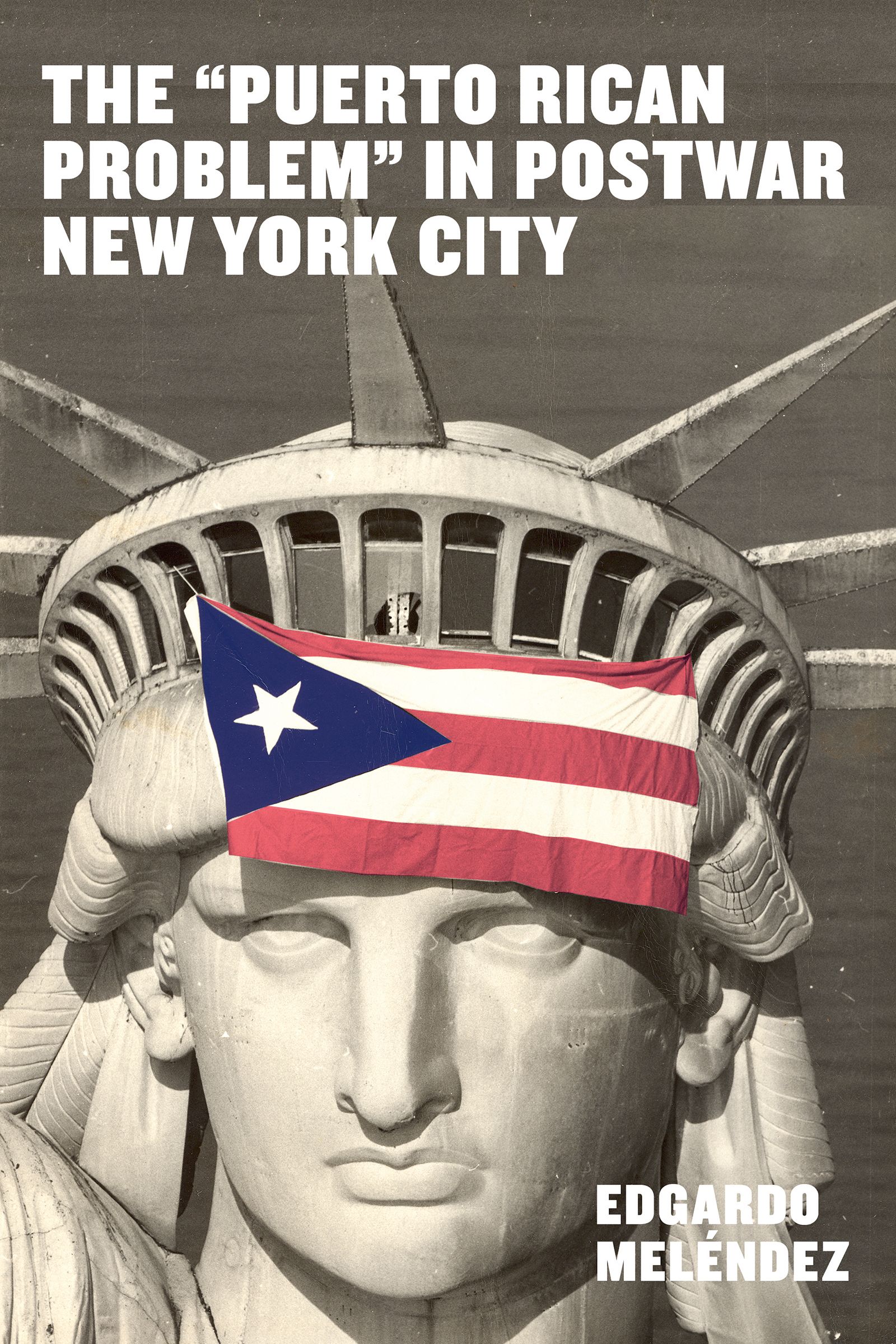
The \Puerto Rican problem\ in postwar New York City
The \"Puerto-Rican Problem\" in Postwar New York City presents the first comprehensive examination of the emergence, evolution, and consequences of the \"Puerto Rican problem\" campaign and narrative in New York City from 1945 to 1960.
eBook

Buzz : urban beekeeping and the power of the bee
\"Bees are essential for human survival--one-third of all food on American dining tables depends on the labor of bees. Beyond pollination, the very idea of the bee is ubiquitous in our culture: we can feel buzzed; we can create buzz; we have worker bees, drones, and Queen bees; we establish collectives and even have communities that share a hive-mind. In Buzz, authors Lisa Jean Moore and Mary Kosut convincingly argue that the power of bees goes beyond the food cycle, bees are our mascots, our models, and, unlike any other insect, are both feared and revered. In this fascinating account, Moore and Kosut travel into the land of urban beekeeping in New York City, where raising bees has become all the rage. We follow them as they climb up on rooftops, attend beekeeping workshops and honey festivals, and even put on full-body beekeeping suits and open up the hives. In the process, we meet a passionate, dedicated, and eclectic group of urban beekeepers who tend to their brood with an emotional and ecological connection that many find restorative and empowering. Kosut and Moore also interview professional beekeepers and many others who tend to their bees for their all-important production of a food staple: honey. The artisanal food shops that are so popular in Brooklyn are a perfect place to sell not just honey, but all manner of goods: soaps, candles, beeswax, beauty products, and even bee pollen. Buzz also examines media representations of bees, such as children's books, films, and consumer culture, bringing to light the reciprocal way in which the bee and our idea of the bee inform one another. Partly an ethnographic investigation and partly a meditation on the very nature of human/insect relations, Moore and Kosut argue that how we define, visualize, and interact with bees clearly reflects our changing social and ecological landscape, pointing to how we conceive of and create culture, and how, in essence, we create ourselves. Lisa Jean Moore is a feminist medical sociologist and Professor of Sociology and Gender Studies at Purchase College, State University of New York. Mary Kosut is Associate Professor of Media, Society and the Arts at Purchase College, State University of New York. In the Biopolitics series\"-- Provided by publisher.
Book

The Puerto Rican Problem in Postwar New York City
The Puerto-Rican Problem in Postwar New York City presents the first comprehensive examination of the emergence, evolution, and consequences of the “Puerto Rican problem” campaign and narrative in New York City from 1945 to 1960. This notion originated in an intense public campaign that arose in reaction to the entry of Puerto Rican migrants to the city after 1945. The “problem” narrative influenced their incorporation in New York City and other regions of the United States where they settled. The anti-Puerto Rican campaign led to the formulation of public policies by the governments of Puerto Rico and New York City seeking to ease their incorporation in the city. Notions intrinsic to this narrative later entered American academia (like the “culture of poverty”) and American popular culture (e.g., West Side Story ), which reproduced many of the stereotypes associated with Puerto Ricans at that time and shaped the way in which Puerto Ricans were studied and perceived by Americans.
eBook