
Catalogue Search | MBRL


Are you sure you want to remove the book from the shelf?

{{itemTitle}}
6,066
result(s) for
"New democracies."
Sort by:

State-formation and democratization : a new classification
This book examines the connection between two major developments in the world: state-formation and democratization. Since 1946, the number of states has increased from 66 to almost 200 independent states, but our knowledge of these state-formation processes is limited. The authors present a new database on state-formation and democratization, which enables novel classifications and analyses of these processes on the global level. They argue that the form of state-formation affects the probability for democratization in new states and that the initial regime that state-formation establishes at the time of independence has long-term effects on new states' democratization.
Book

Divide and Pacify
Despite dramatic increases in poverty, unemployment, and social inequalities, the Central and Eastern European transitions from communism to market democracy in the 1990s have been remarkably peaceful. This book proposes a new explanation for this unexpected political quiescence. It shows how reforming governments in Poland, Hungary and the Czech Republic have been able to prevent massive waves of strikes and protests by the strategic use of welfare state programs such as pensions and unemployment benefits.
Divide and Pacify explains how social policies were used to prevent massive job losses with softening labor market policies, or to split up highly aggrieved groups of workers in precarious jobs by sending some of them onto unemployment benefits and many others onto early retirement and disability pensions. From a narrow economic viewpoint, these policies often appeared to be immensely costly or irresponsibly populist. Yet a more inclusive social-scientific perspective can shed new light on these seemingly irrational policies by pointing to deeper political motives and wider sociological consequences.
eBook

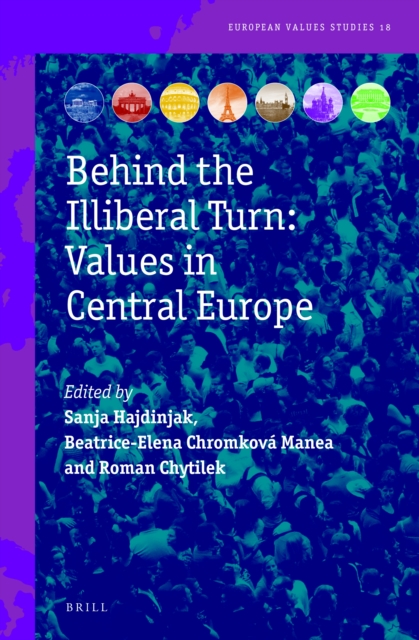
Behind the illiberal turn : values in Central Europe
\"We have to abandon liberal methods and principles of organizing a society. The new state that we are building is an illiberal state, a non-liberal state\", Hungarian Prime Minister Victor Orban famously said in 2014, exemplifying a broader trend taking place in Central Europe. Why would the countries that were praised as democratization and Europeanization success stories take an illiberal turn? This volume explores changing values and attitudes to explain events that took place in the aftermath of the financial and migration crisis in six Central European countries: Croatia, Czechia, Hungary, Poland, Slovakia and Slovenia.
eBook


Advocacy 2.0: An Analysis of How Advocacy Groups in the United States Perceive and Use Social Media as Tools for Facilitating Civic Engagement and Collective Action
Can social media promote civic engagement and collective action? Advocacy organizations think so. Obar, Zube, and Lampe surveyed 169 individuals from 53 advocacy groups of diverse interests and sizes and identified a revealing trend. All groups admitted that they use social media technologies to communicate with citizens almost every day. Respondents also believe that social media enable them to accomplish their advocacy and organizational goals across a range of specified activities. The authors note that the relationship between this and real political and ideological change is still speculative, but suggest that future studies can build on their research.
Journal Article

Women's rights in democratizing states : just debate and gender justice in the public sphere
\"This study offers a new explanation for why advances in women's rights rarely occur in democratizing states. Drawing on deliberative theory, Denise Walsh argues that the leading institutions in the public sphere are highly gendered, meaning women's ability to shape the content of public debate and put pressure on the state to advance their rights is limited. She tests this claim by measuring the openness and inclusiveness of debate conditions in the public sphere during select time periods in Poland, Chile and South Africa. Through a series of structured, focused comparisons, the book confirms the importance of just debate for securing gender justice. The comparisons also reveal that counter publics in the leading institutions in the public sphere are crucial for expanding debate conditions. The book concludes with an analysis of counter publics and suggests an active role for the state in the public sphere\"-- Provided by publisher.
Book

Democratization and the European Union
This book examines in depth the impact of the EU on aspects of the quality of democracy in eight selected post-communist countries. Considering both the political and legal aspects of the dynamics among institutions and focussing on inter-institutional accountability, the book analyses how constitutional designs have been effectively implemented to achieve this, and to what extent this was the result of EU action.
In order to make a comparative assessment of the EU on democracies, the book features detailed case studies according to their different status vis-à-vis the EU, including older new member states: Poland and Hungary; newer new member states: Romania and Bulgaria; potential candidates: Albania and Serbia; and neighbour and remote neighbour states: Ukraine and Armenia. Each chapter addresses a range of dimensions and most relevant domains of inter-institutional accountability, that is: executive-legislative relationships; constitutional justice; decentralisation and regionalism; and the role of ombudsman or other relevant authorities.
Seeking to assess how important the role of the EU has been in influencing the modes and characteristic of democracies and fundamental rights established in these regions, this book will be of interest to students and scholars of comparative politics, EU politics, Post-communist studies and democratization studies.
Leonardo Morlino is Professor of Political Science at the Istituto di Scienze Umane, Florence, Italy and President of the International Political Science Association (IPSA).
Wojciech Sadurski is Challis professor of Jurisprudence in the University of Sydney, Australia.
1. Introduction Leonardo Morlino and Wojciech Sadurski Part 1: \"Old-new\" Member States 2. Poland: EU Driven Democracy? Adam Bodnar 3. Hungary: High Hopes Revisited Renata Uitz Part 2: \"New-new\" Member States 4. Romania: A Personalistic Approach to Accountability Alina Stanciulescu 5. Bulgaria: Discontents and Frustrations of a Newly-Consolidated Democracy Daniel Smilov Part 3: Potential Candidate and Neighbour Countries 6. Serbia in Search of Stability and Accountability Cristina Dallara and Irena Marceta 7. Albania and its Struggle to Consolidate Democracy Darinka Piqani 8. Ukraine: A Constitutional Design Between Façade Democracy and Effective Transformation? Oleksandr Serdiuk and Roman Petrov 9. Armenia: Constitutional Design, Accountability and European Integration Armen Mazmanyan 10. Conclusions Leonardo Morlino and Wojciech Sadurski. Bibliography
eBook


Economic Origins of Dictatorship and Democracy
This book develops a framework for analyzing the creation and consolidation of democracy. Different social groups prefer different political institutions because of the way they allocate political power and resources. Thus democracy is preferred by the majority of citizens, but opposed by elites. Dictatorship nevertheless is not stable when citizens can threaten social disorder and revolution. In response, when the costs of repression are sufficiently high and promises of concessions are not credible, elites may be forced to create democracy. By democratizing, elites credibly transfer political power to the citizens, ensuring social stability. Democracy consolidates when elites do not have strong incentive to overthrow it. These processes depend on (1) the strength of civil society, (2) the structure of political institutions, (3) the nature of political and economic crises, (4) the level of economic inequality, (5) the structure of the economy, and (6) the form and extent of globalization.
eBook