
Catalogue Search | MBRL


Are you sure you want to remove the book from the shelf?

{{itemTitle}}
1,183
result(s) for
"Nigeria-In literature"
Sort by:


Poetry, Prose and Popular Culture in Hausa
Introducing poetry, prose, songs and theatre from Nigeria, this engaging volume blends translated extracts with a rich commentary on the historical development and modern context of this hugely creative culture.
eBook


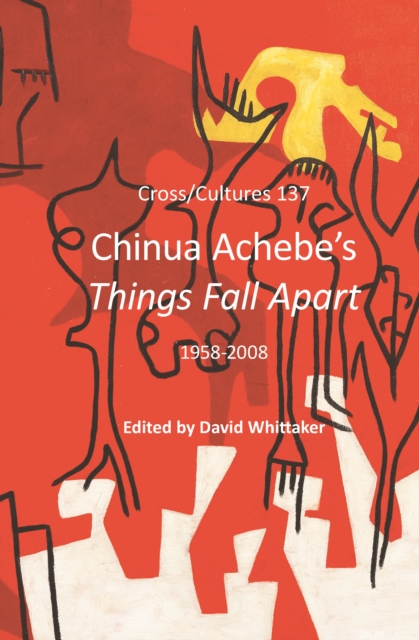
Chinua Achebe's Things fall apart : 1958-2008
Since its publication in 1958, Chinua Achebe's Things Fall Apart has won global critical and popular acclaim. Offering a hitherto unlimned picture of a traditional culture, it is both a moving story of the coming of colonialism and a powerful and complex political statement on the nature of cross-cultural encounter. The novel has been immensely influential work as the progenitor of a whole movement in fiction, drama, and poetry focusing on the re-evaluation of traditional cultures and postcolonial tensions. It enjoys a pre-eminent position as a foundational text of postcolonial studies. This collection, originating in a conference held in London to celebrate the fiftieth anniversary of the novel's first publication, opens with a fascinating, insightful, and wide-ranging interview with Achebe. The essays that following explore contemporary critical responses and the novel's historical and cultural contexts. Achebe's influence on the latest generation of Nigerian writers is discussed in essays devoted to Chimamanda Ngozi Adichie. Another essay examines the radical feminist response to the novel in the work of the francophone Algerian writer Assia Djebar, another the illustrations accompanying early editions. Teaching strategies and reader responses to the novel cover Texas, Scotland, and Australia. One measure of the phenomenal worldwide success of Things Fall Apart is the fact that it has been rendered into some forty-five languages; accordingly, further contributions offer sharp analyses of the German and Polish translations of the novel. Contributors: Mick Jardine, Dorota Gołuch, Waltraud Kolb, Bernth Lindfors, Russell McDougall, Malika Rebai Maamri, Michel Naumann, Chika Okeke-Agulu, Christopher E.W. Ouma, Rashna Batliwala Singh, Andrew Smith, David Whittaker.
eBook

Zones of Instability
Attempts by writers and intellectuals in former colonies to create unique national cultures are often thwarted by a context of global modernity, which discourages particularity and uniqueness. In describing unstable social and political cultures, such \"third-world intellectuals\" often find themselves torn between the competing literary requirements of the \"local\" culture of the colony and the cosmopolitan, \"world\" culture introduced by Western civilization. In Zones of Instability, Imre Szeman examines the complex relationship between literature and politics by exploring the production of nationalist literature in the former British empire. Taking as his case studies the regions of the British Caribbean, Nigeria, and Canada, Szeman analyzes the work of authors for whom the idea of the\"nation\" and literature are inexorably entwined, such as Chinua Achebe, Wole Soyinka, C.L.R. James, Frantz Fanon, and V.S. Naipaul. Szeman focuses on literature created in the two decades after World War II, decades in which the future prospects for many colonies went from extreme political optimism to extreme political disappointment. He finds that the \"nation\" can be read as that space in which literature is thought to be able to conjoin two things that history has separated—the writer and the people.
eBook

Searching for Bate Besong
The future of the country in Searching for Bate Besong is compromised by irresponsible leadership, falsehoods, blind tyranny, waste, and lawlessness. Visionaries like Dockinta (a literary incarnation of Bate Besong, one of Cameroons most fiery and revolutionary authors) who try to question or expose the status-quo are incarcerated and tortured by the brute forces of dictatorship. It however only needs the strong will and audacity, the messianic self-sacrifice and determination (which are the values Dockinta incarnates), to expose, ridicule and destroy power drunkenness. This play is sine qua non to searching for the collective memory of a community marginalized and subjugated by successive regimes of exploitation and repression. It promises the rediscovery of the dignity and destiny of an active volcano wrongfully rendered docile. The Search will liberate a people who agonized from the whips by the Germans, the hypocrisy of the British, the outright exploitation of the French and the eternal domination of La Republique du Cameroun. The search will culminate in liberating not only Cameroonians, but Africa from corruption, nepotism, tribalism, organized crime, wars and the abuse of basic human rights and freedoms.
eBook

In Pursuit of the “Real” Nigeria/n through the Archives of Heinemann’s African Writers Series
This paper will depart from the premise that with the Nigerian writer Chinua Achebe as its flagship author, exemplar and editorial adviser, Heinemann Educational Books, which aimed to represent Africa and Africans through its African Writers Series (AWS) had a tendency to privilege and prioritise realist literary expressions coming out of Africa. This, combined with the fact that the series was published by an educational company looking for a way to market its product in an environment that did not yet have a place for African writers when it was first launched, might also be regarded as having fostered a tendency within the publishing house to treat the works submitted to it more as socio-historical documents than as works of literary fiction and to lead to their framing in anthropological terms. The paper will investigate the precise terms in which this takes place in two case studies of some of the archival material relating to Heinemann’s interest in representing Northern Nigeria and Nigerians in the early years of the series, and it will investigate the consequences and implications of a drive towards producing a series that could be marketed as representative.
Journal Article

Relocating agency : modernity and African letters
A postmodernist metacritical look at theories of African literature.
eBook
