
Catalogue Search | MBRL


Are you sure you want to remove the book from the shelf?

{{itemTitle}}
14
result(s) for
"Nightlife - Social aspects"
Sort by:


Upscaling Downtown
Once known for slum-like conditions in its immigrant and working-class neighborhoods, New York City's downtown now features luxury housing, chic boutiques and hotels, and, most notably, a vibrant nightlife culture. While a burgeoning bar scene can be viewed as a positive sign of urban transformation, tensions lurk beneath, reflecting the social conflicts within postindustrial cities.Upscaling Downtownexamines the perspectives and actions of disparate social groups who have been affected by or played a role in the nightlife of the Lower East Side, East Village, and Bowery. Using the social world of bars as windows into understanding urban development, Richard Ocejo argues that the gentrifying neighborhoods of postindustrial cities are increasingly influenced by upscale commercial projects, causing significant conflicts for the people involved.
Ocejo explores what community institutions, such as neighborhood bars, gain or lose amid gentrification. He considers why residents continue unsuccessfully to protest the arrival of new bars, how new bar owners produce a nightlife culture that attracts visitors rather than locals, and how government actors, including elected officials and the police, regulate and encourage nightlife culture. By focusing on commercial newcomers and the residents who protest local changes, Ocejo illustrates the contested and dynamic process of neighborhood growth.
Delving into the social ecosystem of one emblematic section of Manhattan,Upscaling Downtownsheds fresh light on the tensions and consequences of urban progress.
eBook
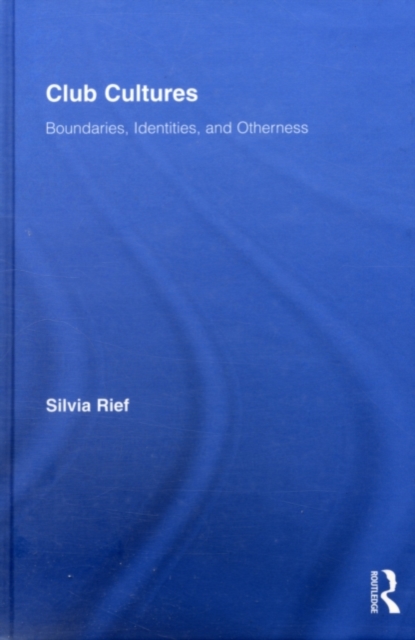
Club Cultures
This book explores contemporary club and dance cultures as a manifestation of aesthetic and prosthetic forms of life. Rief addresses the questions of how practices of clubbing help cultivate particular forms of reflexivity and modes of experience, and how these shape new devices for reconfiguring the boundaries around youth cultural and other social identities. She contributes empirical analyses of how such forms of experience are mediated by the particular structures of night-clubbing economies, the organizational regulation and the local organization of experience in club spaces, the media discourses and imageries, the technologies intervening into the sense system of the body (e.g. music, visuals, drugs) and the academic discourses on dance culture. Although the book draws from local club scenes in London and elsewhere in the UK, it also reflects on similarities and differences between nightclubbing cultures across geographical contexts.
1. Introduction 2. Urban Renewal and Night Life Governance: London and Istanbul 3. Club Cultural Production and the Night-time Economy Market in the UK 4. Sensing and Meaning the Body: The Local Organization of Clubbing Practices 5. Thresholds of Reality: Clubbing, Drugs and Agency 6. Identity Projects and Spectacular Selves 7. Between Style and Desire: Sexual Scenarios in Clubbing Magazines 8. Allegorical Anarchy, Symbolic Hierarchy: Sexual Boundaries in Two London Dance Clubs 9. Conclusion. Appendix.
Silvia Rief is a Lecturer in Sociology at the University of Innsbruck.
eBook

A qualitative investigation exploring why dance festivals are risky environments for drug use and potential adverse outcomes
Dance festivals have been shown to be high-risk events for use of drugs such as ecstasy/MDMA and possible adverse effects associated with use. However, few studies have examined what makes festivals such risky environments. We aimed to determine festival-specific risk factors for adverse outcomes related to drug use.
In-depth interviews were conducted with 35 key informants in North America who deemed themselves experts in new psychoactive substances, and identified as drug checkers, sellers, or experienced users. Interviews were coded in an inductive manner, and we conducted thematic analysis to identify relevant themes.
We identified four main themes focusing on festival attendance as a risk factor for risky drug use and related outcomes: attendees inexperienced with electronic dance music parties and party drugs, risky drug purchasing, risky drug use practices, and festival-specific environmental risk factors. Festivals attract a wide array of people not experienced with party drugs, yet drugs like ecstasy are commonly sought by such individuals inside festivals. Relying on strangers inside to purchase drugs is a risk factor for purchasing adulterated product. Fear of security/police at festivals leads to risky drug-taking such as ingesting one's full batch of drugs at the entrance. These risks are compounded by environmental factors including crowding, hot temperature, and lack of water (which lead to dehydration), long/consecutive event days (which can lead to exhaustion), and inadequate medical emergency response.
We determined modifiable risk factors which can both inform future research and future prevention and harm reduction efforts in this scene.
Journal Article

Sexual violence in nightlife and positive bystander intervention in an English city
Background
Nightlife environments are high risk settings for sexual violence and bystander intervention programmes are being developed in response. However, more research is needed to understand nightlife-related sexual violence, and factors that influence bystander interventions. This study examined nightlife patron’s experiences of sexual violence and associated factors; and relationships between attitudes towards, awareness and experience of sexual violence, and confidence to intervene.
Methods
Cross-sectional on-street survey of nightlife patrons (
N
= 307, aged 18+) on a night out in an English city. Surveys (7.30pm-1.30am; Wednesday-Saturday) established sexual violence awareness, myth acceptance, and experience, and confidence to intervene. Participant’s socio-demographics, nightlife alcohol consumption, and frequency of nightlife usage were collected.
Results
58.0% had ever experienced sexual violence whilst on a night out. In adjusted analyses, sexual violence was higher amongst females (adjusted odds ratio [AOR] 4.0;
p
< 0.001), and regular nightlife patrons (AOR 2.1;
p
< 0.05). The majority agreed that they would feel confident asking someone who has experienced sexual violence if they are okay/would like support (92.2%). In adjusted analyses, confidence to intervene was higher amongst those who agreed that sexual violence was an issue in nightlife (AOR 3.6;
p
< 0.05), however it reduced as sexual violence myth acceptance increased (AOR 0.5;
p
< 0.05).
Conclusion
Sexual violence is a pertinent issue in nightlife. Programmes aiming to address nightlife-related sexual violence must address the wider social norms that promote sexual violence, and ensure patrons understand the extent and significance of the issue, to increase confidence to positively intervene.
Journal Article

Sexual Aggression in Brazilian Nightclubs: Associations with Patron’s Characteristics, Drug Use, and Environmental Factors
Bars and nightclubs are main locations for sexual assault outcomes such as rape, attempted rape, stalking, and other forms of sexual harassment. Alcohol use is strongly associated with violence in nightlife settings. The present study aimed to identify individual and environmental factors, such as different types of nightclubs, music styles, and physical environment associated with nightclub patron’s report of being victims of sexual aggression inside nightclubs in São Paulo, Brazil. Two levels of data were collected: observational data inside nightclubs and individual-level survey data of 2422 patrons at the entrance and 1822 patrons (1111 men; 711 women) at the exit of 31 nightclubs. Among patrons, 11.5% (95% CI 7.9–16.2%) reported being a victim of sexual aggression inside the venues in the night of the survey. Groping and forced kissing were the most prevalent forms of sexual aggression (9.8%; [7.2–13.1%]), which was more strongly associated with environmental factors such as crowding (OR = 2.9 [1.6–5.2%]), entrance consumption fee (OR = 4.2 [2.5–7.0%]), and music style than with individual-level factors. In funk (OR = 3.3 [1.6–6.9%]), electronic (OR = 3.2 [1.8–5.8%]), and pop dance (OR = 7.9 [2.2–29.1%]) nightclubs, patrons had higher chances of being a victim of sexual aggression compared to those ones at the eclectic nightclubs. Presence of reserved areas for sex increased the chances of reporting sexual aggression (OR = 1.8 [1.2–2.8%]). No significant gender differences for sexual aggression were detected. Results suggest a requirement of security improvement where environmental characteristics are potential predictors of victimization.
Journal Article

Moral Dilemmas of Spanish Youth: Consent in Alcohol-Mediated Affective-Sexual Relationships in Nightlife
In recent years, the issue of sexual consent in relationships influenced by alcohol and other substances has come under scrutiny and analysis within both the sociopolitical and academic spheres. To comprehend the moral validity attributed by Spanish youth to sexual consent in nightlife settings, in-depth group and individual interviews were conducted with a total of 53 university students. The findings reveal how the moral discussion surrounding consent validity becomes complex depending on the level of intoxication of those involved. It is concluded that three key ideas govern this discussion: (a) the ability to discern the level of intoxication of the other person, (b) the prior relationship between the victim and the perpetrator, and (c) the relationship between the person judging the validity of that consent and the aggressor. Thus, depending on how the mentioned key factors are resolved, the morality regarding the same act varies. The findings of this research contribute to the scientific literature with yet another piece of evidence highlighting the intricacies inherent in a profound understanding of sexual consent.
Journal Article

Factors Associated with Unwanted Sexual Attention in Australian Nightlife Districts: An Exploratory Study of Nightlife Attendees
Experiences of unwanted sexual attention (UWSA) are commonplace within nightlife environments. While typically associated with aggression perpetration, literature has suggested that a history of childhood corporal punishment (CCP) may also be related to experiences of victimisation in nightlife environments. The current exploratory study aims to examine the associations between experiences of UWSA victimisation and a history of CCP, trait aggression, and conformity to masculine norms (Playboy and Winning), for males and females separately.
Street intercept interviews in the Brisbane inner-city entertainment precincts were used to measure demographic details and participants' breath alcohol concentration. Online follow-up surveys were used to record participants' experiences of UWSA on the night of interview, history of CCP, and self-reported rates of trait aggression and conformity to masculine norms. The final sample consisted of 288 females, as there were not sufficient male UWSA experiences for analysis.
Approximately 20% of female nightlife patrons experienced some form of UWSA victimisation. Logistic regression analyses identified that after controlling for age and intoxication, a history of CCP, trait aggression and masculine norm conformity were unrelated to experiences of UWSA for female respondents.
The current study found that individual factors were unrelated to experiences of UWSA, indicating that simply being in the nightlife environment, especially as a female, increases the risk of UWSA victimisation. Understanding and exploring social and environmental risk factors, rather than individual factors, is needed to prevent victimisation in nightlife environments.
Journal Article
Ideal, expected and perceived descriptive norm drunkenness in UK nightlife environments: a cross-sectional study
Background
Drunkenness is common in nightlife environments and studies suggest it can be considered both desirable and normal by nightlife users. We aimed to compare UK nightlife users’ ideal levels of drunkenness to their expected drunkenness on a night out and their perceptions of descriptive nightlife norms.
Methods
A cross-sectional survey with nightlife patrons (
n
= 408, aged 18–35) in three cities. Using a scale from 1 (completely sober) to 10 (very drunk), participants rated: personal drunkenness at survey; expected drunkenness on leaving nightlife; perceived descriptive drunkenness norm in the city’s nightlife; and ideal personal drunkenness. Analyses were limited to those who had or were intending to consume alcohol.
Results
Almost half of participants (46.8%) expected to get drunker than their reported ideal level on the night of survey, rising to four fifths of those with the highest levels of expected drunkenness. 77.9% rated typical nightlife drunkenness ≥8 but only 40.9% expected to reach this level themselves and only 23.1% reported their ideal drunkenness as ≥8. Higher expected drunkenness was associated with higher ideal drunkenness, higher perceived drunkenness norm and later expected home time.
Conclusions
Nightlife users’ perceptions of typical drunkenness in nightlife settings may be elevated and many of the heaviest drinkers are likely to drink beyond their ideal level of drunkenness. Findings can support emerging work to address cultures of intoxication in nightlife environments and suggest that interventions to correct misperceptions of normal levels of nightlife drunkenness may be of benefit.
Journal Article

You Wanna Come to the ‘Urban’ Night Tomorrow... It’s the Wrong Night Tonight
Drawing from a yearlong ethnography alongside police officers, door staff, and venue managers, this article explores my research participants’ conceptions, and governance of, “urban nights” in “Greenshire, UK.” My research participants used the term “urban nights” to refer to nighttime events where traditionally Black music is played, such as drill, grime, and R & B. In doing this, I reveal how institutional racism is embedded within policing cultures and everyday policing practices used to govern nightlife. In exploring how nightlife is governed in a white provincial context in Southern England, I uncover how the public and private police work together to produce nightlife as an “acceptably white space.” The article outlines the impact this has on the governance of “urban nights” and the management, access, and experiences of Black nighttime participants.
Journal Article