
Catalogue Search | MBRL


Are you sure you want to remove the book from the shelf?

{{itemTitle}}
99
result(s) for
"Nile River History."
Sort by:


The Ptolemies, the Sea and the Nile
With its emphasis on the dynasty's concern for control of the sea – both the Mediterranean and the Red Sea – and the Nile, this book offers a new and original perspective on Ptolemaic power in a key period of Hellenistic history. Within the developing Aegean empire of the Ptolemies, the role of the navy is examined together with that of its admirals. Egypt's close relationship to Rhodes is subjected to scrutiny, as is the constant threat of piracy to the transport of goods on the Nile and by sea. Along with the trade in grain came the exchange of other products. Ptolemaic kings used their wealth for luxury ships and the dissemination of royal portraiture was accompanied by royal cult. Alexandria, the new capital of Egypt, attracted poets, scholars and even philosophers; geographical exploration by sea was a feature of the period and observations of the time enjoyed a long afterlife.
eBook

Red Nile : a biography of the world's greatest river
\"So much begins on the banks of the Nile: all religion, all life, all stories, the script we write in, the language we speak, the gods, the legends and the names of stars. This mighty river that flows through a quarter of all Africa has been history's greatest and most sustained creator. In this dazzling, idiosyncratic journey from ancient times to the Arab Spring, Robert Twigger weaves a Nile narrative like no other. Along the way we meet crocodiles and caliphs, nineteenth-century adventurers and twentieth-century novelists, biblical prophets and classical lovers, dam-builders and crusaders. As he navigates a meandering course through the history of the world's greatest river, he plucks the most intriguing, colourful and dramatic stories - truly a Nile red in tooth and claw. The result is both an epic journey through the whole sweep of human and pre-human history, and an intimate biography of the curious life of this great river, overflowing with stories of excess, love, passion, splendour and violence.\"--Cover.
Book

The Religious Nile
The Nile is arguably the most famous river in the world. For millennia, the search for its source defeated emperors and explorers. Yet the search for its source also contained a religious quest - a search for the origin of its divine and life-giving waters. Terje Oestigaard reveals how the beliefs associated with the river have played a key role in the cultural development and make-up of the societies and civilizations associated with it. Drawing upon his personal experience and fieldwork in Africa, including details of rites and ceremonies now fast disappearing, the author brings out in rich detail the religious and spiritual meanings attached to the life-giving waters by those whose lives are so bound to the river. Part religious quest, part exploration narrative, the author shows how this mighty river is a powerful source for a greater understanding of human nature, society and religion.
eBook

The Nile and ancient Egypt : changing land- and waterscapes, from the Neolithic to the Roman era
\"The tale of human habitation of the Nile Valley is a long one and includes famine, disaster, global environmental events, and human resolve told against a background of ever-changing landscape. In this volume, Judith Bunbury examines the region over a 10,000 year period, from the Neolithic to the Roman conquest. Charting the progression of the river as it meanders through the region and over the ages, she demonstrates how ancient Egyptians attempted to harness the Nile's power as a force for good. Over the generations, they learned how to farm and build on its banks, and also found innovative solutions to cope in a constantly evolving habitat. Using the latest theories and evidence, this richly illustrated volume also provides a blueprint for the future management of the Nile\"-- Provided by publisher.
Book

The Nile River Basin
The Nile provides freshwater not only for domestic and industrial use, but also for irrigated agriculture, hydropower dams and the vast fisheries resource of the lakes of Central Africa. The Nile River Basin covers the whole Nile Basin and is based on the results of three major research projects supported by the Challenge Program on Water and Food (CPWF). It provides unique and up-to-date insights on agriculture, water resources, governance, poverty, productivity, upstream-downstream linkages, innovations, future plans and their implications.
Specifically, the book elaborates the history and the major current and future challenges and opportunities of the Nile river basin. It analyzes the basin characteristics using statistical data and modern tools such as remote sensing and geographic information systems. Population distribution, poverty and vulnerability linked to production system and water access are assessed at the international basin scale, and the hydrology of the region is also analysed.
This text provides in-depth scientific model adaptation results for hydrology, sediments, benefit sharing, and payment for environmental services based on detailed scientific and experimental work of the Blue Nile Basin. Production systems as they relate to crops, livestock, fisheries and wetlands are analyzed for the whole Blue and White Nile basin including their constraints. Policy, institutional and technological interventions that increase productivity of agriculture and use of water are also assessed. Water demand modeling, scenario analysis, and tradeoffs that inform future plans and opportunities are included to provide a unique, comprehensive coverage of the subject.
1. Introduction 2. Nile Water and Agriculture: Past, Present and Future 3. The Nile Basin, People, Poverty and Vulnerability 4. Spatial Characterisation of the Nile Basin for Improved Water Management 5. Availability of Water for Agriculture in the Nile Basin 6. Hydrological Processes in the Blue Nile 7. The Nile Basin Sediment Loss and Degradation with Emphasis on the Blue Nile 8. Nile Basin Farming Systems and Productivity 9. Livestock and Water in the Nile River Basin 10. Overview of Groundwater in the Nile River Basin 11. Wetlands of the Nile Basin: Distribution, Functions and Contribution to Livelihoods 12. Nile Water Governance 13. Institutions and Policy in the BNB: Understanding Challenges and Opportunities for Improved Land and Water Management 14. Simulating Current and Future Water Resources Development in the Blue Nile River Basin 15. Water Management Intervention Analysis in the Nile Basin
Seleshi Bekele Awulachew was, at the time of writing, Acting Director in Africa for the International Water Management Institute (IWMI), Addis Ababa, Ethiopia. He is now Senior Water Resources and Climate Specialist at the African Climate Policy Center (ACPC), United Nations Economic Commission for Africa (UNECA), Addis Ababa, Ethiopia.
Vladimir Smakhtin is Theme Leader – Water Availability and Access at IWMI, Colombo, Sri Lanka.
David Molden was, at the time of writing, Deputy Director General of IWMI, Colombo, Sri Lanka. He is now Director General of the International Centre for Integrated Mountain Development (ICIMOD), Kathmandu, Nepal.
Don Peden is a Consultant at the International Livestock Research Institute (ILRI), Addis Ababa, Ethiopia.
eBook
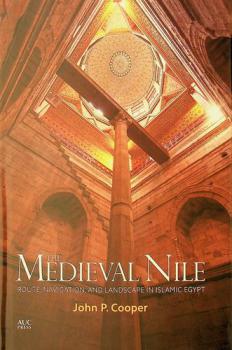
The medieval Nile : route, navigation, and landscape in Islamic Egypt
\"An interdisciplinary study that draws together geography, historical navigation data, and eyewitness accounts into a comprehensive picture of one of the world's great rivers. This ground-breaking view of the navigational landscape of the Nile in medieval Egypt draws on a broad range of sources: medieval Arabic geographies; traveler accounts; archaeology; and meteorological, hydrological, and geological studies. John Cooper first charts the changing geography of the Nile waterways, particularly in the Delta, from the eve of Islam to the early modern period, and logs the 'rise and fall' of these waterways for natural and/or anthropogenic reasons. He then presents a new perspective on the Nile, drawing on traveler accounts and environmental data to portray the river as a uniquely challenging and sometimes dangerous navigational environment requiring extensive local knowledge by skilled and hard-working Nile navigators. Finally, he looks at how the main Delta and Red Sea ports of medieval Egypt fitted into the navigational landscape described, explaining how these ports were affected by changes occurring to the navigational landscape, and how they reflected the navigational conditions of the Nile and surrounding seas\"--From the publisher.
Book

The Nile
The greatest river in the world has a long and fascinating history. Professor Terje Tvedt, one of the world’s leading experts on the history of waterways, travels upstream along the river’s mouth to its sources. The result is a travelogue through 5000 years and 11 countries, from the Mediterranean to Central Africa. This is the fascinating story of the immense economic, political and mythical significance of the river. Brimming with accounts of central characters in the struggle for the Nile – from Caesar and Cleopatra, to Churchill and Mussolini, and on to the political leaders of today, The Nile is also the story of water as it nourished a civilization.
eBook

The medieval Nile : route, navigation, and landscape in Islamic Egypt
\"An interdisciplinary study that draws together geography, historical navigation data, and eyewitness accounts into a comprehensive picture of one of the world's great rivers. This ground-breaking view of the navigational landscape of the Nile in medieval Egypt draws on a broad range of sources: medieval Arabic geographies; traveler accounts; archaeology; and meteorological, hydrological, and geological studies. John Cooper first charts the changing geography of the Nile waterways, particularly in the Delta, from the eve of Islam to the early modern period, and logs the \"rise and fall\" of these waterways for natural and/or anthropogenic reasons. He then presents a new perspective on the Nile, drawing on traveler accounts and environmental data to portray the river as a uniquely challenging and sometimes dangerous navigational environment requiring extensive local knowledge by skilled and hard-working Nile navigators. Finally, he looks at how the main Delta and Red Sea ports of medieval Egypt fitted into the navigational landscape described, explaining how these ports were affected by changes occurring to the navigational landscape, and how they reflected the navigational conditions of the Nile and surrounding seas.\"--From the publisher.
BOOK
