
Catalogue Search | MBRL


Are you sure you want to remove the book from the shelf?

{{itemTitle}}
2,347
result(s) for
"Nitrogen fertilizers Environmental aspects"
Sort by:

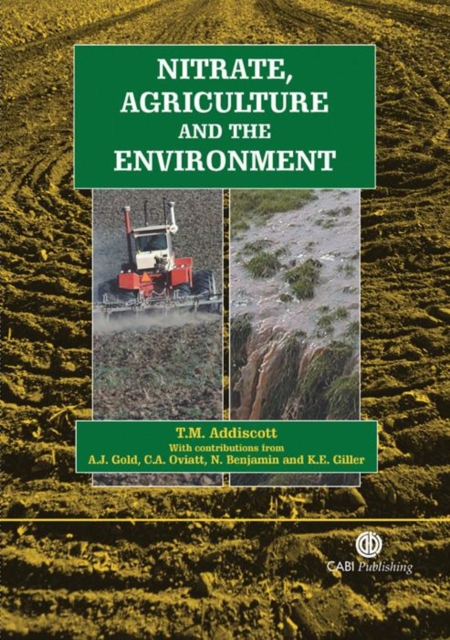
Nitrate, agriculture and the environment
There is widespread public concern about the effects of nitrate derived from farming on water quality and public health. But research on nitrate during the past decade has revealed wide discrepancies between public perceptions and reality. The main problems from nitrate are ecological changes in coastal and estuarine waters and nitrous oxide in the atmosphere. This gas, largely derived from nitrate, is a threat to the ozone layer in the stratosphere and is also a greenhouse gas. This book builds on Farming, Fertilizers and the Nitrate Problem (CABI, 1991) by Addiscott, Whitmore and Powlson but has been restructured to take account of new developments and to bring out more clearly the role of politicians and economists in the 'nitrate problem'.
eBook

The California nitrogen assessment : challenges and solutions for people, agriculture, and the environment
\"Nitrogen is indispensable to all life on Earth. However, humans now dominate the nitrogen cycle and nitrogen emissions resulting from human activity involve real costs: water and air pollution, climate change, and detrimental effects for human health, biodiversity, and natural habitat. Too little nitrogen limits ecosystem processes, while too much nitrogen transforms ecosystems profoundly. The California Nitrogen Assessment is the first comprehensive accounting of nitrogen flows, practices, and policies for California; encompassing all nitrogen flows--not just those associated with agriculture--and their impacts on ecosystem services and human wellbeing. How California handles issues of nitrogen will be of interest nationally and internationally, and the goal of the assessment is to more effectively link science with action and to produce information that informs both future policy and solutions to nitrogen pollution. This book also provides a model for application of integrated ecosystem assessment methods at regional and state (sub-national) levels.\"--Provided by publisher.
Book

Effects of equal chemical fertilizer substitutions with organic manure on yield, dry matter, and nitrogen uptake of spring maize and soil nitrogen distribution
In order to maintain high yields and protect the environment, the replacement of chemical fertilizers with organic ones has received increasing attention in recent years. A 2-year field experiment (2015-2016) was carried out to assess the effects of substituting equal amounts of mineral fertilizer with organic manure on the yield, dry matter (DM), and nitrogen (N) uptake of spring maize (Zea mays L.) and on the mineral N (Nmin) distribution in the soil profile. The treatments included chemical fertilizer; different amounts of maize straw, cow manure, and chicken manure; and an unfertilized control (CK). Compared with the chemical fertilizer treatments, equal amounts of substitutions with cow manure or chicken manure increased production, and a 25% nutrient substitution resulted in the best yield increase. Straw return had no effect on maize production, and 100% straw return resulted in reduced production. The N accumulation and DM content both exhibited a slow-fast-slow growth trend throughout the various growth stages, and the average N uptake and DM accumulation in response to the treatments followed the order of chicken manure > cow manure > chemical fertilizer > straw return > CK. The Nmin content in the profile not only increased as the Nmin application rate increased but also showed greater increases at certain depths than at the surface, indicating that excessive N led to leaching. These results suggest that an appropriate proportion of organic substitution not only provides enough nutrients but also improves the soil environment and leads to increased yields. This technique represents a practical method of continuously increasing production and reducing the risk of N leaching.
Journal Article
Timing and rate of nitrogen fertilization influence maize yield and nitrogen use efficiency
Timing and rate of nitrogen (N) fertilizer application can influence maize (Zea mays L.) grain yield, N uptake, and nitrogen use efficiency (NUE) parameters, but results have been inconsistent across the upper Midwest. This study compared single (fall and preplant) and split applications of differing N rates for maize under irrigated conditions on loamy sand at Becker, MN and under rainfed conditions on loam and clay loam soils at Lamberton, MN and Waseca, MN, respectively, in 2014 to 2016. Fall and preplant applications of N were applied at recommended and 125% of recommended rates (RN) according to University of Minnesota guidelines. Split-application treatments included a two-way (Sp, applied at 75% and 100% of RN) and a three-way split (TSp applied at 50%, 75%, and 100% of RN), with the total N rate equally split among application times. At Becker, maize grain yield with TSp was 12.6 to 15.7 Mg ha-1 among years and significantly greater than that with fall or preplant treatments. The TSp treatment also improved agronomic efficiency (AE) and recovery efficiency (RE) by an average of 30% over fall or preplant treatments. At Lamberton, maize grain yield, AE and RE did not differ among treatments. However, TSp75 improved AE by 8.3 kg kg-1 while producing comparable yields to fall and preplant treatments. At Waseca, Sp or TSp improved grain yield and AE compared with fall treatments. These results suggest that split applications of N can increase maize grain yield, AE, and RE on irrigated coarse-textured soils and applying N fertilizer near planting or as a split application can improve N management on non-irrigated clay loam soils.
Journal Article

Centennial-scale analysis of the creation and fate of reactive nitrogen in China (1910-2010)
Human mobilization and use of reactive nitrogen (Nr) has been one of the major aspects of global change over the past century. Nowhere has that change been more dramatic than in China, where annual net Nr creation increased from 9.2 to 56 Tg from 1910 to 2010. Since 1956, anthropogenic Nr creation exceeded natural Nr creation, contributing over 80% of total Nr until 2010. There is great interest and uncertainty in the fate and effects of this Nr in China. Here, a comprehensive inventory of Nr in China shows that Nr (including recycled Nr) has continuously and increasingly accumulated on land (from 17 to 45 Tg), accompanied by increasing transfers to the atmosphere (before deposition; from 7.6 to 20 Tg), inland waters (from 2.7 to 9.6 Tg), and coastal waters (from 4.5 to 7.7 Tg) over the past 30 y. If current trends continue, Nr creation from human activities will increase to 63 Tg by 2050, raising concerns about deleterious environmental consequences for land, air, and water at regional and global scales. Tremendous amounts of Nr have accumulated in plants, soils, and waters in China over the past 30 y, but the retention capacity of the terrestrial landscape seems to be declining. There is a possibility that the negative environmental effects of excessive Nr may accelerate in coming decades, increasing the urgency to alter the trajectory of increasing Nr imbalance. Here, a conceptual framework of the relationships between human drivers and Nr cycling in China is oriented and well-targeted to Chinese abatement strategies for Nr environmental impact.
Journal Article
Combining organic and mineral fertilizers as a climate-smart integrated soil fertility management practice in sub-Saharan Africa: A meta-analysis
Low productivity and climate change require climate-smart agriculture (CSA) for sub-Saharan Africa (SSA), through (i) sustainably increasing crop productivity, (ii) enhancing the resilience of agricultural systems, and (iii) offsetting greenhouse gas emissions. We conducted a meta-analysis on experimental data to evaluate the contributions of combining organic and mineral nitrogen (N) applications to the three pillars of CSA for maize (Zea mays). Linear mixed effect modeling was carried out for; (i) grain productivity and agronomic efficiency of N (AE) inputs, (ii) inter-seasonal yield variability, and (iii) changes in soil organic carbon (SOC) content, while accounting for the quality of organic amendments and total N rates. Results showed that combined application of mineral and organic fertilizers leads to greater responses in productivity and AE as compared to sole applications when more than 100 kg N ha-1 is used with high-quality organic matter. For yield variability and SOC, no significant interactions were found when combining mineral and organic fertilizers. The variability of maize yields in soils amended with high-quality organic matter, except manure, was equal or smaller than for sole mineral fertilizer. Increases of SOC were only significant for organic inputs, and more pronounced for high-quality resources. For example, at a total N rate of 150 kg N ha-1 season-1, combining mineral fertilizer with the highest quality organic resources (50:50) increased AE by 20% and reduced SOC losses by 18% over 7 growing seasons as compared to sole mineral fertilizer. We conclude that combining organic and mineral N fertilizers can have significant positive effects on productivity and AE, but only improves the other two CSA pillars yield variability and SOC depending on organic resource input and quality. The findings of our meta-analysis help to tailor a climate smart integrated soil fertility management in SSA.
Journal Article

Prospects for Using Phosphate-Solubilizing Microorganisms as Natural Fertilizers in Agriculture
Phosphates are known to be essential for plant growth and development, with phosphorus compounds being involved in various physiological and biochemical reactions. Phosphates are known as one of the most important factors limiting crop yields. The problem of phosphorus deficiency in the soil has traditionally been solved by applying phosphate fertilizers. However, chemical phosphate fertilizers are considered ineffective compared to the organic fertilizers manure and compost. Therefore, increasing the bioavailability of phosphates for plants is one of the primary goals of sustainable agriculture. Phosphate-solubilizing soil microorganisms can make soil-insoluble phosphate bioavailable for plants through solubilization and mineralization. These microorganisms are currently in the focus of interest due to their advantages, such as environmental friendliness, low cost, and high biological efficiency. In this regard, the solubilization of phosphates by soil microorganisms holds strong potential in research, and inoculation of soils or crops with phosphate-solubilizing bacteria is a promising strategy to improve plant phosphate uptake. In this review, we analyze all the species of phosphate-solubilizing bacteria described in the literature to date. We discuss key mechanisms of solubilization of mineral phosphates and mineralization of organic phosphate-containing compounds: organic acids secreted by bacteria for the mobilization of insoluble inorganic phosphates, and the enzymes hydrolyzing phosphorus-containing organic compounds. We demonstrate that phosphate-solubilizing microorganisms have enormous potency as biofertilizers since they increase phosphorus bioavailability for the plant, promote sustainable agriculture, improve soil fertility, and raise crop yields. The use of phosphate-solubilizing microbes is regarded as a new frontier in increasing plant productivity.
Journal Article

Flooding and prolonged drought have differential legacy impacts on soil nitrogen cycling, microbial communities and plant productivity
Background and aims Extreme climate events, including flooding and prolonged drought, may establish long-lasting (legacy) effects on soil abiotic and biotic properties, potentially influencing soil N-cycling, microbial communities, and plant productivity. Nitrogen (N) fertilizer often stimulates plant growth, but it remains unknown whether N addition can alleviate the impact of legacy drought or waterlogging events on crops. Our aim was to assess the interactive effects of legacy extreme climate events and N-addition on these processes. Methods Using cotton as a model system, soils previously exposed to waterlogging and prolonged drought were used to examine potential legacy impacts of extreme climate on soil N process rates, abundance and structure of associated microbial communities, and cotton growth and productivity under different levels of N fertilizer application (0, 100, 200 and 300 kg N/ha). Results The deleterious legacy effects of prolonged drought on plant productivity were due to negative impacts on microbial abundance and community structure, and soil nutrient availability, thereby negatively influencing the rate of nitrification, and consequently plant available N. The legacy impacts of prolonged drought persisted throughout the experiment despite fertiliser applications of up to 300 kg of N/ha. The only observed legacy impacts of waterlogging were low NO3− levels in soils without N-addition and shifts in the abundance and structure of the N2O-reducing community. Conclusions There were strong legacy impacts of prolonged drought, but minor legacy impacts of waterlogging, on soils and crop yields which could not be fully counteracted by the high rates of N fertilizer application. This study provides critical knowledge contributing to the development of adaptation and soil N management strategies to minimize the loss of farm productivity, within the context of increased frequencies and intensities of extreme weather events.
Journal Article
Plant Growth-Promoting Soil Bacteria: Nitrogen Fixation, Phosphate Solubilization, Siderophore Production, and Other Biological Activities
This review covers the literature data on plant growth-promoting bacteria in soil, which can fix atmospheric nitrogen, solubilize phosphates, produce and secrete siderophores, and may exhibit several different behaviors simultaneously. We discuss perspectives for creating bacterial consortia and introducing them into the soil to increase crop productivity in agrosystems. The application of rhizosphere bacteria—which are capable of fixing nitrogen, solubilizing organic and inorganic phosphates, and secreting siderophores, as well as their consortia—has been demonstrated to meet the objectives of sustainable agriculture, such as increasing soil fertility and crop yields. The combining of plant growth-promoting bacteria with mineral fertilizers is a crucial trend that allows for a reduction in fertilizer use and is beneficial for crop production.
Journal Article