
Catalogue Search | MBRL


Are you sure you want to remove the book from the shelf?

{{itemTitle}}
16,842
result(s) for
"Nobel Peace Prize"
Sort by:

'The world's most prestigious prize' : the inside story of the Nobel Peace Prize
An insider account of the Nobel Peace Prize drawing on access to the Norwegian Nobel Institute's vast archive, this book examines the founding of the prize, as well as its highs and lows, triumphs and disasters, over the last one-hundred-and-twenty years. But more than that, the book also draws on the author's unique insight during his twenty-five years as Director of the Norwegian Nobel Institute and Secretary of the Norwegian Nobel Committee, revealing the real story of all the laureates of that period--some of them among the most controversial in the history of the prize (Gorbachev, Arafat, Peres and Rabin, Mandela and De Klerk, Obama, and Liu Xiaobo)--and exactly why they came to receive the prize.
Book
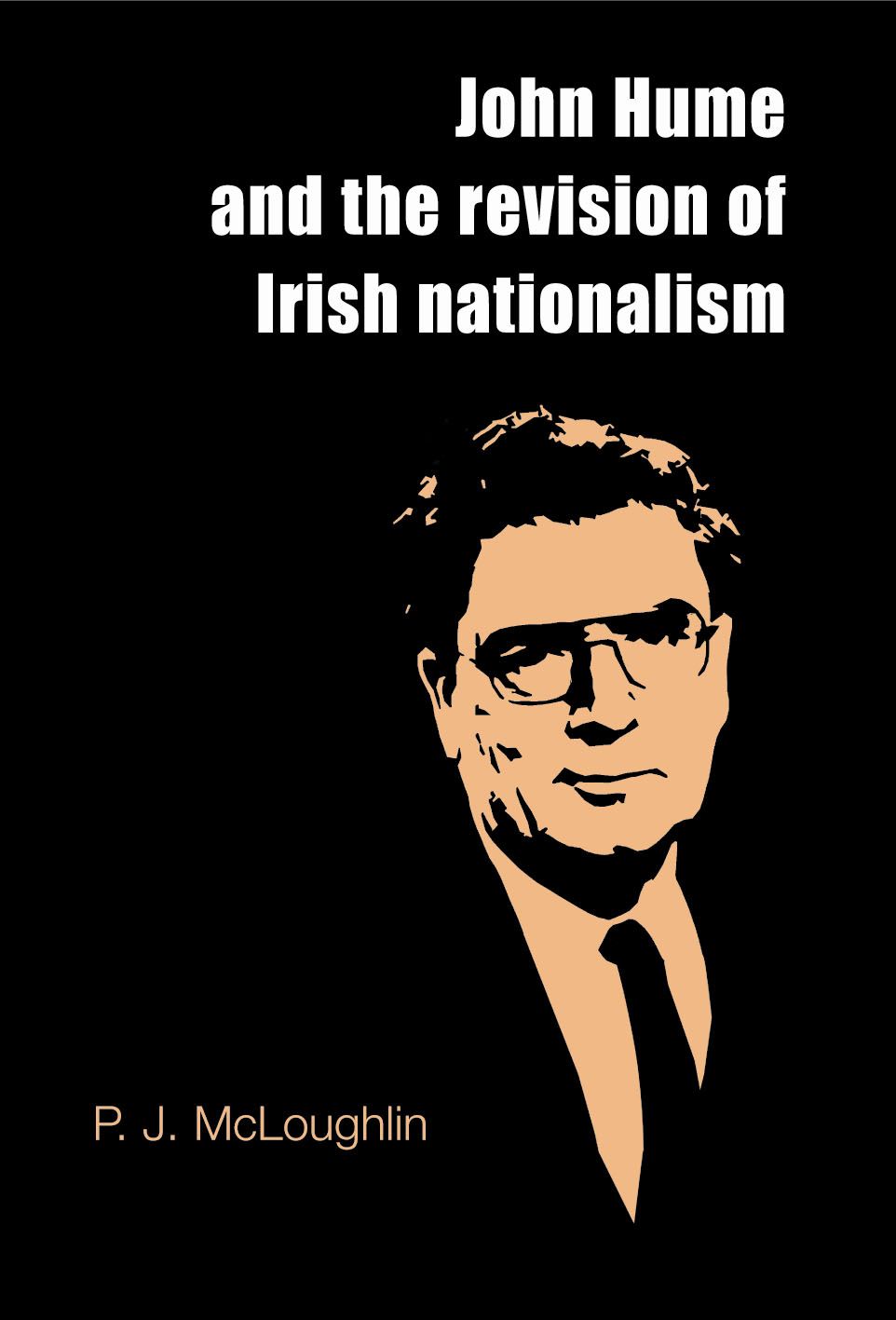
John Hume and the revision of Irish nationalism
The book, available at last in paperback, explores the politics of the most important Irish nationalist leader of his generation, and one of the most influential figures of twentieth-century Ireland: the Nobel Peace Prize winner, John Hume. Given his central role in the reformulation of Irish nationalist ideology, and the vital part which he played in drawing violent republicanism into democratic politics, the book shows Hume to be one of the chief architects of the Northern Ireland peace process, and a key figure in the making of the 1998 Good Friday Agreement. At the same time, it considers Hume’s failure in what he stated to be his foremost political objective: the conciliation of the two communities in Northern Ireland. The book is essential reading for specialists on Irish history and politics, but will also be of interest to academics and practitioners working in other regions of political and ethnic conflict. In addition, it will appeal to readers seeking to understand the crucial role played by Hume in modernising Irish nationalist thinking, and bringing peace to Northern Ireland.
eBook

Values Most Extolled in Nobel Peace Prize Speeches
The authors randomly selected 50 Nobel Peace Prize speeches and content analyzed them to determine which values the speakers extolled most frequently. The 10 most frequently mentioned values were peace (in 100% of the speeches), hope (92%), security (86%), justice (85%), responsibility (81%), liberty (80%), tolerance (79%), altruism (75%), God (49%), and truth (38%). The authors discuss the interplay of these values in the modern world and implications regarding the search for universal moral values.
Journal Article

Peacemaking in Africa and Nobel Peace Prize 2019: The Role of Ahmed Abiy Ali in resolving the Ethiopia-Eritrea Cross-Border Conflict
Abstract
Conflicts globally have reportedly declined even though the number of African countries plagued by internal cross border strife has increased. Given this trend, the African peace and security architecture has evolved considerably over the past decade, culminating in the award of the Nobel Peace Prize - to one of the key actors in peace-making process, Ahmed Abiy Ali. Hence, this paper explores how the inter-state conflicts in Africa, such as the Ethiopia-Eritrea conflict, reflect some colonial continuities of violence. We, therefore, stipulate the justification for the Nobel Peace Prize to illustrate how norms evolve, and further, how identities are constituted in peace-making. This, we argue, is parallel to other situations in African countries as manifested through identity, legitimacy, and authority in shaping political decisions, within the mutually constitutive relationships between agents and political structures. The paper, therefore, situates the conflict between Ethiopia and Eritrea into the African context using a model of the decisive action by Abiy, with limited Western influence towards peace, hence providing rationale for subaltern voices and indigenous peace processes in Africa.
Journal Article

A contribution of Józef Rotblat, a winner of the Nobel Peace Prize, to the development of nuclear medicine
Józef Rotblat, a nuclear physicist born and educated in Poland, is the only laureate of the Nobel Peace Prize, who made a significant contribution to the development of nuclear medicine. In 1948 he went down in the annals of nuclear medicine by obtaining, with extarnal measurements, the first \"image \" of a function of an internal organ - thyroid gland, by registering gamma rays with a collimated Geiger counter at many points of the patient's neck and chest. He was awarded the Nobel Prize in Rotblat in 1995 for organizing, together with the a British philosopher Bertrand Russell, the international, peaceful movement of scholars for the eradication of weapons of mass destruction (Pugwash) and multi-annual activity in this movement.
Journal Article


Appraising through someone else's words: The evaluative power of quotations in news reports
This article explores the inclusion of external voices in news reports, especially looking at the way these are exploited for appraising purposes. It is argued that attributions are not evaluation outlets for sources only, but indirect means of appraisal for the journalists as well, who support - and reinforce - the points they want to make through these voices. In this way, quotations help them imprint their personal views on the events and ultimately serve an ideological function in the text. The study compares the use of attributed material in various pieces of online news reporting on the announcement of the Nobel Peace Prize award to the Chinese dissident Liu Xiaobo. Taking some elements of Appraisal Theory, the article examines the role of external sources in two corpora representing opposite ideological positions concerning this event - China and the Western world - in order to explore how such material is used by the writer to engage in an ideological-evaluative activity.
Journal Article

My name is Jody Williams
As Eve Ensler says in her inspired foreword to this book, \"Jody Williams is many things—a simple girl from Vermont, a sister of a disabled brother, a loving wife, an intense character full of fury and mischief, a great strategist, an excellent organizer, a brave and relentless advocate, and a Nobel Peace Prize winner. But to me Jody Williams is, first and foremost, an activist.\" From her modest beginnings to becoming the tenth woman—and third American woman—to receive the Nobel Peace Prize, Jody Williams takes the reader through the ups and downs of her tumultuous and remarkable life. In a voice that is at once candid, straightforward, and intimate, Williams describes her Catholic roots, her first step on a long road to standing up to bullies with the defense of her deaf brother Stephen, her transformation from good girl to college hippie at the University of Vermont, and her protest of the war in Vietnam. She relates how, in 1981, she began her lifelong dedication to global activism as she battled to stop the U.S.-backed war in El Salvador. Throughout the memoir, Williams underlines her belief that an \"average woman\"—through perseverance, courage and imagination—can make something extraordinary happen. She tells how, when asked if she'd start a campaign to ban and clear anti-personnel mines, she took up the challenge, and the International Campaign to Ban Landmines (ICBL) was born. Her engrossing account of the genesis and evolution of the campaign, culminating in 1997 with the Nobel Peace Prize, vividly demonstrates how one woman's commitment to freedom, self-determination, and human rights can have a profound impact on people all over the globe.
eBook

Retrospectives: Léon Walras and the Nobel Peace Prize
This paper is an account of the history of Léon Walras's attempt to be awarded the Nobel Peace Prize for 1906. It describes Walras's moves to get three of his Lausanne colleagues to nominate him for the prize, the arguments advanced in the proposal, and the reception that it received by the Norwegian Peace Prize Committee in Kristiania (Oslo). It discusses whether Walras had realistic reasons to believe that he stood a chance of winning the prize, and it evaluates the validity of the arguments on which the proposal was based.
Journal Article

Improve reading with complex texts
The Common Core State Standards have cast a renewed light on reading instruction, presenting teachers with the new requirements to teach close reading of complex texts. Teachers and administrators should consider a number of essential features of close reading: They are short, complex texts; rich discussions based on worthy questions; revisiting and annotating the text; and being inspired by the text. Educators should consider these the look-fors that deepen students’ interactions with text.
Journal Article