
Catalogue Search | MBRL


Are you sure you want to remove the book from the shelf?

{{itemTitle}}
100
result(s) for
"Non sequiturs"
Sort by:

Parts and differences
Part/whole is said in many ways: the leg is part of the table, the subset is part of the set, rectangularity is part of squareness, and so on. Do the various flavors of part/whole have anything in common? They may be partial orders, but so are lots of non-mereological relations. I propose an \"upward difference transmission\" principle: x is part of y if and only if x cannot change in specified respects while y stays the same in those respects.
Journal Article


The Disjunction and Conjunction Theses
This paper is a response to replies by Dan López de Sa and Mark Jago to my ‘Truthmaking, Entailment, and the Conjuction Thesis’. In that paper, my main aim was to argue against the Entailment Principle by arguing against the Conjunction Thesis, which is entailed by the Entailment Principle. In the course of so doing, although not essential for my project in that paper, I defended the Disjunction Thesis. López de Sa has objected both to my defence of the Disjunction Thesis and my case against the Conjunction Thesis. I shall show that his objections are unfounded and based on serious misunderstandings of my position, what the relevant debate is, and some fundamental notions of Truthmaker Theory. Jago argues that accepting the Disjunction Thesis and rejecting the Conjunction Thesis is hard to maintain. But I show that Jago has not shown that accepting the Disjunction Thesis while rejecting the Conjunction Thesis is impossible or even hard to maintain. Jago believes that, to accept the Disjunction Thesis while rejecting the Conjunction Thesis, one needs to reject his axiom (T3), which says that all the truthmakers for 〈P&P〉 are truthmakers for 〈P〉. I argue that there are reasons to reject such a principle, and the version of it that says that what makes 〈P&P〉 true makes 〈P〉 true.
Journal Article


Locus est spatium On Gerald Odonis' Quaestio de loco
Abstract
This article examines Gerald Odonis' view on the nature of place as found in his commentary on the Sentences (Sent. II, d. 2, qq. 3-5) and in an anonymous question (Utrum locus sit ultima superficies corporis ambientis immobile primum) extant in manuscript Madrid, Biblioteca Nacional, 4229. Both texts defend a thoroughly un-Aristotelian conception of place as three-dimensional space. Odonis not only deviates from Aristotle's definition of place as the inner surface of a surrounding body, but also from the positions of his contemporaries, including fellow Franciscans. Despite some remarkable doctrinal similarities between Odonis' view and that of Renaissance innovators like Francesco Patrizi and Bernardino Telesio, it seems unlikely that Gerald played a role in the rise of new conceptions of place in the sixteenth and seventeenth century. An edition of the anonymous Quaestio de loco is given in an appendix.
Journal Article
Duns Scotus's Parisian Question on the Formal Distinction
The degree of realism that Duns Scotus understood his formal distinction to have implied is a matter of dispute going back to the fourteenth century. Both modern and medieval commentators alike have seen Scotus's later, Parisian treament of the formal distinction as less realist in the sense that it would deny any extra-mentally separate formalities or realities. This less realist reading depends in large part on a question known to scholars only in the highly corrupt edition of Luke Wadding, where it is printed as the first of the otherwise spurious Quaestiones miscellaneae de formalitatibus. The present study examines this question in detail. Cited by Scotus's contemporaries as the Quaestio logica Scoti, we establish that it was a special disputation held by Scotus at Paris in response to criticisms of his use of the formal distinction in God, identify its known manuscripts, and provide an analysis based upon a corrected text, showing in particular the total unreliability of the Wadding edition. Our analysis shows that the Logica Scoti does not absolutely prohibit an assertion of formalities as correlates of the formal distinction, even in the divine Person, so long as their non-identity is properly qualified. That is, the positing of formalities does not of itself entail an unqualified or absolute distinction.
Journal Article
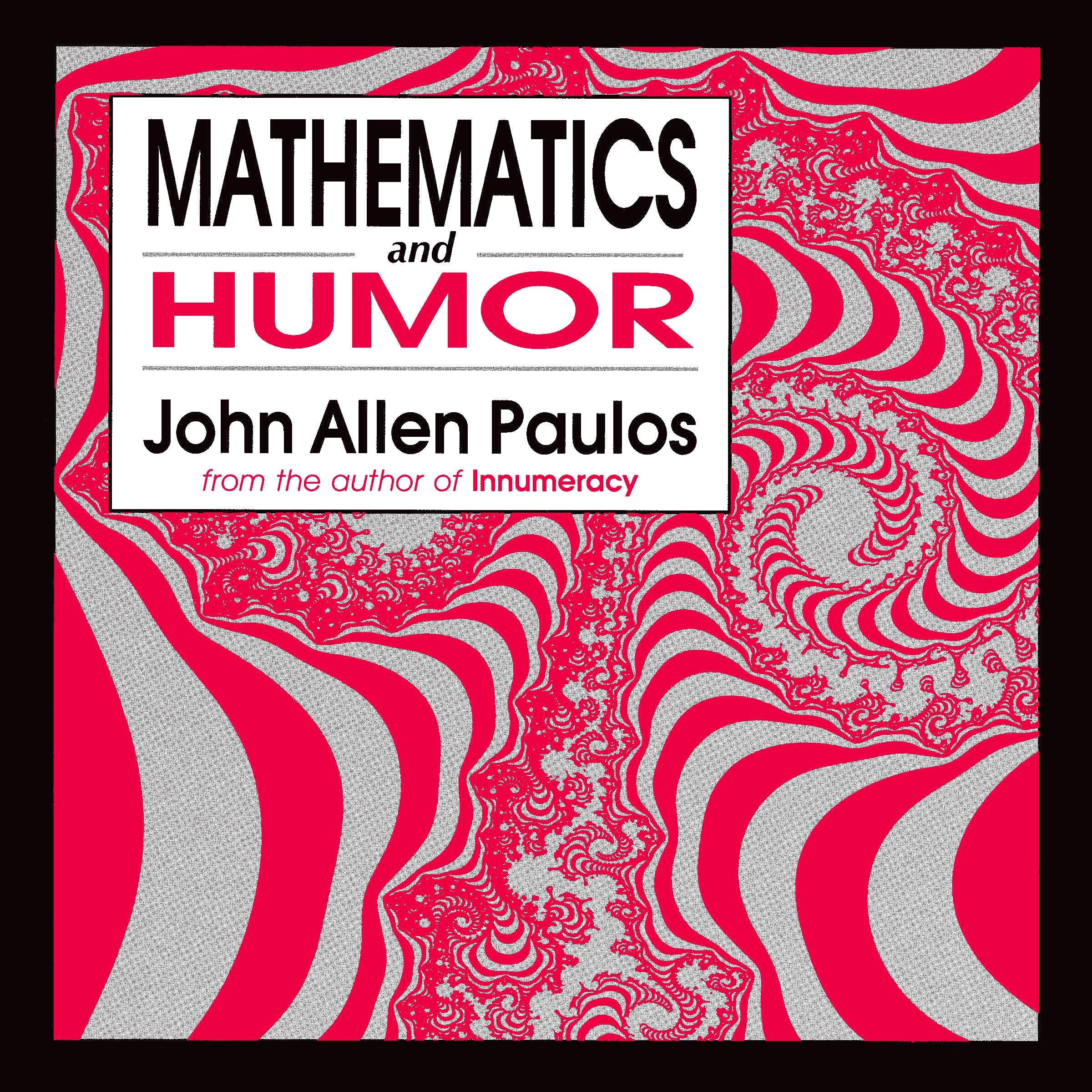
Mathematics and Humor
John Allen Paulos cleverly scrutinizes the mathematical structures of jokes, puns, paradoxes, spoonerisms, riddles, and other forms of humor, drawing examples from such sources as Rabelais, Shakespeare, James Beattie, René Thom, Lewis Carroll, Arthur Koestler, W. C. Fields, and Woody Allen.
\"Jokes, paradoxes, riddles, and the art of non-sequitur are revealed with great perception and insight in this illuminating account of the relationship between humor and mathematics.\"—Joseph Williams, New York Times
\"'Leave your mind alone,' said a Thurber cartoon, and a really complete and convincing analysis of what humour is might spoil all jokes forever. This book avoids that danger. What it does. . .is describe broadly several kinds of mathematical theory and apply them to throw sidelights on how many kinds of jokes work.\"—New Scientist
\"Many scholars nowadays write seriously about the ludicrous. Some merely manage to be dull. A few—like Paulos—are brilliant in an odd endeavor.\"—Los Angeles Times Book Review
eBook


THE \SENTENCES\ COMMENTARY OF PAUL OF PERUGIA, O.CARM., WITH AN EDITION OF HIS QUESTION ON DIVINE FOREKNOWLEDGE
The Carmelite Paul of Perugia (fl. early 1340s) has received little scholarly attention, despite the existence of four complete witnesses of his Sentences commentary. After discussing dating issues and the manuscripts, this article presents a list of Paul's questions and citations and a critical edition of q. 37 of book I, concerning divine foreknowledge. Paul's explicit citations of university theologians show that Paul dealt with the «information overload» of his time, i.e. the mountain of Sentences commentaries that had accumulated by the mid-14th century, by depending on a strict selection of texts for the various parts of his commentary. A close analysis of q. 37, however, besides revealing that his selection influenced the shape of his own theological discussion, demonstrates that it was even more strict than first appears.
Journal Article
