
Catalogue Search | MBRL


Are you sure you want to remove the book from the shelf?

{{itemTitle}}
72
result(s) for
"Nonindigenous pests Control."
Sort by:


Invasive alien species: a toolkit of best prevention and management practices
Human activities have contributed to the distribution of many plant, animal and microbial species to parts of the world where they are not native. This spread of alien species can have devastating consequences on native biodiversity. Examples include alien mammals consuming native vegetation and alien insects spreading viruses, as well as plants such as water hyacinth, which has caused major problems to waterways when introduced from South America.The Global Invasive Species Programme (GISP) was established to address concerns with alien invasive species, formulated in the Convention on Biological Diversity. GISP is coordinated by:the Scientific Committee on Problems of the Environment (SCOPE)the World Conservation Union (IUCN)CAB InternationalIts goal is to improve prevention and management of biological invasions, and this book represents a key outcome. It has been assembled by a team of international experts. Features include:case studies from around the globe, with some emphasis on islandsa focus on biodiversity, but with some consideration of traditional agriculture and forestryadvice on national management plans, including risk analysis.
eBook

What can we do about invasive species?
Learn about invasive species that are a part of our environment.
Book
Predicting Invasions of Nonindigenous Plants and Plant Pests
Nonindigenous plants and plant pests that find their way to the United States and become invasive can often cause problems. They cost more than $100 billion per year in crop and timber losses plus the expense of herbicides and pesticides. And this figure does not include the costs of invasions in less intensively managed ecosystems such as wetlands.
Nonindigenous Plants and Plant Pests examines this growing problem and offers recommendations for enhancing the science base in this field, improving our detection of potential invaders, and refining our ability to predict their impact.
The book analyzes the factors that shape an invader's progress through four stages: arriving through one of many possible ports of entry, reaching a threshold of survival, thriving through proliferation and geographic spread, and ultimate impact on the organism's new environment. The book also reviews approaches to predicting whether a species will become an invader as well as the more complex challenge of predicting and measuring its impact on the environment, a process involving value judgments and risk assessment.
This detailed analysis will be of interest to policymakers, plant scientists, agricultural producers, environmentalists, and public agencies concerned with invasive plant and plant pest species.
eBook

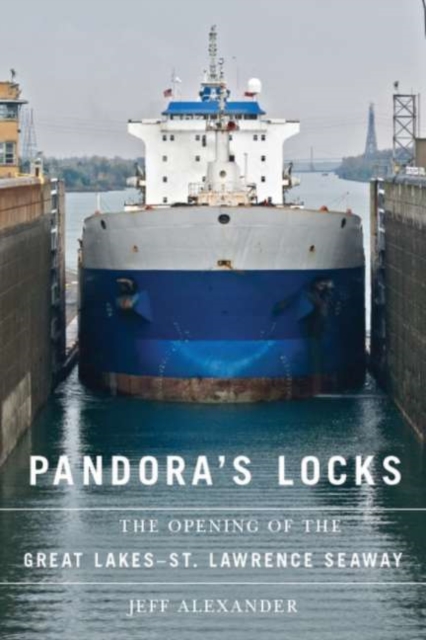
Pandora's locks
The St. Lawrence Seaway was considered one of the world's greatest engineering achievements when it opened in 1959. The $1 billion project-a series of locks, canals, and dams that tamed the ferocious St. Lawrence River-opened the Great Lakes to the global shipping industry.Linking ports on lakes Superior, Michigan, Huron, Erie, and Ontario to shipping hubs on the world's seven seas increased global trade in the Great Lakes region. But it came at an extraordinarily high price. Foreign species that immigrated into the lakes in ocean freighters' ballast water tanks unleashed a biological shift that reconfigured the world's largest freshwater ecosystems.Pandora's Locksis the story of politicians and engineers who, driven by hubris and handicapped by ignorance, demanded that the Seaway be built at any cost. It is the tragic tale of government agencies that could have prevented ocean freighters from laying waste to the Great Lakes ecosystems, but failed to act until it was too late. Blending science with compelling personal accounts, this book is the first comprehensive account of how inviting transoceanic freighters into North America's freshwater seas transformed these wondrous lakes.
eBook

Cane toad wars
\"For 80 years, giant American amphibians have been spreading through tropical Australia, resulting in the death of millions of native animals. Rick Shine and his research team set out to understand that invasion and its impacts, and to develop new ways of protecting endangered wildlife from the tide of toads. In the process, Shine's work revealed that biological invasions can stimulate rapid evolutionary change, and that understanding your enemy is the essential first step in combatting its deadly effects\"--Provided by publisher.
Book
Stemming the tide: controlling introductions of nonindigenous species by ships' ballast water
The European zebra mussel in the Great Lakes, a toxic Japanese dinoflagellate transferred to Australia--such biologically and economically harmful stowaways have made it imperative to achieve better management of ballast water in ocean-going vessels.
eBook

The International Law on Ballast Water
\"In providing a broad overview of the legal aspects related to marine pollution caused by ballast water and tank sediments, this book offers a pragmatic analysis of the current international legal system, and includes principles of international customary law and also references to a comprehensive environmental treaty law framework which relates the Ballast Water Convention to other treaties, such as the United Nations Convention on the Law of the Sea (UNCLOS), MARPOL and the Convention on Biological Diversity.\" From the Foreword by Efthimios E. Mitropoulos.
eBook