
Catalogue Search | MBRL


Are you sure you want to remove the book from the shelf?

{{itemTitle}}
605
result(s) for
"Normans Religion."
Sort by:

Empires of the Normans : conquerors of Europe
How did descendants of Viking marauders came to dominate Europe, the Mediterranean and the Middle East? It is a tale of ambitious adventures and fierce freebooters, of fortunes made and fortunes lost. The Normans made their influence felt across all of western Europe and the Mediterranean, from the British Isles to North Africa, and Lisbon to the Holy Land. In Empires of the Normans we discover how they combined military might and political savvy with deeply held religious beliefs and a profound sense of their own destiny. For a century and a half, they remade Europe in their own image, and yet their heritage was quickly forgotten - until now.
Book
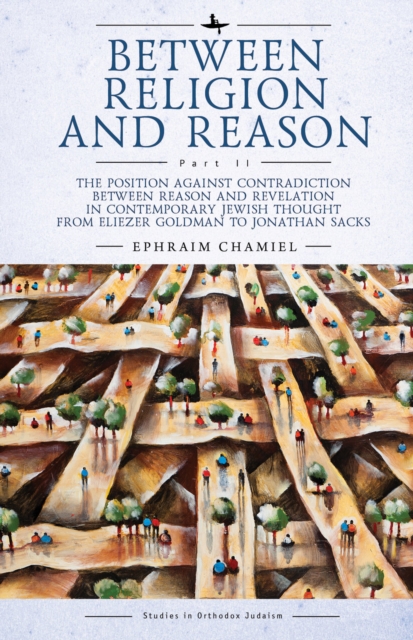
Between Religion and Reason (Part II)
This book is dedicated to an analysis of the writings of modern religious Jewish thinkers who adopted a neo-fundamentalist, illusionary, apologetic approach, opposing the notion that there may sometimes be a contradiction between reason and revelation. The book deals with the thought of Eliezer Goldman, Norman Lamm, David Hartman, Aharon Lichtenstein, Jonathan Sacks, and Michael Abraham. According to these thinkers, it is possible to resolve all of the difficulties that arise from the encounter between religion and science, between reason and revelation, between the morality of halakhah and Western morality, between academic scholarship and tradition, and between scientific discoveries and statements found in the Torah. This position runs counter to the stance of other Jewish thinkers who espouse a different, more daring approach. According to the latter view, irresolvable contradictions between reason and faith sometimes face the modern Jewish believer, who must reconcile himself to these two conflicting truths and learn to live with them. This dialectic position was discussed in Between Religion and Reason, Part I (Academic Studies Press, 2020). The present volume, Part II, completes the discussion of this topic. This book concludes a trilogy of works by the author dealing with modern Jewish thought that attempts to integrate tradition and modernity. The first in the series was The Middle Way (Academic Studies Press, 2014), followed by The Dual Truth (Academic Studies Press, 2018).
eBook

Dynasties Intertwined
Dynasties Intertwined traces
the turbulent relationship between the Zirids of Ifriqiya and the
Normans of Sicily during the eleventh and twelfth
centuries. In doing so, it reveals the complex web of
economic, political, cultural, and military connections that linked
the two dynasties to each other and to other polities across the
medieval Mediterranean. Furthermore, despite the contemporary
interfaith holy wars happening around the Zirids and Normans, their
relationship was never governed by an overarching ideology like
jihad or crusade. Instead, both dynasties pursued policies that
they thought would expand their power and wealth, either through
collaboration or conflict. The relationship between the Zirids and
Normans ultimately came to a violent end in the 1140s, when a
devastating drought crippled Ifriqiya. The Normans seized this
opportunity to conquer lands across the Ifriqiyan coast, bringing
an end to the Zirid dynasty and forming the Norman kingdom of
Africa, which persisted until the Almohad conquest of Mahdia in
1160.
Previous scholarship on medieval North Africa during the reign
of the Zirids has depicted the region as one of instability and
political anarchy that rendered local lords powerless in the face
of foreign conquest. Matt King shows that, to the contrary, the
Zirids and other local lords in Ifriqiya were integral parts of the
far-reaching political and economic networks across the
Mediterranean. Despite the eventual collapse of the Zirid dynasty
at the hands of the Normans, Dynasties Intertwined makes
clear that its emirs were active and consequential Mediterranean
players for much of the eleventh and twelfth centuries, with
political agency independent of their Christian neighbors across
the Strait of Sicily.
eBook

“We Are All Sick People”—On Wittgenstein’s Religious Point of View
Drury reports Wittgenstein telling him, “I am not a religious man but I can’t help seeing every problem from a religious point of view, I would like my work to be understood in this way”. My paper attempts to make sense of this strange claim. I first consider the meaning Wittgenstein gives to ‘religious’ in speaking of questions he explicitly designates as such, and then explain how that (sort of) meaning could also apply to the (other) characterisations he provides of his philosophical work. I also consider the subsidiary question, and suggest two very different reasons as to why Wittgenstein nonetheless did not consider himself ‘a religious man’. While I find much confusion in what Wittgenstein says about religion, his crucial insight is that both religious and philosophical thinking are characterised by the same kind of difficulty. Both spring from our moral–existential confusion and despair over finding, or accepting the sense we find, in our life with others. In the later parts of this paper, I show how the metaphysical I–world perspective of the Tractatus (the first specific form taken by Wittgenstein’s own ‘religious point of view’) exemplifies this very rootedness of philosophical/religious thinking in despair, and how in Wittgenstein’s later philosophy, including in some of his later explicitly religious remarks, an I–You perspective starts to emerge, one where our difficulties in sense-making are seen as the other side of our difficulties in opening ourselves to each other in love. I also suggest, however, that an unresolved tension nonetheless remains in Wittgenstein’s late thinking between an I–You orientation and a focus on collective normativity. Finally, I suggest that foregrounding love tends to dissolve the very idea of specifically ‘religious’ problems quite generally, and so leaves us with a double question about how to understand religion as such, and about whether, or how, we can give coherent sense to Wittgenstein’s idea that his point of view is specifically ‘religious’.
Journal Article
Discourse and Counter-Discourses: Missionaries, Literacy, and Black Liberation in the British Caribbean
From the late seventeenth century onward, the central aim of missionary Christianity in the British Atlantic was to Christianize slavery; that is, to render the institution morally and theologically acceptable within a Christian framework. This work of “amelioration” was envisioned as a gradual process, with missionaries from both the established Church of England and a host of dissenting denominations playing a central role in its advancement. Collectively, they promoted a discourse of Christian slavery that aimed both to reassure slaveowners of the compatibility between slavery and Christianity and to frame the conversion of enslaved people as a means of producing a more obedient, industrious, and morally disciplined labor force. To be sure, in promoting a Christianized vision of slavery, missionary societies were deeply complicit in the exploitation of enslaved Africans. Yet, ironically, the very tools they employed to pacify and discipline (biblical instruction and literacy) were repurposed to articulate a platform of resistance, ultimately contributing to slavery’s undoing. This essay employs critical discourse analysis to examine how these dynamics unfolded in two pivotal uprisings in the British Atlantic world: the Demerara Rebellion of 1823 and the Christmas Rebellion of 1831 in Jamaica. In both cases, missionary endeavors contributed to the counter-discursive appropriation of biblical theology that played a critical role in transforming enslaved people into agents of political change. Still, reimagining scripture was only part of the story. Crucially, it was the alignment of a new religious consciousness with unfolding political events, that transformed simmering discontent into open revolt.
Journal Article
St. Thomas Aquinas on God as Ipsum Esse Subsistens
St. Thomas Aquinas’s doctrine of God as ipsum esse subsistens is not easy to understand. Even some of his more informed interpreters appear to struggle with it. In this paper, I attempt to explain the doctrine in a way that I hope is intelligible to a fairly broad philosophical audience. I also respond to Norman Kretzmann’s interpretation of it, which I think is mistaken. The main problem with Kretzmann’s interpretation seems to be a failure to grasp what Thomas means by esse.
Journal Article


Between Religion and Reason (Part II)
This book is dedicated to an analysis of the writings of modern
religious Jewish thinkers who adopted a neo-fundamentalist,
illusionary, apologetic approach, opposing the notion that there
may sometimes be a contradiction between reason and revelation. The
book deals with the thought of Eliezer Goldman, Norman Lamm, David
Hartman, Aharon Lichtenstein, Jonathan Sacks, and Michael Abraham.
According to these thinkers, it is possible to resolve all of the
difficulties that arise from the encounter between religion and
science, between reason and revelation, between the morality of
halakhah and Western morality, between academic scholarship and
tradition, and between scientific discoveries and statements found
in the Torah. This position runs counter to the stance of other
Jewish thinkers who espouse a different, more daring approach.
According to the latter view, irresolvable contradictions between
reason and faith sometimes face the modern Jewish believer, who
must reconcile himself to these two conflicting truths and learn to
live with them. This dialectic position was discussed in
Between Religion and Reason, Part I (Academic Studies
Press, 2020). The present volume, Part II, completes the discussion
of this topic. This book concludes a trilogy of works by the author
dealing with modern Jewish thought that attempts to integrate
tradition and modernity. The first in the series was The Middle
Way (Academic Studies Press, 2014), followed by The Dual
Truth (Academic Studies Press, 2018).
eBook

Le spleen et l’idéal. Pour une relecture de la fin’amor dans le Tristan de Thomas d’Angleterre
Spleen and ideal. The concept of the fin’amor in Thomas’ Tristan The concept of fin’amor in Thomas’ Tristan is traditionally subject to two interpretations: either it is glorified as a religion, with lovers as its martyrs, or it is criticized within the framework of Christian principles. This paper proposes an alternative to such interpretative dichotomy: it attempts to prove that glorifying the fin’amor as an ideal does not mean idealizing the lovers. In fact, Thomas judges severely his characters not in the name of Christian religion but in the name of an entirely profane, yet highly spiritual ideal of courtly love. The lovers, although far from being its embodiment, still aspire and refer to it, suffering from their own imperfection. This tension is highlighted by the aesthetics of doubling characterizing Thomas’ writing.
Journal Article