
Catalogue Search | MBRL


Are you sure you want to remove the book from the shelf?

{{itemTitle}}
246
result(s) for
"North Atlantic Treaty Organization Afghanistan."
Sort by:

Risking NATO
NATO's success in Afghanistan--or lack thereof--will have significant implications for the alliance itself. The authors examine the current mission in light of NATO's history and with an eye toward the future. NATO faces a long and daunting list of issues that extends beyond the borders of the member countries. The alliance must confront them, however, because failure to do so would risk its long-term success and sustainability.
eBook

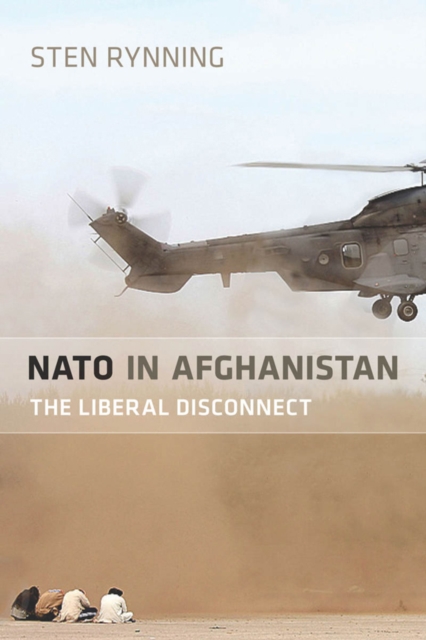
NATO in Afghanistan : the liberal disconnect
The war in Afghanistan has run for more than a decade, and NATO has become increasingly central to it. In this book, Sten Rynning examines NATO's role in the campaign and the difficult diplomacy involved in fighting a war by alliance. He explores the history of the war and its changing momentum, and explains how NATO at first faltered but then improved its operations to become a critical enabler for the U.S. surge of 2009. However, he also uncovers a serious and enduring problem for NATO in the shape of a disconnect between high liberal hopes for the new Afghanistan and a lack of realism about the military campaign prosecuted to bring it about. He concludes that, while NATO has made it to the point in Afghanistan where the war no longer has the potential to break it, the alliance is, at the same time, losing its own struggle to define itself as a vigorous and relevant entity on the world stage. To move forward, he argues, NATO allies must recover their common purpose as a Western alliance, and he outlines options for change.
eBook

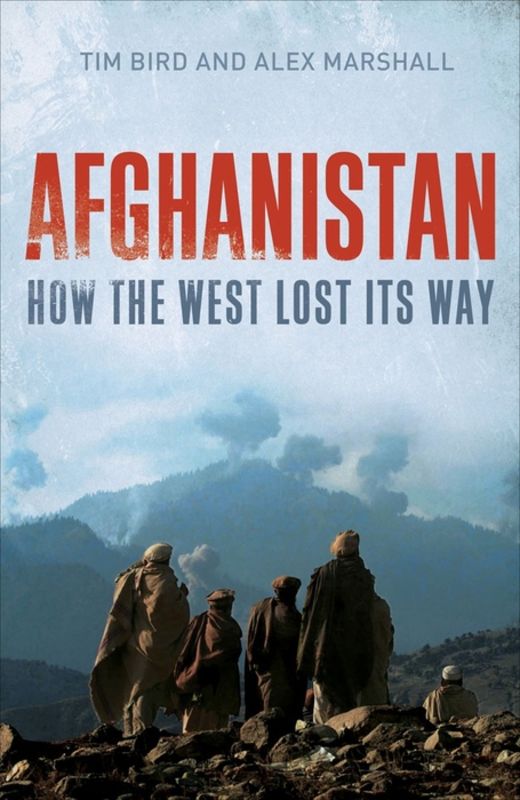
Afghanistan
In October 2001, NATO forces invaded Afghanistan. Their initial aim, to topple the Taliban regime and replace it with a more democratic government aligned to Western interests, was swiftly achieved. However, stabilizing the country in the ensuing years has proven much more difficult. Despite billions of dollars in aid and military expenditure, Afghanistan remains a nation riddled with warlords, the world's major heroin producer, and the site of a seemingly endless conflict between Islamist militants and NATO forces.
In this timely and important book, Tim Bird and Alex Marshall offer a panoramic view of international involvement in Afghanistan from 2001 to 2011. Tackling the subject matter as a whole, Bird and Marshall weave together analysis of military strategy, regional context, aid policy, the Afghan government, and the many disagreements between and within the Western powers involved in the intervention. Given the complicating factors of the heroin trade, unwelcoming terrain, and precarious relations with Pakistan, the authors acknowledge the ways in which Afghanistan has presented unique challenges for its foreign invaders. Ultimately, however, they argue that the international community has failed in its self-imposed effort to solve Afghanistan's problems and that there are broader lessons to be learned from their struggle, particularly in terms of counterinsurgency and the ever-complicated work of \"nation-building.\" The overarching feature of the intervention, they argue, has been an absence of strategic clarity and coherence.
eBook

Afghan Lessons: Culture, Diplomacy, and Counterinsurgency
Fernando Gentilini served nearly two years as the civilian representative of NATO in Afghanistan, running a counterinsurgency campaign in the wartorn nation.Afghan Lessonsis the fascinating story of his mission, a firsthand view of Afghanistan through a kaleidoscope. He explores Afghan history, literature, tradition, and culture to understand some of the most basic questions of Western involvement: What is the purpose? What does an international presence mean, and how can it help?
Highlights from Afghan Lessons
\"This is a book about different worlds, different realities. The reality of everyday life in an unreal world. People that need to be looked after, jobs that need to be done, a country that needs to be restored, all from within the necessary confines of an armed camp. And this in the middle of another reality, which we do not understand, full of things forgotten under decades of war. The keys to this reality lie in the past, perhaps lost.\" -from the Foreword by Robert Cooper
\"To tempt me to explore their country, the Afghans kept repeating that there were three different Afghanistans: 'The first is the one you Westerners imagine; another coincides with the city of Kabul; the third is the country of remote provinces, far away from the cities, and of the three, this is the only real Afghanistan.'\"
\"'There can be no development without security and no security without development.' ... Everyone said it over and over again, both the civilians and the military, but depending on whether it was said by the former or the latter, the emphasis was placed on the first or second part of the slogan. In all honesty this seemingly obvious concept concealed two contrasting ways of seeing things.\"
eBook

The first stone
\"Dispatched to fight the Taliban as part of the NATO forces, the soldiers of the Third Platoon arrive in a desert hell intent on testing their courage and endurance. Among them are the charismatic platoon leader Schr²der, a former games designer fascinated by the imaginative potential of war; Colonel Steffensen, whose negotiating tactics will have deadly consequences; Sidekick, the LifeLogger whose online \"war memorial\" will blur into horror; and the hardened but vulnerable Hannah, who must bury her womanhood - or sacrifice her soul. Confronted by a betrayal that no military training could prepare them for, the soldiers must embark on a desperate mission to track down an enemy whose methods are as murderous as they are unfathomable. As the hunters become the hunted, the mission turns into a depraved, hallucinatory voyage into an Afghanistan they never knew existed. With the Third Platoon's most fundamental notions of good and evil called into question, survival becomes their only mission\"--Publisher description.
Book

Security Force Assistance in Afghanistan
Security force assistance (SFA) is a central pillar of the counterinsurgency campaign being waged by U.S. and coalition forces in Afghanistan. This monograph analyzes SFA efforts in Afghanistan over time, documents U.S. and international approaches to building the Afghan force from 2001 to 2009, and provides observations and recommendations that emerged from extensive fieldwork in Afghanistan in 2009 and their implications for the U.S. Army.
eBook