
Catalogue Search | MBRL


Are you sure you want to remove the book from the shelf?

{{itemTitle}}
397
result(s) for
"Northeast Brazil"
Sort by:


The Vigorous Core of Our Nationality
The Vigorous Core of Our Nationalityexplores conceptualizations of regional identity and a distinct population group known as nordestinos in northeastern Brazil during a crucial historical period. Beginning with the abolition of slavery and ending with the demise of the Estado Novo under Getúlio Vargas, Stanley E. Blake offers original perspectives on the paradoxical concept of thenordestinoand the importance of these debates to the process of state and nation building.Since colonial times, the Northeast has been an agricultural region based primarily on sugar production. The area's population was composed of former slaves and free men of African descent, indigenous Indians, European whites, and mulattos. The image of thenordestinowas, for many years, linked with the predominant ethnic group in the region, the Afro-Brazilian. For political reasons, however, the conception of thenordestinolater changed to more closely resemble white Europeans.Blake delves deeply into local archives and determines that politicians, intellectuals, and other urban professionals formulated identities based on theories of science, biomedicine, race, and social Darwinism. While these ideas served political, social, and economic agendas, they also inspired debates over social justice and led to reforms for both the region and the people. Additionally, Blake shows how debates over northeastern identity and the concept of thenordestinoshaped similar arguments about Brazilian national identity and \"true\" Brazilian people.
eBook

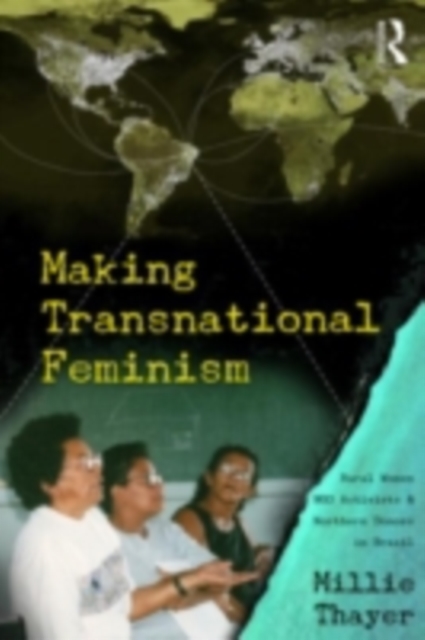
Making Transnational Feminism
This ethnographic study examines the transnational relations among feminist movements at the end of the twentieth century, exploring two differently situated women’s organizations in the Northeast Brazilian state of Pernambuco.
The conventional narrative of globalization tells the story of inexorable forces beyond the capacity of individuals to mute or transcend. But this study tells a different story, one of social actors purposefully weaving cross-border relationships. From this vantage point, global social forces are not immaculately conceived. Instead, they are constituted by human actors with their own interests and identities, located in particular social contexts.
Making Transnational Feminism takes what some have called \"global civil society\" as its object, moving beyond both dire predictions and euphoric celebrations to understand how transnational political relationships are constructed and sustained across social and geographical divides. It also provides a compelling case study for use in advanced undergraduate and graduate courses in globalization, gender studies, and social movements.
1. Introduction: Re-Reading Globalization from Northeast Brazil 2. Traveling Feminisms: From Embodied Women to Gendered Citizenship 3. The Leverage of the Local: Political Negotiations in a Global Sphere 4. Feminists and Funding: Plays of Power in a Social Movement Market 5. Conclusion: Defending the Endangered Public. Methodological Appendix: Transnational Feminism as Field – Power, Solidarity and the Researcher
Millie Thayer (2004 Ph.D., University of California, Berkeley) is Assistant Professor of Sociology at the University of Massachusetts where she teaches graduate classes in field research methods, social movements, and undergraduate classes in race, class, gender, and ethnicity. Her research work is in cross-border feminist relationships, Latin American women's movements, and the social movement/international funding agency nexus. Her articles have appeared in the Journals Ethnography and Social Problems and in books published by University of California Press and Cornell University Press.
\" Making Transnational Feminism (Thayer, 2010) is a great illustration of the processes that lead to organizational movements, and it is a book that is appropriate for students, educators, feminists, nongovernmental organization (NGO) workers, and others who are generally interested in transnational social movements. It is most useful for people like me who are new to this field, and who want to gain a deeper understanding of how the theoretical bases of transnational feminism are implemented in activist movements.\" — The Weekly Qualitative Report
\"...this is a rich, interesting and well-crafted study. It is extremely readable, accessible to students, and a critical resource for for scholars of Latin American social movements, transnational feminisms, global civil society, and the transnational networks of non-governmental organizations. It will be of interest to students across the disciplines of anthropology, sociology, politics, geography and women’s studies.\" — The Canadian Journal of Sociology, Vol. 35, No. 2, 2010
\"Millie Thayer, in her innovative and accessible Making Transnational Feminism , illuminates the complex dynamics of transnational feminist relations, rooting her analysis in close observation of the interactions among northeastern Brazilian rural women workers, urban professional feminists, and feminists and funders from the global North. In this clear and compassionate work, Thayer takes what she terms the “ant’s eye view” (7) to see the impact of transnational discourses and resources on women’s and feminist activism in the global South. Relying on a decade’s worth of field research, Thayer offers a nuanced understanding of the power of transnational flows, examining their impacts on overlapping counterpublics based in part on class and geographic location. Thayer unfolds her multilayered analysis of original ethnography through a design that she deftly crafts from chapter to chapter, clearly indicating to the reader where she is and where she is going.\"— Signs, Vol 36, no. 4, Elisabeth Jay Friedman, University of San Francisco, USA
eBook


Domingos Álvares, African Healing, and the Intellectual History of the Atlantic World
Between 1730 and 1750, Domingos Alvares traversed the colonial Atlantic world like few Africans of his time--from Africa to South America to Europe. By tracing the steps of this powerful African healer and vodun priest, James Sweet finds dramatic means for unfolding a history of the eighteenth-century Atlantic world in which healing, religion, kinship, and political subversion were intimately connected.Alvares treated many people across the Atlantic, yet healing was rarely a simple matter of remedying illness and disease. Through the language of health and healing, Alvares also addressed the profound alienation of warfare, capitalism, and the African slave trade. As a result, he and other African healers frequently ran afoul of imperial power brokers. Nevertheless, even the powerful suffered isolation in the Atlantic world and often turned to African healers for answers. In this way, healers simultaneously became fierce critics of Atlantic imperialism and expert translators of it, adapting their therapeutic strategies in order to secure social relevance and even power. By tracing Alvares' frequent uprooting and border crossing, Sweet illuminates how African healing practices evolved in the diaspora, contesting the social and political hierarchies of imperialism while also making profound impacts on the intellectual discourse of the \"modern\" Atlantic world.
eBook

The Vigorous Core of Our Nationality
The Vigorous Core of Our Nationality explores conceptualizations of regional identity and a distinct population group known as nordestinos in northeastern Brazil during a crucial historical period. Beginning with the abolition of slavery and ending with the demise of the Estado Novo under Get\\u00falio Vargas, Stanley E. Blake offers original perspectives on the paradoxical concept of the nordestino and the importance of these debates to the process of state and nation building. Since colonial times, the Northeast has been an agricultural region based primarily on sugar production. The areaÆs population was composed of former slaves and free men of African descent, indigenous Indians, European whites, and mulattos. The image of the nordestino was, for many years, linked with the predominant ethnic group in the region, the Afro-Brazilian. For political reasons, however, the conception of the nordestino later changed to more closely resemble white Europeans. Blake delves deeply into local archives and determines that politicians, intellectuals, and other urban professionals formulated identities based on theories of science, biomedicine, race, and social Darwinism. While these ideas served political, social, and economic agendas, they also inspired debates over social justice and led to reforms for both the region and the people. Additionally, Blake shows how debates over northeastern identity and the concept of the nordestino shaped similar arguments about Brazilian national identity and \\u201ctrue\\u201d Brazilian people.
eBook
First record of Croton rottlerifolius Baill. (Euphorbiaceae) in Pernambuco state, Brazil mdash;a warning for the protection of threatened Brejos de Altitude of the Caatinga domain
The occurrence of Croton rottlerifolius Baill. in the state of Pernambuco, Brazil, is recorded here for the first time. Individuals of this species were collected in the municipality of Triunfo in a Brejo de Altitude, a type of humid forest found in some mountain ranges and plateaus of the Brazilian semi-arid region. This new record is essential for a better understanding of the geographical distribution and conservation of C. rottlerifolius in Brazil.
Journal Article

Assessing drought in the drylands of northeast Brazil under regional warming exceeding 4 °C
Historically, during periods of extreme drought, food security in the drylands of the semiarid region of Northeast Brazil (NEB) is under severe risk due to agricultural collapse. The drought that started in 2012 continues to highlight the vulnerability of this region, and arid conditions have been detected during the last years mainly in the central semiarid region, covering almost 2% of the NEB. Climate projections show an increase in the area under water stress condition, covering 49% and 54% of the NEB region by 2700 and 2100, respectively, with a higher likelihood with warming above 4 °C. The projections of vegetative stress conditions derived from the empirical model for Vegetation Health Index (VHI) are consistent with projections from vegetation models, where semi-desert types typical of arid conditions would replace the current semiarid bushland vegetation (“caatinga”) by 2100. Due to the impacts of the 2012–2017 drought, public policies have been implemented to reduce social and economic vulnerability for small farmers but are not enough as poor population continues to be affected. In the long term, to make the semiarid less vulnerable to drought, strengthened integrated water resources management and a proactive drought policy are needed to restructure the economy. Integrating drought monitoring and seasonal climate forecasting provides means of assessing impacts of climate variability and change, leading to disaster risk reduction through early warning. Lastly, there is an urgent need for integrated assessments because the possibility that under permanent drought conditions with warming above 4 °C, arid conditions would prevail in NEB since 2060.
Journal Article

Drought in Northeast Brazil: A review of agricultural and policy adaptation options for food security
The semiarid lands of Northeast Brazil represent one of the most densely populated regions of the country. Rainfall variability together with land degradation and large‐scale poverty in rural areas makes this region vulnerable to droughts. Most of the agriculture in this region is rainfed and deficient rainfall leads to severe drought impacts. In this review, we examine different short‐ and long‐term strategies directed to cope with possible impacts of droughts proposed by the government, farmers, civil society, and the private sector. These are approaches to adaptation to drought in the Northeast of Brazil, and among them, we have agricultural management and soil conservation and better management of water resources. Other actions include seasonal climate forecasts and funds transfer and credits to affected small‐scale farmers. Although some of these actions are for the short term and may help to survive the drought situation, they may be only postdisaster mitigation options that do not improve adaptive capacity. They favor maladaptation and create dependency of farmers to government actions. Some experiences such as AdaptaSertão show potential benefits for small‐scale farmers. We identify key challenges for moving toward a more holistic risk management approach and highlight the need to integrate actions and tools for adaptation, combining technology‐based solutions with in‐depth knowledge of local and regional social, economic, and cultural aspects, among them seasonal climate forecasts and drought impacts studies, among some other proactive predisaster ways, rather than reactive postdisaster actions. Adaptation strategies must increase long‐term resilience of food production in the Brazilian Northeast, going beyond an individual drought event. The semiarid lands of Northeast Brazil NEB represent one of the most densely populated regions of the country. Rainfall variability together with land degradation and large‐scale poverty in rural areas make this region vulnerable to droughts in the present. Approaches to adaptation to drought in the NEB vary from agricultural practices and credits to farmers to infrastructure and climate forecasts. Adaptation strategies must increase long‐term resilience of food production in the Brazilian Northeast, going beyond an individual drought event.
Journal Article