
Catalogue Search | MBRL


Are you sure you want to remove the book from the shelf?

{{itemTitle}}
2,064
result(s) for
"Northeastern United States"
Sort by:


Neon wasteland
This path-breaking book examines the lives of five topless dancers in the economically devastated “rust belt” of upstate New York. With insight and empathy, Susan Dewey shows how these women negotiate their lives as parents, employees, and family members while working in a profession widely regarded as incompatible with motherhood and fidelity. Neither disparaging nor romanticizing her subjects, Dewey investigates the complicated dynamic of performance, resilience, economic need, and emotional vulnerability that comprises the life of a stripper. An accessibly written text that uses academic theories and methods to make sense of feminized labor, Neon Wasteland shows that sex work is part of the learned process by which some women come to believe that their self-esteem, material worth, and possibilities for life improvement are invested in their bodies.
eBook


The Archaeology of Race in the Northeast
Historical and archaeological records show that racism and white supremacy defined the social fabric of the northeastern states as much as they did the Deep South.
This collection of essays looks at both new sites and well-known areas to explore race, resistance, and supremacy in the region. With essays covering farm communities and cities from the early seventeenth century to the late nineteenth century, the contributors examine the marginalization of minorities and use the material culture to illustrate the significance of race in understanding daily life. Drawing on historical resources and critical race theory, they highlight the context of race at these sites, noting the different experiences of various groups, such as African American and Native American communities.
This cutting-edge research turns with new focus to the dynamics of race and racism in early American life and demonstrates the coming of age of racialization studies.
eBook

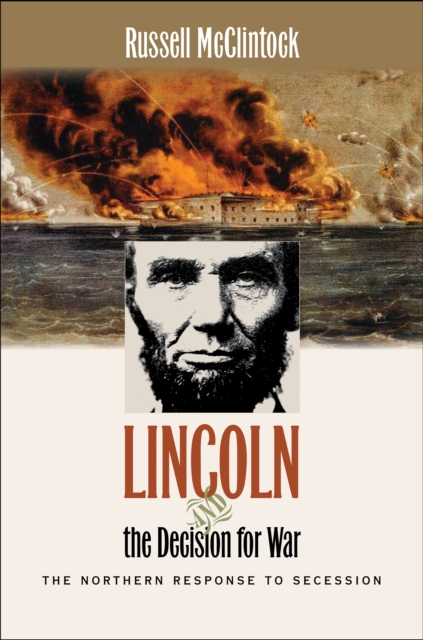
Lincoln and the Decision for War
When Abraham Lincoln's election in 1860 prompted several Southern states to secede, the North was sharply divided over how to respond. In this groundbreaking and highly praised book, McClintock follows the decision-making process from bitter partisan rancor to consensus. From small towns to big cities and from state capitals to Washington, D.C., McClintock highlights individuals both powerful and obscure to demonstrate the ways ordinary citizens, party activists, state officials, and national leaders interacted to influence the Northern response to what was essentially a political crisis. He argues that although Northerners' reactions to Southern secession were understood and expressed through partisan newspapers and officials, the decision fell into the hands of an ever-smaller group of people until finally it was Lincoln alone who would choose whether the future of the American republic was to be determined through peace or by sword.
eBook

Reviewing the South : the literary marketplace and the Southern Renaissance, 1920-1941
\"The American South received increased attention from national commentators during the interwar era. Beginning in the 1920s, the proliferation of daily book columns and Sunday book supplements in newspapers reflected a growing audience of educated readers and its demand for books and book reviews. This period of intensified scrutiny coincided with a boom in the publishing industry, which, in turn, encouraged newspapers to pay greater attention to the world of books. Reviewing the South shows how Northern critics were as much involved in the Southern Literary Renaissance as Southern authors and critics. Southern writing, Gardner argues, served as a litmus to gauge Southern exceptionalism. For critics and their readers, nothing less than the region's ability to contribute to the vibrancy and growth of the nation was at stake\"-- Provided by publisher.
Book

Counter Realignment
In Counter Realignment, Howard L. Reiter and Jeffrey M. Stonecash analyze data from the early 1900s to the early 2000s to explain how the Republican Party lost the northeastern United States as a region of electoral support. Although the story of how the 'Solid South' shifted from the Democratic to the Republican parties has received extensive consideration from political scientists, far less attention has been given to the erosion of support for Republicans in the Northeast. Reiter and Stonecash examine who the Republican Party lost as it repositioned itself, resulting in the shift of power in the Northeast from heavily Republican in 1900 to heavily Democratic in the 2000s.
eBook

