
Catalogue Search | MBRL


Are you sure you want to remove the book from the shelf?

{{itemTitle}}
339
result(s) for
"Norway -- Religion"
Sort by:

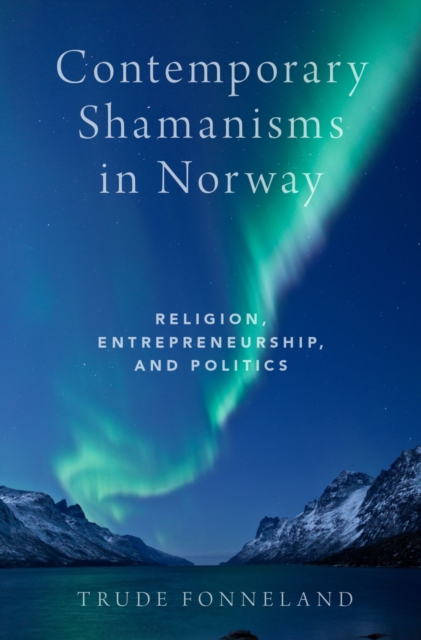
Contemporary Shamanisms in Norway
This book examines Sámi shamanism in Norway as a uniquely distinctive local manifestation of a global new religious phenomenon. Based on more than ten years of ethnographic research, the book provides the basis for a study revealing the development of inventiveness, nuances and polyphony that occur when a global religion of shamanism is merged in a Norwegian setting, colored by its own political and cultural circumstances.
eBook

Global Dynamics of Shi'a Marriages
Muslim marriages have been the focus of considerable public debate in Europe and beyond, in Muslim-majority countries as well as in settings where Muslims are a minority. Most academic work has focused on how the majority Sunni Muslims conclude marriages. This volume, in contrast, focuses on Twelver Shi'a Muslims in Iran, Pakistan, Oman, Indonesia, Norway, and the Netherlands. The volume makes an original contribution to understanding the global dynamics of Shi'a marriage practices in a wide range of contexts--not only its geographical spread but also by providing a critical analysis of the socio-economic, religious, ethnic, and political discourses of each context. The book sheds light on new marriage forms presented through a bottom up approach focusing on the lived experiences of Shi'a Muslims negotiating a diverse range of relationships and forms of belonging.
eBook


Book Collections of Clerics in Norway, 1650-1750
By examining clerical book collections in Norway 1650-1750, this book describes the flow of books in one of the northernmost areas of Europe, a flow dependant on three networking areas in particular, namely Germany, the Netherlands and England.
eBook

Europe's Tired, Poor, Huddled Masses: Self-Selection and Economic Outcomes in the Age of Mass Migration
During the age of mass migration (1850-1913), one of the largest migration episodes in history, the United States maintained a nearly open border, allowing the study of migrant decisions unhindered by entry restrictions. We estimate the return to migration while accounting for migrant selection by comparing Norway-to-US migrants with their brothers who stayed in Norway in the late nineteenth century. We also compare fathers of migrants and nonmigrants by wealth and occupation. We find that the return to migration was relatively low (70 percent) and that migrants from urban areas were negatively selected from the sending population.
Journal Article

Church Resistance to Nazism in Norway, 1940-1945
Church Resistance to Nazism in Norway, 1940-1945 examines the evolution of the Lutheran state Church of Norway in response to the German occupation. While German Protestant churches generally accepted Nazism and state incorporation, Norway s churches rejected both Nazism and ideological alignment. Arne Hassing moves through the history of the Church of Norway s relationship to the Nazi state, from its initial confused complicities to its open resistance and separation. He writes engagingly of the people at the center of this struggle and reflects on how the resistance affected the postwar church and state.
eBook

Idolization and ramification between globalization and ecological footprints: evidence from quantile-on-quantile approach
Globalization persists the tendency to alter numerous aspects of today’s world including religion, transport, language, living styles, and international relations; however, its potential to influence quality of environment is the prime concern for trade and environmental policies guidelines (Audi and Ali
2018
). In response to the growing interest for identifying the dynamic relationship between globalization and environmental performance, the present study seeks to investigate the critical link between globalization and ecological footprints in top 15 globalized countries between 1970 and 2016. Applying the novel methods of quantile-on-quantile regression (QQ) and Granger causality in quantiles, the findings examine the manners in which quantiles of globalization affect the quantiles of ecological footprints and vice versa. The empirical results suggest that globalization has a long-term positive effect on ecological footprint and vice versa in case of Belgium, the Netherlands, Sweden, Switzerland, Denmark, Norway, Canada, and Portugal. On the other hand, the estimated results indicate a negative effect between globalization and ecological footprint in the case of France, Germany, the UK, and Hungary. These results extend the recent findings on the globalization–environment nexus implying that the magnitude of relationship among both variables varies with countries demanding individual focus and cautions for postulating environmental and trade policies.
Journal Article

TO THE NEW WORLD AND BACK AGAIN
The authors compile large data sets from Norwegian and US historical censuses to study return migration during the Age of Mass Migration (1850–1913). Norwegian immigrants who returned to Norway held lower-paid occupations than did Norwegian immigrants who stayed in the United States, both before and after their first transatlantic migration, suggesting they were negatively selected from the migrant pool. Upon returning to Norway, return migrants held higher-paid occupations relative to Norwegians who never moved, despite hailing from poorer backgrounds. These patterns suggest that despite being negatively selected, return migrants had been able to accumulate savings and could improve their economic circumstances once they returned home.
Journal Article

A Comparison of Intergenerational Mobility Curves in Germany, Norway, Sweden, and the US
We examine intergenerational mobility differences between Germany, Norway, Sweden, and the US. Using ranks, we find that the US is substantially less intergenerationally mobile than the three European countries and that the most mobile region of the US is less mobile than the least mobile regions of Norway and Sweden. Using a linear estimator of income share mobility, we find that the four countries have very similar rates of intergenerational mobility. However, when we use non-parametric versions of rank and income share mobility, we find that the US tends to experience lower upward mobility at the bottom of the income distribution than Norway and Sweden.
Journal Article