
Catalogue Search | MBRL


Are you sure you want to remove the book from the shelf?

{{itemTitle}}
5,573
result(s) for
"Norwegian"
Sort by:

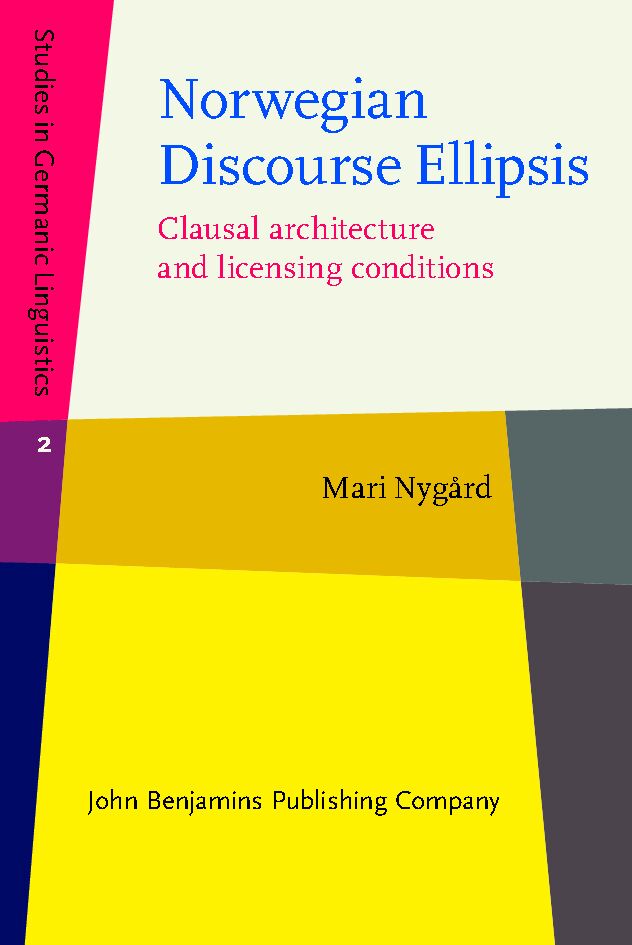
Norwegian Discourse Ellipsis
This book develops a grammar model for discourse ellipses in spoken Norwegian. Two major questions are addressed. Firstly, is there active syntactic structure in the ellipsis site? Secondly, how are discourse ellipses licensed? It is argued that both structural and semantic restrictions are required to account for the empirical patterns.
eBook

Crosslinguistic Influence and Distinctive Patterns of Language Learning
This book details patterns of language use found in the writing of adult learners of Norwegian as a second language (L2). Each study draws its data from the same corpus of L2 Norwegian texts and examines the learners’ use of Norwegian in relation to the morphological, syntactic, lexical, semantic and pragmatic patterns they produce.
eBook

The other name : Septology I-II
Asle is a painter and widower who lives in the house in Dylgja where he used to live with his wife Ales. He is now alone; almost the only people he still sees are his neighbour, êAsleik - an old-fashioned country fisherman - and his gallerist, Beyer, who lives in the city of Bj²rgvin, Fosse's fictional version of Bergen. Another Asle, also a painter, lives in Bj²rgvin, and he and the narrator are doppelgangers, in a way, or perhaps two versions of the same person, the same life. The one who married Ales also became religious, and quit drinking, and became a successful painter; the other is on a harder path. It is a central event of Fosse's fictional universe when they meet. The action of the novel takes place during Advent, shortly before Christmas, with the lives of the two Asles told both in flashback and in the present.
Book
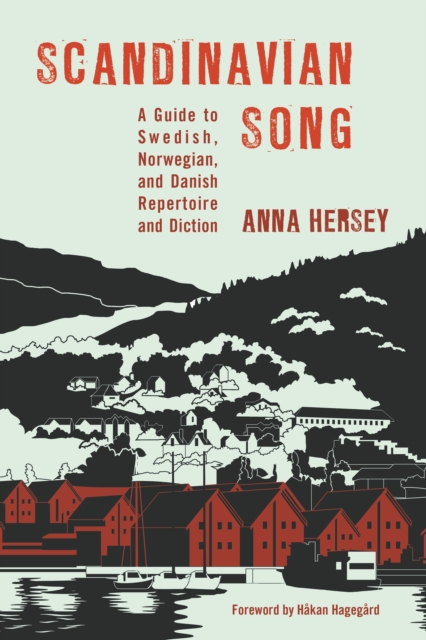
Scandinavian song
Scandinavian art songs are a unique expression of the cultures of Sweden, Norway, and Denmark. Although these three countries are distinct from one another, their languages and cultures share many similarities. Common themes found in art and literature include a love of nature, especially of the sea, feelings of longing and melancholy, the contrast between light and dark, the extremes of the northern climate, and lively folk traditions. These shared sensibilities are reflected and expressed in a tangible way through music. Scandinavian art song has faced several challenges over the years in North America (even in the American Midwest, where descendants of Scandinavian immigrants are concentrated). But matters have changed recently with the recent expansion of diction curricula to cover languages other than English, French, German, and Italian. The primary obstacle remains practical resources for the study of art songs and lyric diction of Sweden, Norway, and Denmark. This guide remedies this problem. Scandinavian Song is a practical guide to the art songs of Sweden, Norway, and Denmark. Unlike other sources that give at best a cursory overview of lyric diction in the Scandinavian languages, this guide provides practical information, enabling teachers and students to render transcriptions of Swedish, Norwegian, and Danish texts into the International Phonetic Alphabet (IPA)—an absolute necessity for any study of repertoire. An extensive survey of available music, sample IPA transcriptions and translations, as well as a website link with native speakers reciting selected song texts, make this book an invaluable resource for students and professors in North American college, university, and conservatory voice programs.
eBook
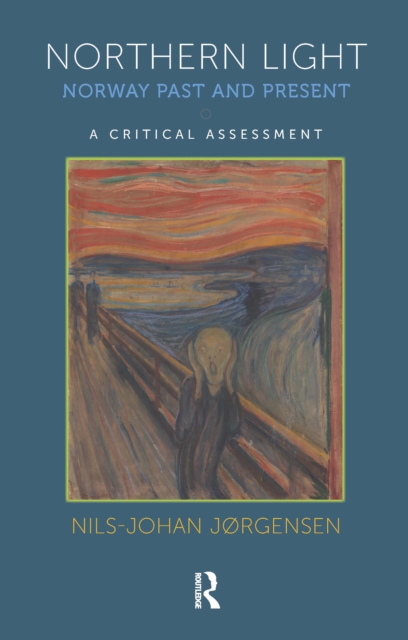
Northern Light
The marking of the 200-anniversary of the Constitution in 2014 tells the story of Norway, the once great European power until the thirteenth century, subsumed for five hundred and twenty-five years under Denmark and Sweden and occupied for five years by Nazi-Germany.
eBook

Elites, language, and the politics of identity : the Norwegian case in comparative perspective
Why and when do linguistic cleavages within a nation become politicized? Using Norway—where language has played a particularly salient role in the nation’s history—as a case study, Gregg Bucken-Knapp explores these questions and challenges the notion that the politicization of language conflict is a response to language problems. He shows that political elites often view language conflict as a political opportunity, placing it on the policy agenda as an effective mobilizing tool to serve their own nonlinguistic political ends. Although language-oriented interest groups may fight to achieve desired language policies, they are generally unsuccessful when their preferences clash with the broader objectives of political elites. This book focuses on understanding just how language policies emerge.
eBook