
Catalogue Search | MBRL


Are you sure you want to remove the book from the shelf?

{{itemTitle}}
1,187
result(s) for
"Nostalgie"
Sort by:

The way we never were : American families and the nostalgia trap
Acclaimed historian Stephanie Coontz provides a myth-shattering examination of two centuries of the American family, sweeping away misconceptions about the past that cloud current debates about domestic life.
Book

Afro-Nostalgia
The past as a building block of a more affirming and
hopeful future As early as the eighteenth century, white
Americans and Europeans believed that people of African descent
could not experience nostalgia. As a result, black lives have been
predominately narrated through historical scenes of slavery and
oppression. This phenomenon created a missing archive of romantic
historical memories.
Badia Ahad-Legardy mines literature, visual culture,
performance, and culinary arts to form an archive of black
historical joy for use by the African-descended. Her analysis
reveals how contemporary black artists find more than trauma and
subjugation within the historical past. Drawing on contemporary
African American culture and recent psychological studies,
Ahad-Legardy reveals nostalgia's capacity to produce positive
emotions. Afro-nostalgia emerges as an expression of black romantic
recollection that creates and inspires good feelings even within
our darkest moments.
Original and provocative, Afro-Nostalgia offers black
historical pleasure as a remedy to contend with the disillusionment
of the present and the traumas of the past.
eBook

Il faut partir, Casimir
\"Casimir habite le même quartier depuis sa naissance. Il y connaît tout le monde et y a plein d'amis. Un jour, une lettre arrive, et vient bouleverser sa vie. Une lettre du propriétaire qui annonce que sa mère, sa petite sœur et lui devront quitter l'appartement où ils vivent et déménager ailleurs. Mais Casimir est un inventeur. Un bricoleur. Un réparateur. Et il est bien décidé à trouver un moyen de déconstruire ce malheur pour le transformer en bonheur. Un roman en vers libres magnifiquement illustré\"-- Publisher's description.
Book

Reclaiming Nostalgia
Often thought of as the quintessential home or the Eden from which humanity has fallen, the natural world has long been a popular object of nostalgic narratives. InReclaiming Nostalgia,Jennifer Ladino assesses the ideological effects of this phenomenon by tracing its dominant forms in American literature and culture since the closing of the frontier in 1890. While referencing nostalgia for pastoral communities and for untamed and often violent frontiers, she also highlights the ways in which nostalgia for nature has served as a mechanism for social change, a model for ethical relationships, and a motivating force for social and environmental justice.
eBook

The Paradox of Music-Evoked Sadness: An Online Survey
This study explores listeners' experience of music-evoked sadness. Sadness is typically assumed to be undesirable and is therefore usually avoided in everyday life. Yet the question remains: Why do people seek and appreciate sadness in music? We present findings from an online survey with both Western and Eastern participants (N = 772). The survey investigates the rewarding aspects of music-evoked sadness, as well as the relative contribution of listener characteristics and situational factors to the appreciation of sad music. The survey also examines the different principles through which sadness is evoked by music, and their interaction with personality traits. Results show 4 different rewards of music-evoked sadness: reward of imagination, emotion regulation, empathy, and no \"real-life\" implications. Moreover, appreciation of sad music follows a mood-congruent fashion and is greater among individuals with high empathy and low emotional stability. Surprisingly, nostalgia rather than sadness is the most frequent emotion evoked by sad music. Correspondingly, memory was rated as the most important principle through which sadness is evoked. Finally, the trait empathy contributes to the evocation of sadness via contagion, appraisal, and by engaging social functions. The present findings indicate that emotional responses to sad music are multifaceted, are modulated by empathy, and are linked with a multidimensional experience of pleasure. These results were corroborated by a follow-up survey on happy music, which indicated differences between the emotional experiences resulting from listening to sad versus happy music. This is the first comprehensive survey of music-evoked sadness, revealing that listening to sad music can lead to beneficial emotional effects such as regulation of negative emotion and mood as well as consolation. Such beneficial emotional effects constitute the prime motivations for engaging with sad music in everyday life.
Journal Article

Left in the past : radicalism and the politics of nostalgia
Looks at the role nostalgia plays in the radical imagination to offer a new guide to the history and politics of the left.
eBook

Why Do Older Consumers Buy Older Brands? The Role of Attachment and Declining Innovativeness
The authors compare three mechanisms that may explain why older consumers tend to prefer older brands. Data are from the French perfume market, in which some market leaders are decades old while hundreds of new entrants launch yearly. The authors reveal monotonically increasing differences across age ranges. Younger consumers have a greater propensity to change their preferred brand, a form of innovativeness that benefits relatively recent entrants, whereas older consumers exhibit a propensity to remain attached for a longer duration to the same preferred brand. Nostalgia for options encountered during an early \"formative period\" has only a limited impact. Furthermore, strong heterogeneity emerges: At all ages, some consumers frequently change their preferred brand, whereas others remain attached to it for long periods. It is the proportion of these two behaviors that varies across age ranges. The resultant managerial implications indicate that mature consumers are attractive targets because they likely remain attached to a brand longer, that long-established products may still attract new consumers, and that the success of a new brand among young consumers may be ephemeral.
Journal Article

Lifespan effects of current age and of age at the time of remembered events on the affective tone of life narrative memories: Early adolescence and older age are more negative
The affective tone of autobiographical memories may be influenced by age in two ways—by the current age of the remembering individual and by the age of the remembered self at the time of the remembered event. While aging has been associated with more positive autobiographical memories, young adulthood is remembered more positively than other parts of life. We tested whether these effects also show in life story memories and how they act jointly on affective tone; also, we wanted to explore their effects on remembered lifetimes other than early adulthood. We tested effects of current age and age at event on affective tone with brief entire life narratives provided up to five times across 16 years by 172 Germans of both genders, ages 8 to 81 years. Multilevel analyses found an unexpected negativity effect of aging for current age and confirmed a “golden 20s” effect of remembered age. In addition, women told more negative life stories, and affective tone dipped in early adolescence for current age and was remembered as such up to mid-adulthood. Thus, the affective tone of life story memories is jointly influenced by current and remembered age. The absence of a positivity effect in aging is explained by the specific requirements of telling an entire life. We suggest the turmoil of puberty as a reason for the early adolescence dip. Gender differences are potentially explained by differences in narrative style, in depression rates, and in real-life challenges.
Journal Article

Nostalgia and the post-war Labour Party
This book shows that William Shakespeare was a more personal writer than any of his innumerable commentators have realised. It asserts that numerous characters and events were drawn from the author's life, and puts faces to the names of Jaques, Touchstone, Feste, Jessica, the 'Dark Lady' and others. Steven Sohmer explores aspects of Shakespeare's plays and sonnets that have been hitherto overlooked or misinterpreted in an effort to better understand the man and his work. If you've ever wondered who Pigrogromitus was, or why Jaques spies on Touchstone and Audrey - or what the famous riddle M.O.A.I. stands for - this is the book for you.
eBook
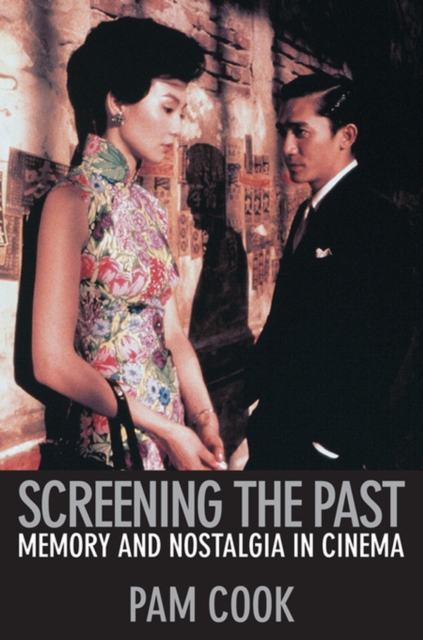
Screening the Past
From Mildred Pierce and Brief Encounter to Raging Bull and In the Mood for Love, this lively and accessible collection explores film culture's obsession with the past, offering searching and provocative analyses of a wide range of titles.
Screening the Past engages with current debates about the role of cinema in mediating history through memory and nostalgia, suggesting that many films use strategies of memory to produce diverse forms of knowledge which challenge established ideas of history, and the traditional role of historians.
Classic essays sit side by side with new research, contextualized by introductions which bring them up to date, and provide suggestions for further reading as the work of contemporary directors such as Martin Scorsese, Kathryn Bigelow, Todd Haynes and Wong Kar-wai is used to examine the different ways they deploy creative processes of memory.
Pam Cook also investigates the recent history of film studies, reviewing the developments that have culminated in the exciting, if daunting, present moment. The result is a rich and stimulating volume that will appeal to anyone with an interest in cinema, memory and identity.
eBook