
Catalogue Search | MBRL


Are you sure you want to remove the book from the shelf?

{{itemTitle}}
596
result(s) for
"Novelists, Russian"
Sort by:


The Damned and the Dead
The first comprehensive study of how Soviet and post-Soviet novelists--most of them war veterans--depicted the shattering experiences of World War II. Uncovers themes common to war literature in general but also distinctive to the Soviet experience. Reveals why Russia's memories of World War II are forever tied to the suffering of its people.
eBook

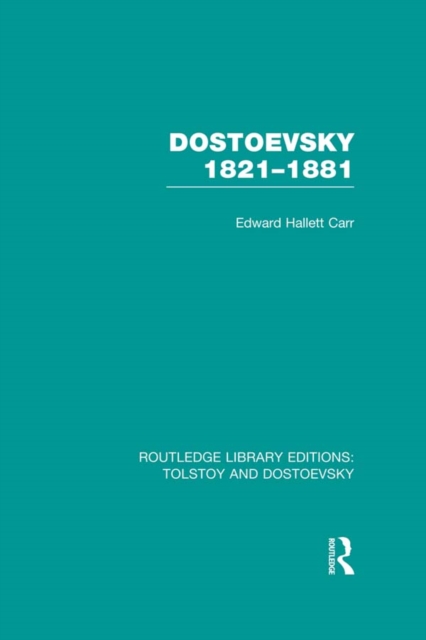
Dostoevsky 1821-1881
The bare events of Dostoevsky's life - his father murdered by peasants, his own ordeal before a firing squad, then exile in Siberia, his epilepsy, gambling, poverty and debts - go far to account for his strange intensity of vision. This biography, first published in 1931, traces his wayward development, from his strict and secluded childhood to his debut as 'literary pimple', through his years of anguish, to his maturity as artist and final apotheosis as Russian patriot.
Written some fifty years after Dostoevsky's death, when the material necessary for a full study first became available, Carr's classic study reflects an approach to the life and genius of Dostoevsky dominated by the concerns of the mid-twentieth century. With its illuminating chapters on each of the great novels and its stylistic precision, this treatment of Dostoevsky remains a perfect introduction to the man, both as a novelist and as a human being.
eBook
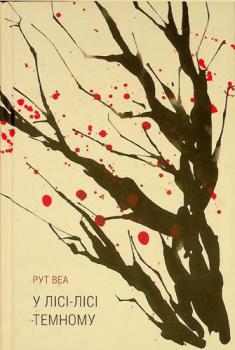
U lisi-lisi temnomy
\"What should be a cozy and fun-filled weekend deep in the English countryside takes a sinister turn in Ruth Ware's suspenseful, compulsive, and darkly twisted psychological thriller. Leonora, known to some as Lee and others as Nora, is a reclusive crime writer, unwilling to leave her \"nest\" of an apartment unless it is absolutely necessary. When a friend she hasn't seen or spoken to in years unexpectedly invites Nora (Lee?) to a weekend away in an eerie glass house deep in the English countryside, she reluctantly agrees to make the trip. Forty-eight hours later, she wakes up in a hospital bed injured but alive, with the knowledge that someone is dead. Wondering not \"what happened?\" but \"what have I done?\", Nora (Lee?) tries to piece together the events of the past weekend. Working to uncover secrets, reveal motives, and find answers, Nora (Lee?) must revisit parts of herself that she would much rather leave buried where they belong: in the past. In the tradition of Paula Hawkins's instant New York Times bestseller The Girl On the Train and S. J. Watson's riveting national sensation Before I Go To Sleep, this gripping literary debut from UK novelist Ruth Ware will leave you on the edge of your seat through the very last page\"-- Provided by publisher.
BOOK
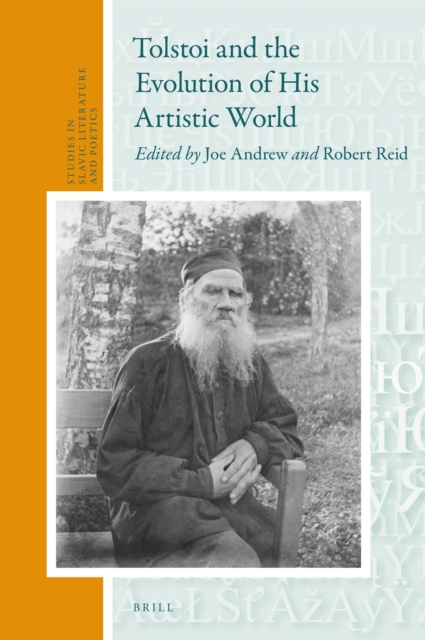
Tolstoi and the Evolution of His Artistic World
Joe Andrew and Robert Reid assemble thirteen analytical discussions of Tolstoi's key works, written by leading scholars from around the world. The works studied cover almost the entire length of Tolstoi's career; the analyses present unique insights into Tolstoi's artistic world.
eBook


The Damned and the Dead
The confrontation between the Wehrmacht and the Red Army on the Eastern Front of World War II was defined by incalculable suffering, destruction, casualties, and heroism. While many historians have chronicled the epic nature of that arena of war, it has largely been left to Russian novelists to fully express the intense human dimensions of that conflict. Frank Ellis's groundbreaking study provides the first comprehensive survey of that impressive body of literature. Canvassing a wide spectrum of works by Soviet and post-Soviet writers, many of whom were war veterans themselves, Ellis uncovers themes both common to war literature in general and distinctive to the Soviet experience. He recalls the earliest works in this genre by Emmanuil Kazakevich, Grigorii Baklanov, and IUrii Bondarev; presents a long overdue assessment of Vasil' Bykov's work, which focuses on the partisan war in Bykov's native Belorussia; and brings into sharp focus the powerful Stalingrad novels of Vasilii Grossman, Konstantin Simonov, Viktor Nekrasov, and Bondarev. He also provides keen insights into the heroic portraits of Stalin in the fiction of Ivan Stadniuk and Vladimir Bogomolov and examines three important war novels published during the 1990s: Viktor Astaf'ev's The Damned and the Dead, Georgii Vladimov's The General and His Army, and Vladimir But's Heads-Tails. One of the many threads running throughout Ellis's study is the dilemma of the Red Army soldier condemned to serve a regime that was utterly paranoid regarding the allegiances of its own armies, so much so that Soviet soldiers often felt as threatened by the Soviet government as they did by the German armies. Many of these novels reinforce the now well-known fact that Stalin devoted considerable resources to ferreting out soldiers whose actions (or inactions) suggested disloyalty to his repressive regime. A few of them-such as Grossman's Life and Fate-became battlegrounds in their own right, pitting Soviet writers against Soviet censors in a struggle over the public memory of the war. Russia's memories of World War II are forever tied to the suffering of its people. Ellis's rich and revealing work shows us why.
eBook


Resurrection from the Underground
In a fascinating analysis of critical themes in Feodor Dostoevsky's work, René Girard explores the implications of the Russian author's \"underground,\" a site of isolation, alienation, and resentment. Brilliantly translated, this book is a testament to Girard's remarkable engagement with Dostoevsky's work, through which he discusses numerous aspects of the human condition, including desire, which Girard argues is \"triangular\" or \"mimetic\"-copied from models or mediators whose objects of desire become our own. Girard's interdisciplinary approach allows him to shed new light on religion, spirituality, and redemption in Dostoevsky's writing, culminating in a revelatory discussion of the author's spiritual understanding and personal integration.Resurrectionis an essential and thought-provoking companion to Dostoevsky'sNotes from the Underground.
eBook