
Catalogue Search | MBRL


Are you sure you want to remove the book from the shelf?

{{itemTitle}}
71,851
result(s) for
"Nuclear accidents"
Sort by:

The science of a nuclear plant explosion
Examines the reasons behind and effects of nuclear power plant accidents.
Book

Life Exposed
On April 26, 1986, Unit Four of the Chernobyl nuclear reactor exploded in then Soviet Ukraine. More than 3.5 million people in Ukraine alone, not to mention many citizens of surrounding countries, are still suffering the effects. Life Exposed is the first book to comprehensively examine the vexed political, scientific, and social circumstances that followed the disaster. Tracing the story from an initial lack of disclosure to post-Soviet democratizing attempts to compensate sufferers, Adriana Petryna uses anthropological tools to take us into a world whose social realities are far more immediate and stark than those described by policymakers and scientists. She asks: What happens to politics when state officials fail to inform their fellow citizens of real threats to life? What are the moral and political consequences of remedies available in the wake of technological disasters? Through extensive research in state institutions, clinics, laboratories, and with affected families and workers of the so-called Zone, Petryna illustrates how the event and its aftermath have not only shaped the course of an independent nation but have made health a negotiated realm of entitlement. She tracks the emergence of a \"biological citizenship\" in which assaults on health become the coinage through which sufferers stake claims for biomedical resources, social equity, and human rights. Life Exposed provides an anthropological framework for understanding the politics of emergent democracies, the nature of citizenship claims, and everyday forms of survival as they are interwoven with the profound changes that accompanied the collapse of the Soviet Union.
eBook
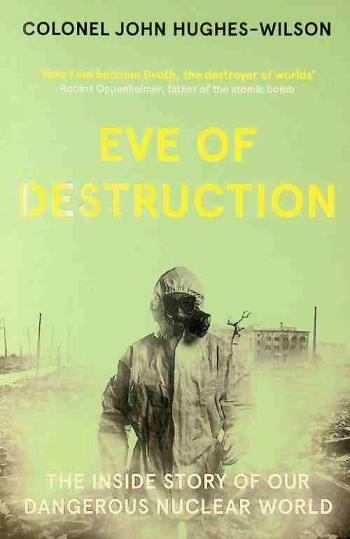
Eve of destruction : the inside story of our dangerous nuclear world
Truman evidently understood the terrifying power of atomic weaponry, but no one could have realised its full potential when he ordered the bombings of Hiroshima and Nagasaki in August 1945. Those military attacks, along with the disasters at the Fukashima and Chernobyl nuclear reactors, might immediately spring to mind at the mention of nuclear destruction, but the vast majority of the events recorded in this book are entirely unknown to most people. This book records the facts, many of them still shrouded in secrecy - which show a worrying truth: we have teetered precariously on the brink of Armageddon far more frequently than the general public realises. Since that first and last atomic war in 1945, there have been a terrifying number of nuclear accidents and mishaps, from the careless or accidental to the genuinely intentional and only narrowly averted. Despite the catastrophic nature of any nuclear conflict, we have come to the very borders of such a situation ten times since the 1960s. Most people know about the Cuba Missile Crisis, and a few about Operation Able Archer in 1984, which, if anything, was even more frightening than Cuba, but there have been eight other occasions that might easily have toppled over into outright war. These were potential conflicts; but there have been other accidents, such as the reactor meltdown at the nuclear generating plant at Three Mile Island, Pennsylvania, in 1979, or the 'Palomares Incident' in 1966, when a USAF B-52 bomber crashed after a mid-air collision, dropping four hydrogen bombs on Spanish soil. Eve of Destruction is a warning from history, recent history. It is a call to sit up and listen, and to take note of the very real danger of nuclear catastrophe. It is a timely and important book because, after all, the future of our planet has to concern us all.

The Politics of Invisibility
Before Fukushima, the most notorious large-scale nuclear accident the world had seen was Chernobyl in 1986. The fallout from Chernobyl covered vast areas in the Northern Hemisphere, especially in Europe. Belarus, at the time a Soviet republic, suffered heavily: nearly a quarter of its territory was covered with long-lasting radionuclides. Yet the damage from the massive fallout was largely imperceptible; contaminated communities looked exactly like noncontaminated ones. It could be known only through constructed representations of it. InThe Politics of Invisibility, Olga Kuchinskaya explores how we know what we know about Chernobyl, describing how the consequences of a nuclear accident were made invisible. Her analysis sheds valuable light on how we deal with other modern hazards -- toxins or global warming -- that are largely imperceptible to the human senses.Kuchinskaya describes the production of invisibility of Chernobyl's consequences in Belarus -- practices that limit public attention to radiation and make its health effects impossible to observe. Just as mitigating radiological contamination requires infrastructural solutions, she argues, the production and propagation of invisibility also involves infrastructural efforts, from redefining the scope and nature of the accident's consequences to reshaping research and protection practices. Kuchinskaya finds vast fluctuations in recognition, tracing varyingly successful efforts to conceal or reveal Chernobyl's consequences at different levels -- among affected populations, scientists, government, media, and international organizations. The production of invisibility, she argues, is a function of power relations.
eBook

Close your eyes, hold hands : a novel
Living in an igloo of ice and trash bags half a year after a cataclysmic nuclear disaster, Emily, convinced that she will be hated as the daughter of the drunken father who caused the meltdown, assumes a fictional identity while protecting a homeless boy.
Book

Long-term effects of radiation exposure on health
Late-onset effects of exposure to ionising radiation on the human body have been identified by long-term, large-scale epidemiological studies. The cohort study of Japanese survivors of the atomic bombings of Hiroshima and Nagasaki (the Life Span Study) is thought to be the most reliable source of information about these health effects because of the size of the cohort, the exposure of a general population of both sexes and all ages, and the wide range of individually assessed doses. For this reason, the Life Span Study has become fundamental to risk assessment in the radiation protection system of the International Commission on Radiological Protection and other authorities. Radiation exposure increases the risk of cancer throughout life, so continued follow-up of survivors is essential. Overall, survivors have a clear radiation-related excess risk of cancer, and people exposed as children have a higher risk of radiation-induced cancer than those exposed at older ages. At high doses, and possibly at low doses, radiation might increase the risk of cardiovascular disease and some other non-cancer diseases. Hereditary effects in the children of atomic bomb survivors have not been detected. The dose–response relation for cancer at low doses is assumed, for purposes of radiological protection, to be linear without a threshold, but has not been shown definitively. This outstanding issue is not only a problem when dealing appropriately with potential health effects of nuclear accidents, such as at Fukushima and Chernobyl, but is of growing concern in occupational and medical exposure. Therefore, the appropriate dose–response relation for effects of low doses of radiation needs to be established.
Journal Article
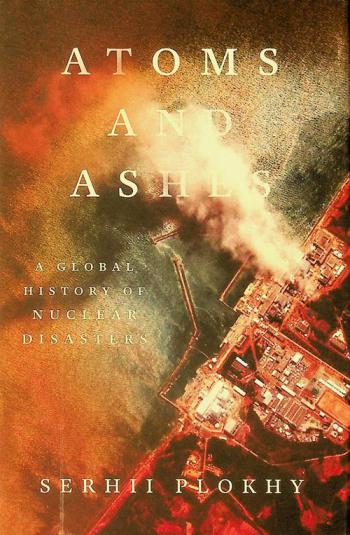
Atoms and ashes : a global history of nuclear disasters
\"A chilling account of seventy years of nuclear catastrophes, by the author of the \"definitive\" (Economist) Cold War history, Nuclear Folly. Nuclear energy was embraced across the globe at the height of the nuclear industry in the 1960s and 1970s; today, there are 440 nuclear reactors operating throughout the world, with nuclear power providing 10 percent of world electricity. Yet as the world seeks to reduce carbon emissions to combat climate change, the question arises: Just how safe is nuclear energy? Atoms and Ashes recounts the dramatic history of nuclear accidents that have dogged the industry in its military and civil incarnations since the 1950s. Through the stories of six terrifying major incidents-Bikini Atoll, Kyshtym, Windscale, Three Mile Island, Chernobyl, and Fukushima-Cold War expert Serhii Plokhy explores the risks of nuclear power, both for military and peaceful purposes, while offering a vivid account of how individuals and governments make decisions under extraordinary circumstances. Atoms and Ashes provides a crucial perspective on the most dangerous nuclear disasters of the past, in order to safeguard our future\"-- Provided by publisher.

Japan's Nuclear Disaster and the Politics of Safety Governance
In Japan's Nuclear Disaster and the
Politics of Safety Governance , Florentine
Koppenborg argues that the regulatory reforms taken up in the wake
of the Fukushima disaster on March 11, 2011, directly and
indirectly raised the costs of nuclear power in Japan. The
Nuclear Regulation Authority resisted capture by the nuclear
industry and fundamentally altered the environment for nuclear
policy implementation. Independent safety regulation changed
state-business relations in the nuclear power domain from
regulatory capture to top-down safety regulation, which raised
technical safety costs for electric utilities. Furthermore, the
safety agency's extended emergency preparedness regulations
expanded the allegorical backyard of NIMBY demonstrations.
Antinuclear protests, mainly lawsuits challenging restarts,
incurred additional social acceptance costs. Increasing costs
undermined pronuclear actors' ability to implement nuclear power
policy and caused a rift inside the \"nuclear village.\" Small
nuclear safety administration reforms were, in fact, game changers
for nuclear power politics in Japan.
Koppenborg's findings contribute to the vibrant conversations
about the rise of independent regulatory agencies, crisis as a
mechanism for change, and the role of nuclear power amid global
interest in decarbonizing our energy supply.
eBook

Nuclear meltdowns
Describes how nuclear power developed, how it works, and the serious health and environmental problems that ensue when the process malfunctions.
Book

Unexpected source of Fukushima-derived radiocesium to the coastal ocean of Japan
There are 440 operational nuclear reactors in the world, with approximately one-half situated along the coastline. This includes the Fukushima Dai-ichi Nuclear Power Plant (FDNPP), which experienced multiple reactor meltdowns in March 2011 followed by the release of radioactivity to the marine environment. While surface inputs to the ocean via atmospheric deposition and rivers are usually well monitored after a nuclear accident, no study has focused on subterranean pathways. During our study period, we found the highest cesium-137 (137Cs) levels (up to 23,000 Bq·m−3) outside of the FDNPP site not in the ocean, rivers, or potable groundwater, but in groundwater beneath sand beaches over tens of kilometers away from the FDNPP. Here, we present evidence of a previously unknown, ongoing source of Fukushima-derived 137Cs to the coastal ocean. We postulate that these beach sands were contaminated in 2011 through wave- and tide-driven exchange and sorption of highly radioactive Cs from seawater. Subsequent desorption of 137Cs and fluid exchange from the beach sands was quantified using naturally occurring radium isotopes. This estimated ocean 137Cs source (0.6 TBq·y−1) is of similar magnitude as the ongoing releases of 137Cs from the FDNPP site for 2013–2016, as well as the input of Fukushima-derived dissolved 137Cs via rivers. Although this ongoing source is not at present a public health issue for Japan, the release of Cs of this type and scale needs to be considered in nuclear power plant monitoring and scenarios involving future accidents.
Journal Article