
Catalogue Search | MBRL


Are you sure you want to remove the book from the shelf?

{{itemTitle}}
1,241
result(s) for
"Nuclear engineering History"
Sort by:

Destroyer of worlds : the deep history of the Nuclear age
\"The thrilling and terrifying seventy-year story of the physics that deciphered the atom and created the hydrogen bomb Although Henri Becquerel didn't know it at the time, he changed history in 1895 when he left photographic plates and some uranium rocks in a drawer. The rocks emitted something that exposed the plates: it was the first documented evidence of spontaneous radioactivity. So began one of the most exciting and consequential efforts humans have ever undertaken. As Frank Close recounts in Destroyer of Worlds, scientists confronting Becquerel's discovery had three questions: What was this phenomenon? Could it be a source of unlimited power? And (alas), could it be a weapon? Answering them was an epic journey of discovery, with Ernest Rutherford, Enrico Fermi, Irene Joliot-Curie, and many others jockeying to decipher the dance of particles in a decaying atom. And it was a terrifying journey as well, as Edward Teller and others pressed on from creating atom bombs to hydrogen bombs so powerful that they could destroy all life on Earth. The deep history of the nuclear age has never before been recounted so vividly. Centered on an extraordinary cast of characters, Destroyer of Worlds charts the course of nuclear physics from simple curiosity to potential Armageddon\"-- Provided by publisher.
BOOK

Producing Power
The Chernobyl disaster has been variously ascribed to human error, reactor design flaws, and industry mismanagement. Six former Chernobyl employees were convicted of criminal negligence; they defended themselves by pointing to reactor design issues. Other observers blamed the Soviet style of ideologically driven economic and industrial management. InProducing Power,Sonja Schmid draws on interviews with veterans of the Soviet nuclear industry and extensive research in Russian archives as she examines these alternate accounts. Rather than pursue one \"definitive\" explanation, she investigates how each of these narratives makes sense in its own way and demonstrates that each implies adherence to a particular set of ideas -- about high-risk technologies, human-machine interactions, organizational methods for ensuring safety and productivity, and even about the legitimacy of the Soviet state. She also shows how these attitudes shaped, and were shaped by, the Soviet nuclear industry from its very beginnings.Schmid explains that Soviet experts established nuclear power as a driving force of social, not just technical, progress. She examines the Soviet nuclear industry's dual origins in weapons and electrification programs, and she traces the emergence of nuclear power experts as a professional community. Schmid also fundamentally reassesses the design choices for nuclear power reactors in the shadow of the Cold War's arms race. Schmid's account helps us understand how and why a complex sociotechnical system broke down. Chernobyl, while unique and specific to the Soviet experience, can also provide valuable lessons for contemporary nuclear projects.
eBook
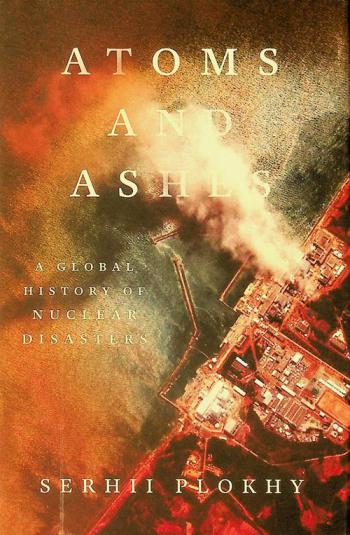
Atoms and ashes : a global history of nuclear disasters
\"A chilling account of seventy years of nuclear catastrophes, by the author of the \"definitive\" (Economist) Cold War history, Nuclear Folly. Nuclear energy was embraced across the globe at the height of the nuclear industry in the 1960s and 1970s; today, there are 440 nuclear reactors operating throughout the world, with nuclear power providing 10 percent of world electricity. Yet as the world seeks to reduce carbon emissions to combat climate change, the question arises: Just how safe is nuclear energy? Atoms and Ashes recounts the dramatic history of nuclear accidents that have dogged the industry in its military and civil incarnations since the 1950s. Through the stories of six terrifying major incidents-Bikini Atoll, Kyshtym, Windscale, Three Mile Island, Chernobyl, and Fukushima-Cold War expert Serhii Plokhy explores the risks of nuclear power, both for military and peaceful purposes, while offering a vivid account of how individuals and governments make decisions under extraordinary circumstances. Atoms and Ashes provides a crucial perspective on the most dangerous nuclear disasters of the past, in order to safeguard our future\"-- Provided by publisher.
Mad on radium : New Zealand in the atomic age
Although New Zealander Lord Rutherford was the first to split the atom, the country has since been known around the world for its nuclear-free stance. In this engaging and accessible book, an alternative history is revealed of \"nuclear New Zealand\"—when there was much enthusiasm for nuclear science and technology. From the first users of X-rays and radium in medicine to the plans for a nuclear power station on the Kaipara Harbour, this account uncovers the long and rich history of New Zealanders' engagement with the nuclear world and the roots of its nuclear-free identity.
eBook

Atomic adventures : secret islands, forgotten N-rays, and isotopic murder--a journey into the wild world of nuclear science
Mahaffey unearths lost reactors on far-flung islands and finds trees that were exposed to active fission -- which then changed gender or bloomed in the dead of winter. He explains why we have nuclear submarines but not nuclear aircraft and why cold fusion does not -- and cannot -- exist. And who knew that radiation-counting was once a fashionable trend? Though parts of our nuclear history might seem like fiction -- such as when cowboys got their hands on a reactor -- Mahaffey's prose holds the reader in thrall of the energy of scientific curiosity and ingenuity that may hold the key to solving our energy crisis -- or even send us to Mars.
BOOK


Atomic junction : nuclear power in Africa after independence
After Atomic Junction, along the Haatso-Atomic Road there lies the Ghana Atomic Energy Commission, home to Africa's first nuclear programme after independence. Travelling along this road, Abena Dove Osseo-Asare gathers together stories of conflict and compromise on an African nuclear frontier. She speaks with a generation of African scientists who became captivated with 'the atom' and studied in the Soviet Union to make nuclear physics their own. On Pluton Lane and Gamma Avenue, these scientists displaced quiet farming villages in their bid to establish a scientific metropolis, creating an epicentre for Ghana's nuclear physics community. By placing interviews with town leaders, physicists and local entrepreneurs alongside archival records, Osseo-Asare explores the impact of scientific pursuit on areas surrounding the reactor, focusing on how residents came to interpret activities on these 'Atomic Lands'. This combination of historical research, personal and ethnographic observations shows how Ghanaians now stand at a crossroad, where some push to install more reactors, whilst others merely seek pipe-borne water.
Book
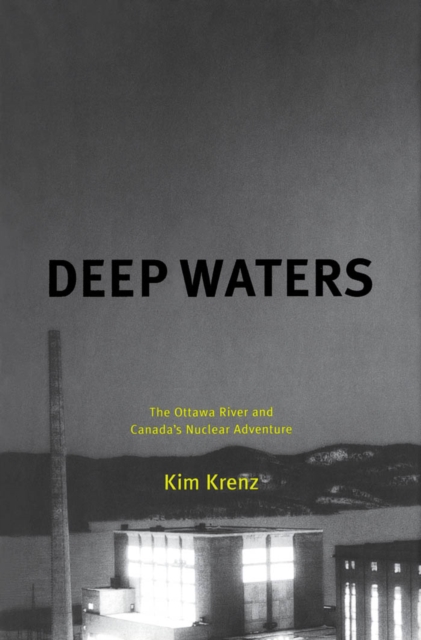
Deep Waters
Public understanding of nuclear power has remained confused, yet decisions about whether and how to use it are of vital importance to Canadians today - and will increase in importance as we seek to maintain our standard of living without doing irreparable damage to the environment around us. Deep Waters examines the issues involved in the use of nuclear power without over-emphasizing its positive aspects or avoiding its negative aspects.
eBook


The Radiance of France
How it happened that technological prowess and national glory (or “radiance,” which also means “radiation” in French) became synonymous in France as nowhere else.
In the aftermath of World War II, as France sought a distinctive role for itself in the modern, postcolonial world, the nation and its leaders enthusiastically embraced large technological projects in general and nuclear power in particular. The Radiance of France asks how it happened that technological prowess and national glory (or “radiance,” which also means “radiation” in French) became synonymous in France as nowhere else.
To answer this question, Gabrielle Hecht has forged an innovative combination of technology studies and cultural and political history in a book that, as Michel Callon writes in the new foreword to this edition, “not only sheds new light on the role of technology in the construction of national identities” but is also “a seminal contribution to the history of contemporary France.” Proposing the concept of technopolitical regime as a way to analyze the social, political, cultural, and technological dynamics among engineering elites, unionized workers, and rural communities, Hecht shows how the history of France's first generation of nuclear reactors is also a history of the multiple meanings of nationalism, from the postwar period (and France's desire for post-Vichy redemption) to 1969 and the adoption of a “Frenchified” American design.
This paperback edition of Hecht's groundbreaking book includes both Callon's foreword and an afterword by the author in which she brings the story up to date, and reflects on such recent developments as the 2007 French presidential election, the promotion of nuclear power as the solution to climate change, and France's aggressive exporting of nuclear technology.
eBook