
Catalogue Search | MBRL


Are you sure you want to remove the book from the shelf?

{{itemTitle}}
13,636
result(s) for
"Nuclear nonproliferation."
Sort by:


Nuclear Apartheid
After World War II, an atomic hierarchy emerged in the noncommunist world.Washington was at the top, followed over time by its NATO allies and then Israel, with the postcolonial world completely shut out.An Indian diplomat called the system nuclear apartheid.Drawing on recently declassified sources from U.S.
eBook


Nonproliferation Norms
Too often, our focus on the relative handful of countries with nuclear weapons keeps us from asking an important question: Why do so many more states not have such weapons? More important, what can we learn from these examples of nuclear restraint? Maria Rost Rublee argues that in addition to understanding a state's security environment, we must appreciate the social forces that influence how states conceptualize the value of nuclear weapons. Much of what Rublee says also applies to other weapons of mass destruction, as well as national security decision making in general. The nuclear nonproliferation movement has created an international social environment that exerts a variety of normative pressures on how state elites and policymakers think about nuclear weapons. Within a social psychology framework, Rublee examines decision making about nuclear weapons in five case studies: Japan, Egypt, Libya, Sweden, and Germany. In each case, Rublee considers the extent to which nuclear forbearance resulted from persuasion (genuine transformation of preferences), social conformity (the desire to maximize social benefits and/or minimize social costs, without a change in underlying preferences), or identification (the desire or habit of following the actions of an important other). The book offers bold policy prescriptions based on a sharpened knowledge of the many ways we transmit and process nonproliferation norms. The social mechanisms that encourage nonproliferation-and the regime that created them-must be preserved and strengthened, Rublee argues, for without them states that have exercised nuclear restraint may rethink their choices.
eBook


Nuclear Desire
Since its enactment in 1970, the Nuclear Non-Proliferation Treaty (NPT), has become one node of a massive, sprawling, multibillion-dollar regime that is considered essential to slowing the proliferation of nuclear weapons and weapons technology. However, according to Shampa Biswas, these well-intentioned efforts to halt the spread of nuclear weapons deflect attention from a hierarchical global nuclear order dominated by powerful states and capitalist interests that benefit from the status quo.
InNuclear Desire, Biswas proposes that pursuit and production of nuclear power is sustained by this unequal global order whose persistent and daily harmful effects are experienced by some of the most vulnerable bodies around the world. Making a compelling case for nuclear abolition, she shows that the path to nuclear zero is more successfully traversed through the perspective of postcolonialism and the political economy of injustice?rather than through the prism of \"security.\" In the end, the nonproliferation regime maintains a hierarchy of haves and have-nots, one that reinforces inequalities that run counter to the NPT's broader goal.
Innovative, forcefully argued, and long overdue,Nuclear Desiremoves beyond conventional critiques to give scholars and students of international relations new insights into how a more secure world might simultaneously be more peaceful and just.
eBook

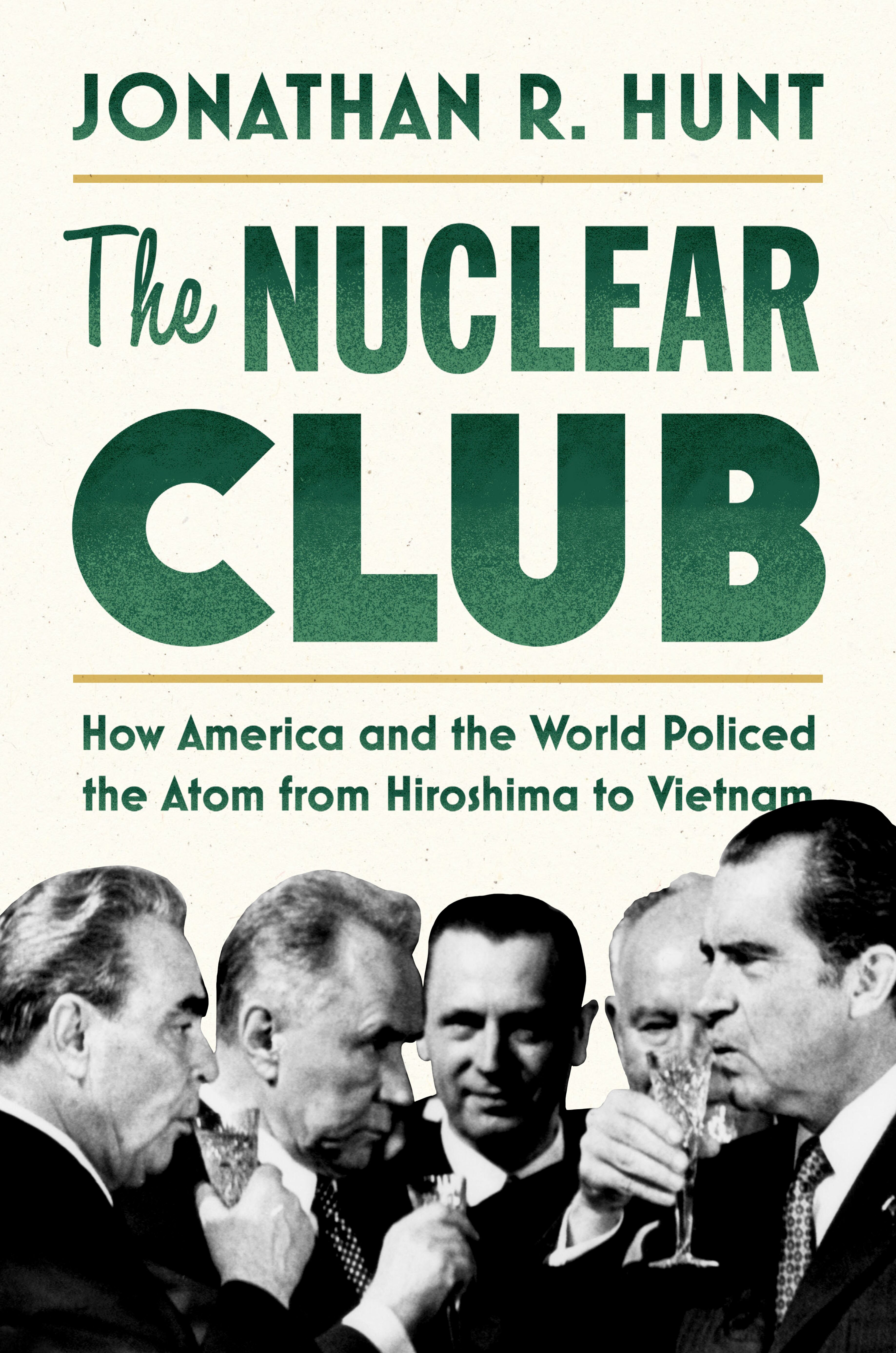
The nuclear club : how America and the world policed the atom from Hiroshima to Vietnam
The Nuclear Club reveals how a coalition of powerful and developing states embraced global governance in hopes of a bright and peaceful tomorrow. While fears of nuclear war were ever-present, it was the perceived threat to their preeminence that drove Washington, Moscow, and London to throw their weight behind the 1963 Limited Test Ban Treaty (LTBT) banishing nuclear testing underground, the 1967 Treaty of Tlatelolco banning atomic armaments from Latin America, and the 1968 Nuclear Non-Proliferation Treaty (NPT) forbidding more countries from joining the most exclusive club on Earth. International society, the Cold War, and the imperial U.S. presidency were reformed from 1945 to 1970, when a global nuclear order was inaugurated, averting conflict in the industrial North and yielding what George Orwell styled a \"peace that is no peace\" everywhere else. Today the nuclear order legitimizes foreign intervention worldwide, empowering the nuclear club and, above all, the United States, to push sanctions and even preventive war against atomic outlaws, all in humanity's name.
eBook

On the Horizon
The Nuclear Scholars Initiative is a signature program run by the Project on Nuclear Issues at the Center for Strategic and International Studies to engage emerging nuclear experts in thoughtful and informed debate over how to best address the nuclear community's most pressing problems. The papers included in this volume comprise research from participants in the 2022 Nuclear Scholars Initiative. These papers explore a range of crucial debates across deterrence, arms control, and disarmament communities.
eBook