
Catalogue Search | MBRL


Are you sure you want to remove the book from the shelf?

{{itemTitle}}
311
result(s) for
"Nuclear weapons Fiction."
Sort by:
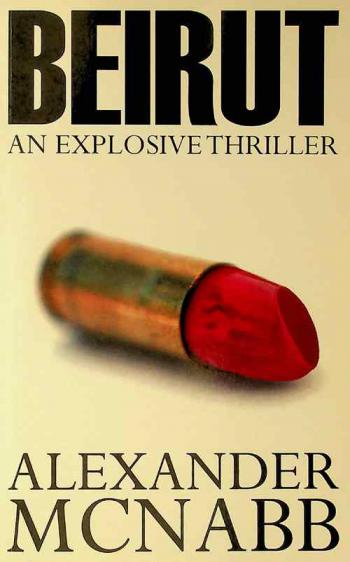
Beirut : an explosive thriller
Beirut - An Explosive Thriller Michel Freij is a powerful man. But he wants more. Two hundred kilotons more. Michel Freij is poised to become the next president of Lebanon. The billionaire businessman's calls for a new, strong regional role for the country take on a sinister note when European intelligence reveals Freij has bought two ageing Soviet nuclear warheads from a German arms dealer. Maverick British intelligence officer Gerald Lynch has to find the warheads, believed to be on board super-yacht the Arabian Princess, before they can reach Lebanon. Joined by Nathalie Durand, the leader of a French online intelligence team, Lynch is pitched into a deadly clash with Freij and his violent militia as he pursues the Arabian Princess across the Mediterranean. Beirut - An Explosive Thriller sweeps through Lebanon, Hamburg, Prague, Malta, Albania and the Greek Islands on its journey to a devastating climax.

The Cyborg Caribbean
Finalist for the Gordon K. and Sybil Lewis Award from the Caribbean Studies Association The Cyborg Caribbean examines a wide range of twenty-first-century Cuban, Dominican, and Puerto Rican science fiction texts, arguing that authors from Pedro Cabiya, Alexandra Pagan-Velez, and Vagabond Beaumont to Yasmin Silvia Portales, Erick Mota, and Yoss, Haris Durrani, and Rita Indiana Hernandez, among others, negotiate rhetorical legacies of historical techno-colonialism and techno-authoritarianism. The authors span the Hispanic Caribbean and their respective diasporas, reflecting how science fiction as a genre has the ability to manipulate political borders. As both a literary and historical study, the book traces four different technologies—electroconvulsive therapy, nuclear weapons, space exploration, and digital avatars—that have transformed understandings of corporality and humanity in the Caribbean. By recognizing the ways that increased technology may amplify the marginalization of bodies based on race, gender, sexuality, and other factors, the science fiction texts studied in this book challenge oppressive narratives that link technological and sociopolitical progress.
eBook

The girl who saved the King of Sweden
Nombeko Mayeki, a chief adviser at the helm of one of the world's most secret projects in South Africa, holds the fate of the world in her hands when she discovers a nuclear missile that was supposed to have been dismantled.
Book

Revisiting the ‘stability–instability paradox’ in AI-enabled warfare: A modern-day Promethean tragedy under the nuclear shadow?
This article contributes to the empirical and theoretical discourse on the ‘stability–instability paradox’, the idea that while possessing nuclear weapons deters cataclysmic all-out war, it simultaneously increases the likelihood of low-level conflict between nuclear dyads. It critiques the paradox’s dominant interpretation (red-line model), which places undue confidence in the nuclear stalemate – premised on mutually assured destruction – to prevent unintentional nuclear engagement and reduce the perceived risks associated with military actions that fall below the nuclear threshold. Recent scholarship has inadequately examined the unintentional consequences of the paradox in conflicts below the nuclear threshold, particularly those relating to the potential for aggression to escalate uncontrollably. The article employs empirically grounded fictional scenarios to illustrate and critically evaluate, rather than predict, the assumptions underpinning the red-line model of the stability–instability paradox in the context of future artificial intelligence (AI)-enabled warfare. It posits that the strategic cap purportedly offered by a nuclear stalemate is illusory and that low-level military aggression between nuclear-armed states increases the risk of unintentional nuclear detonation.
Journal Article

The final day
\"Months before publication, William R. Forstchen's One Second After was cited on the floor of Congress as a book all Americans should read. Hundreds of thousands of people have read the tale. The thrilling follow-up to that novel, One Year After, will be published this September. This third novel in the series will pick up a month after One Year After ends, emersing readers once more in this story of our nation's struggle to rebuild itself after an electromagnetic pulse wipes out all electricity and plunges the country into darkness, starvation, and death\"-- Provided by publisher.
Book

Polynesia against Paris: Indigenous Anti-Nuclear Literature and the French Colonial Origins of Oceanian Reintegration
This essay examines Francophone and Anglophone Indigenous Oceanian literature and art to argue that through the predominantly Polynesian response to French nuclear testing in Te Ao Mā’ohi (French Polynesia), French colonialism has inadvertently generated one key cultural movement toward post-colonial Oceanian reintegration—one that extends well beyond the Francophone Pacific. The essay first examines the prose fiction of Chantal Spitz, Rai a Mai [aka Michou Chaze], and Déwé Gorodé to understand Te Ao Mā’ohi’s (French Polynesia's) and Kanaky’s (New Caledonia's) shared experiences of French colonialism. It then contrasts the same authors’ treatment of French nuclear weapons testing, which was the central crisis in Mā’ohi literature but which was marginal to early Kanak prose fiction. The essay then brings this Francophone literature in direct conversation with the hitherto unexamined specifically anti-French dimension of better-known Anglophone Oceanian works from authors Witi Ihimaera (Maori) and Albert Wendt (Samoan) and visual artists Ralph Hotere (Maori) and Hiko‘ula Hanapi (Hawaiian). The essay then demonstrates how this mutual Francophone-Anglophone Polynesian response to French colonialism created a Polynesia-centric anti-French-colonial process of Oceanian reintegration, and how that engine of Pacific reintegration later encompassed Kanaky and generated new cultural and activist connections between the Francophone and Anglophone Pacific.
Journal Article

Treason
A military coup in Russia leads to a to a swift invasion of former Soviet territories--while the U.S. has been rendered powerless to respond. In Russia, the military is anxious to assert its military strength and regain its role as a superpower. The Russian President refuses to greenlight a bold plan to disable American strategic nuclear capability and retake Ukraine and the Baltic States, fearing the potential consequences of involving nuclear weapons. But the generals won't have it and at the first opportunity, they overthrow the president in a military coup. Then they use a narrow window to initiate their bold plan--the Zolotov option--which will render all of America's B2 bombers and ballistic missiles useless. With the U.S. off the board, they swiftly invade Ukraine with an overwhelming force, an invading Army that even NATO can't hope to resist. Now, it's game on. Without their primary weapons, the U.S. has to find a way to fight back on multiple fronts. If they're to have any chance, they'll have to overcome the malware that has grounded their ballistic missiles and planes, as well as secretly land a SEAL team to help rescue the imprisoned Russian President, and help retake control from the forces that are driving Europe into a continental war.
Book

Atomville: Architects, Planners, and How to Survive the Bomb
In the post-Hiroshima era, atomic cities—designed to survive a nuclear attack—remain in the science fiction realm. Yet Hungarian émigré Paul Laszlo, a successful architect in Southern California suburbia, had a utopian vision for a futuristic, paradoxically luxurious atomic city he called \"Atomville,\" never built but nonetheless seriously proposed. Laszlo was one of the very few architects known to venture into atomic survival on this scale. This article focuses on why the architectural profession for the most part ignored the issues raised by the atomic bomb, and on Laszlo's role as an outlier. It also deals with the genesis of Atomville and its place among the many unrealized ideas put forward in the 1940s and 1950s for urban survival, including underground buildings, urban dispersal, linear cities, and cluster cities.
Journal Article

The Trident deception
\"The USS Kentucky--a Trident ballistic missile submarine carrying a full complement of 192 nuclear warheads--is about to go on a routine cruise. Not long after it reaches the open sea, however, the Kentucky receives a launch order. What the Kentucky's crew doesn't know is that those launch orders haven't actually come from the U.S. government. Rogue elements within the Mossad have learned that Iran has developed its first nuclear weapon and, in ten days, will detonate it--and the target is Israel. The suspected weapon complex is too far underground for conventional weapons to harm it, and the only choice is a pre-emptive nuclear strike. With only 8 days before the Kentucky is in launch range and with the submarine cut off from any outside communication, one senior officer, the father of one of the officers aboard the submarine, must assemble and lead a team of attack submarines to find, intercept and neutralize the Kentucky before it can unknowingly unleash a devastating nuclear attack\"--Provided by publisher.
Book
Artificial Intelligence: Medical Applications and the Future Impacts
Artificial intelligence (AI) is currently being used to enable faster disease detection, enable better understanding of disease progression, enhance medication dosages, and discover pioneering treatments. We have only scratched the surface of AI, but under any circumstances, it would be impossible for AI to acquire the talent of creativity which is a unique human characteristic. AI poses real life and hypothetical risks. Many AI and robotics researchers have aired alarms about the way advances in AI, paired with autonomous systems, could create new and dangerous weapon systems that will menace global stability. AI might revolutionise areas like medicine and agriculture, but it also poses great risks to business and society as a whole. This paper is an attempt to evaluate the positive and negative impacts of AI. Improving the quality of life and prolonging life are responsibilities of the medical profession and any interference to this obligation, the caring profession has to take seriously.
Journal Article